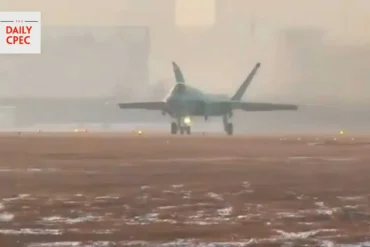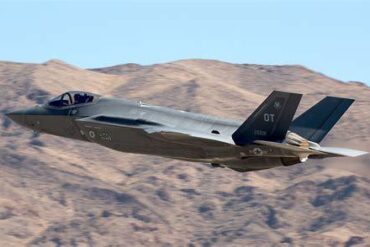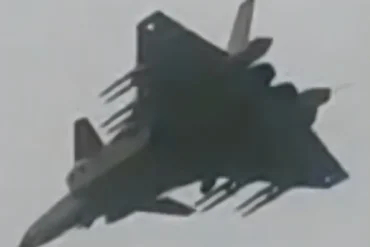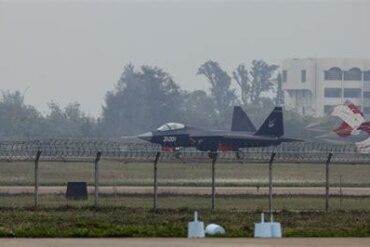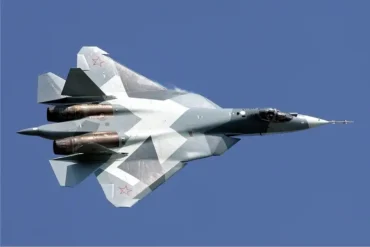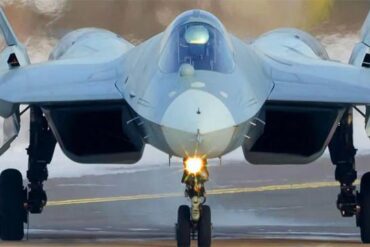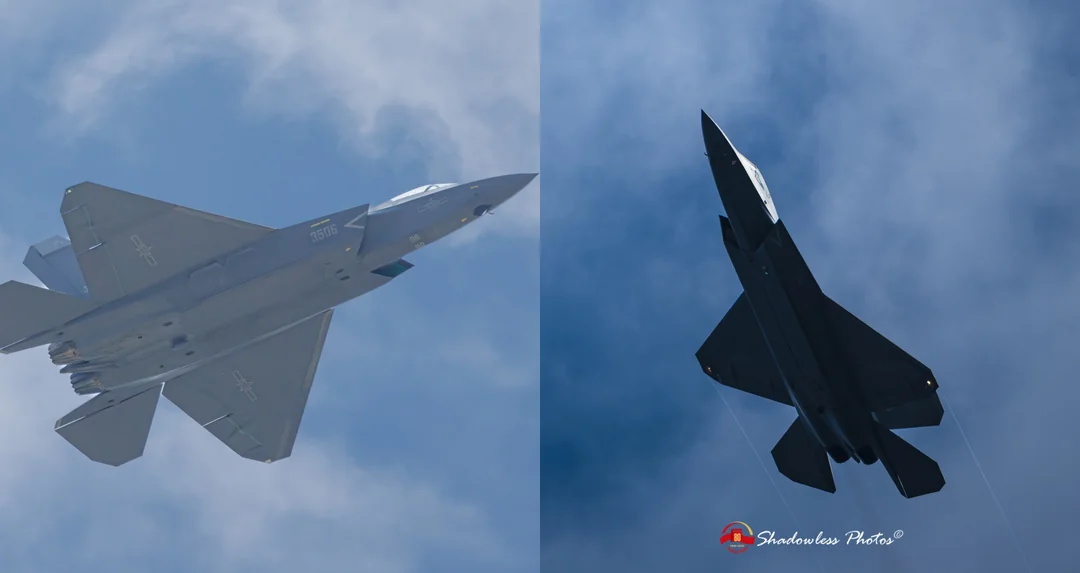
China’s ambitious fifth-generation stealth fighter program has expanded beyond the mainland, branching into the maritime domain with the J-35 naval variant—a powerful complement to the J-35A air force variant. These twin derivatives of the same fighter family are strategically designed to meet distinct operational environments, but together, they demonstrate a significant leap in China’s airpower projection and defense strategy.
The J-35 series represents China’s direct answer to the U.S. F-35 platform, yet with regional focus and tailored adaptability. While the J-35A suits the People’s Liberation Army Air Force (PLAAF) with its land-based agility and endurance, the naval J-35 integrates into carrier strike groups with enhanced survivability and maritime strike capabilities.
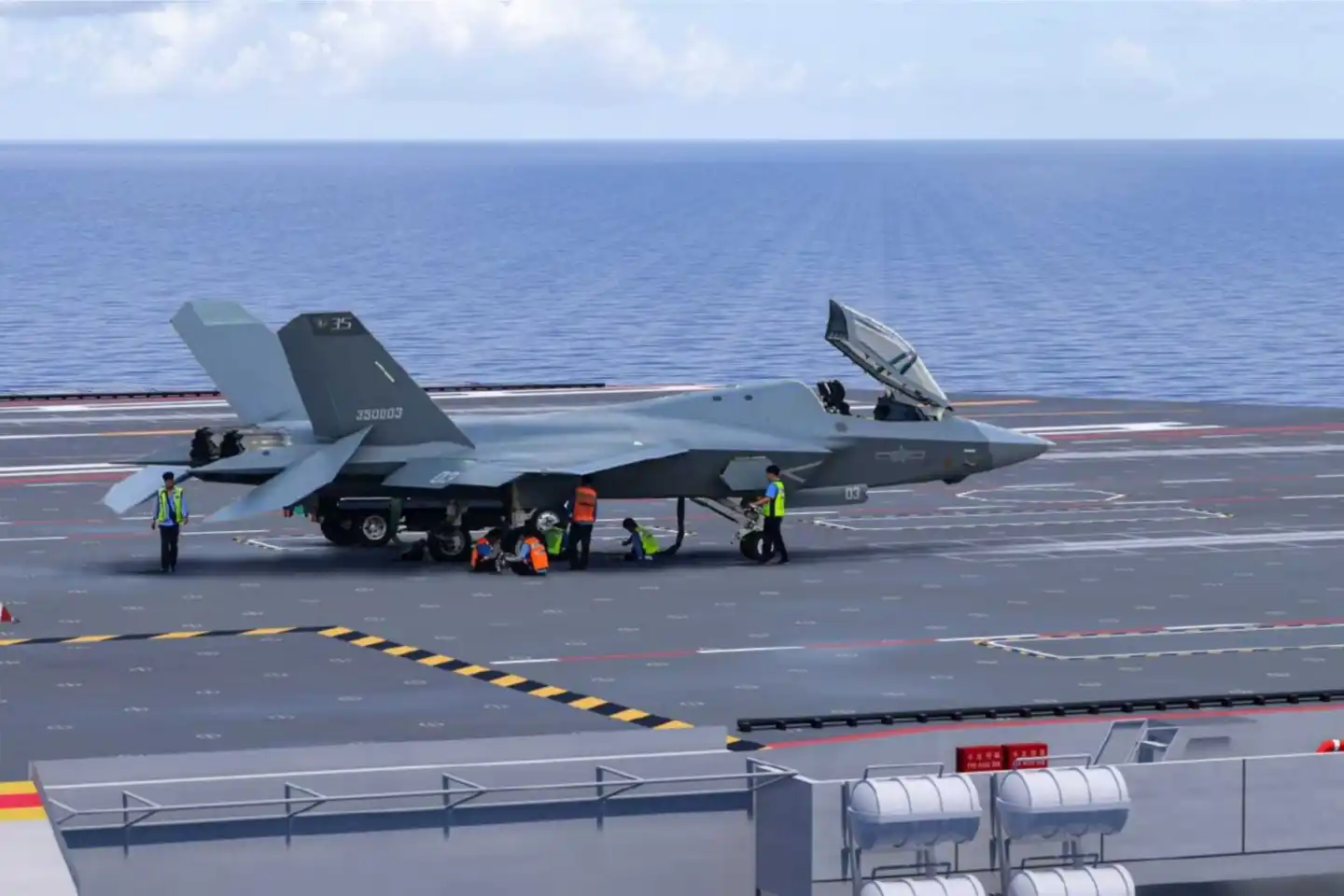
Core Structural and Design Differences Between J-35 and J-35A
At the heart of the divergence between these two fighters lies structural optimization for distinct launch environments. The J-35 naval variant, purpose-built for aircraft carrier deployment, features a foldable wing mechanism—a critical design for maximizing space efficiency aboard crowded carrier decks. This mechanism is comparable to the F-35C’s wing-fold design, allowing more jets to be stationed within the limited footprint of China’s flat-top vessels.
Further reinforcing its suitability for naval operations, the J-35’s landing gear is structurally enhanced to absorb the high-impact forces during arrested carrier landings. The forward landing gear incorporates an integrated launch bar compatible with electromagnetic catapult systems (EMALS), such as the one installed on the Type 003 Fujian-class carrier.
The airframe of the naval J-35 is coated with anti-corrosion paint to withstand the salt-laden maritime climate—protection unnecessary for its land-based cousin.
By contrast, the J-35A air force variant is engineered for lighter weight and aerodynamic efficiency, eliminating the complexity of folding wings. This airframe emphasizes performance optimization rather than ruggedness, tailored for high-tempo land-based sorties. The conventional landing gear system is simplified, relying solely on traditional runway takeoffs and landings, free from the mass and bulk of carrier adaptation.
Aerodynamics and Stealth Considerations
Aerodynamic refinements and radar signature management remain paramount in both variants, but their adaptations reflect operational context. The J-35 naval version features a tail hook bay—a necessity for carrier landings but one that slightly increases the radar cross-section (RCS). Moreover, integration of carrier-specific electronics and structural reinforcements further nudges up the RCS marginally.
In contrast, the J-35A sports a single-piece cockpit canopy, which not only improves aerodynamic flow but also reduces reflective surfaces, enhancing its stealth profile. Both variants boast RCS estimates in the 0.01–0.1㎡ range, making them highly survivable against modern radar systems and placing them in close competition with the F-35’s estimated 0.05㎡ RCS.
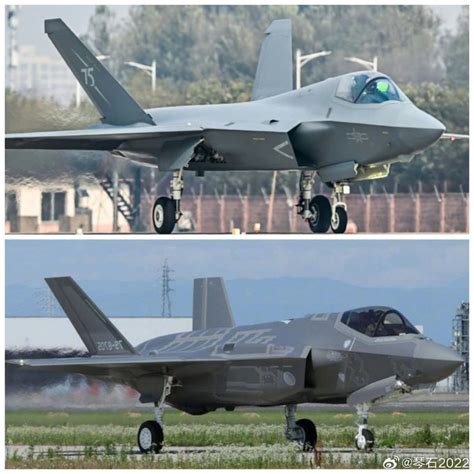
Combat Roles and Tactical Integration
The J-35 naval variant and J-35A air force model were never designed to compete but to complement each other in a multifaceted airpower doctrine. Their tactical deployments are customized:
- J-35 Naval Variant: Focused on fleet air defense, carrier strike, and blue-water operations, often working in tandem with platforms like the KJ-600 AEW&C aircraft and the Type 003 Fujian’s EMALS system.
- J-35A Air Force Variant: Oriented towards air superiority, deep-strike missions, and battlefield interdiction, operating within an integrated command structure with J-20 fighters and airborne early warning units.
Both versions share a similar internal weapons bay capable of housing six PL-15 or PL-17 air-to-air missiles, but the J-35A can accommodate more ground-attack munitions due to fewer naval design constraints. This makes the air force variant more suitable for multi-role strike missions, while the naval variant remains specialized for maritime scenarios.
Performance Metrics and Engine Design
Powering both aircraft is a pair of high-performance turbofan engines, initially the WS-13E, with long-term plans to transition to the WS-19—a more potent engine offering enhanced thrust and fuel efficiency. The J-35 naval variant requires a higher thrust-to-weight ratio (≥1:1) to manage the demands of catapult launches and arrested recoveries.
In terms of flight envelope:
- J-35 Naval Variant: Maximum takeoff weight of approximately 30 tons, with a combat radius of 1,350 km, constrained by carrier launch-recovery limitations.
- J-35A: Slightly lighter at 25–28 tons, allowing an extended range of up to 15% more due to the absence of naval reinforcements and better aerodynamic shaping.
Both aircraft utilize a 1.1-meter diameter GaN-based AESA radar, capable of tracking targets over 300 kilometers. While the core radar system remains identical, the naval radar software is fine-tuned for tracking sea-skimming targets and fast-moving naval threats.
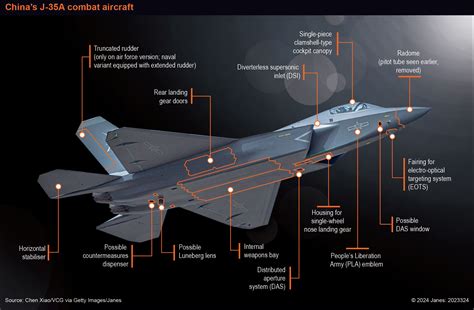
The J-35A cockpit environment is markedly more advanced in human-machine integration. It incorporates a wide-area touchscreen display and voice-command AI, facilitating rapid mode switching, a feature less emphasized in the naval variant which prioritizes ruggedness and reliability.
Strategic Deployment and Geopolitical Implications
The deployment trajectories of these two fighters reveal their distinct strategic goals.
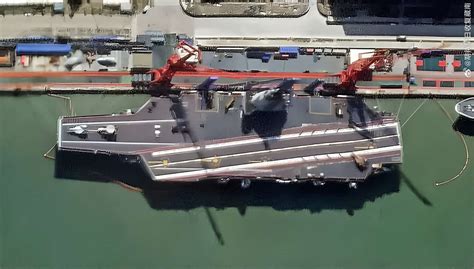
The J-35 naval variant is slated to become the primary air wing platform for the Type 003 Fujian-class aircraft carrier, expected to operate up to 48 stealth jets. It will also be retrofitted onto the Liaoning and Shandong carriers, although with a smaller complement of 24 aircraft each. The naval J-35 is integral to China’s vision of a blue-water navy, aiming to maintain sustained air dominance far from the mainland by 2030.
Meanwhile, the J-35A is already operational with the Northern Theater Command Air Force, often deployed in joint exercises with the J-20 stealth fighter. Notably, China has secured a deal with Pakistan for 40 J-35A units, marking the first successful export of a Chinese fifth-generation aircraft, expected to be fulfilled by 2027. This not only diversifies China’s defense exports but also reshapes South Asia’s aerial balance of power.
Conclusion: Dual Paths Toward Fifth-Generation Dominance
Rather than representing two competing philosophies, the J-35 naval and J-35A air force variants are two prongs of a unified strategic vision. The naval variant sacrifices some operational range and internal capacity to achieve ruggedness, maritime survivability, and carrier operability, becoming the aerial shield of China’s carrier strike groups. Conversely, the J-35A maximizes payload flexibility and range, excelling in land-based rapid response operations and enhancing the export footprint of China’s defense industry.
Together, they make China only the second nation after the United States to field two domestically developed, operational fifth-generation fighters, and the only nation with dual-variant stealth fighters tailored for land and sea theaters. This achievement marks a pivotal evolution in Asia-Pacific airpower dynamics, and a bold statement of China’s military-technological ambition.
At-A-Glance Technical Summary
| Feature | J-35 Naval Variant | J-35A Air Force Variant |
|---|---|---|
| Wing Design | Foldable | Fixed |
| Landing Gear | Reinforced for catapult/recovery | Standard for runway operations |
| Core Deployment | Type 003 Fujian (48 aircraft) | Northern Theater Command |
| Strategic Role | Maritime air superiority | Deep-strike, multi-role, export |
| Combat Radius | ~1,350 km | Up to 15% longer |
| Cockpit | Durable design, standard MFDs | Wide-area display, voice control |
| Export Status | Domestic only | 40 units to Pakistan by 2027 |