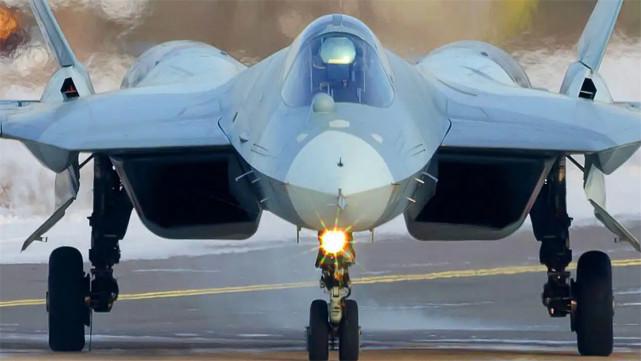
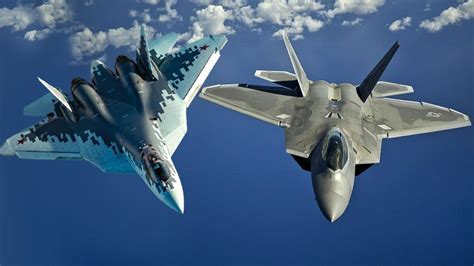
The F-22 Raptor and Su-57 Felon represent the pinnacle of fifth-generation fighter aircraft, each embodying the air combat doctrines of their respective nations—the United States and Russia. The F-22 excels in stealth, sensor fusion, and networked warfare, making it the premier air superiority fighter. Meanwhile, the Su-57 emphasizes agility, versatility, and cost-effectiveness, reflecting Russia’s emphasis on maneuverability and multi-role capability. In this in-depth comparison, we analyze stealth, maneuverability, avionics, weaponry, production, and real-world combat scenarios to determine how these two titans stack up against each other in modern aerial warfare.
Stealth Performance: F-22’s Absolute Superiority
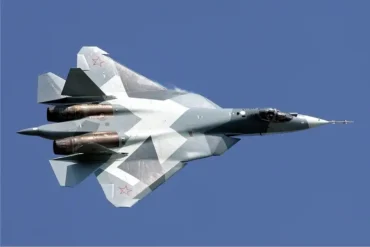
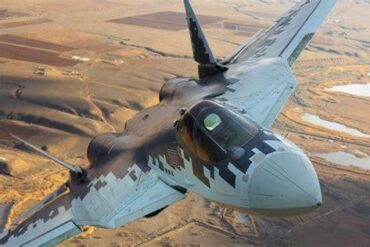
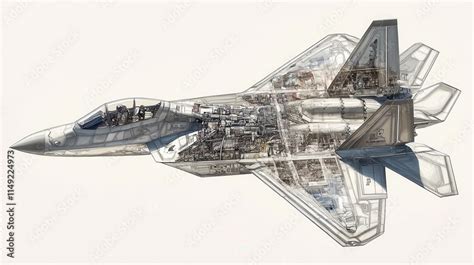
One of the most critical factors in modern aerial combat is stealth. The F-22 Raptor boasts an extremely low radar cross-section (RCS) of just 0.01 square meters, thanks to its diamond-shaped airframe, radar-absorbing materials, and concealed weapon bays. In contrast, the Su-57 Felon has a significantly higher RCS of approximately 0.4 square meters, largely due to its exposed engine fan blades, lack of serpentine inlets, and less refined surface finishing. This major disparity means that the F-22 can detect and engage the Su-57 long before the Russian jet can even register its presence, giving it a decisive advantage in beyond-visual-range (BVR) combat.
Maneuverability: Su-57’s Close-Combat Edge
The Su-57 is designed for extreme agility, featuring three-dimensional thrust-vectoring AL-41F1S engines, which allow it to perform post-stall maneuvers like the Cobra and falling leaf. These capabilities make it an exceptional dogfighter, giving it an edge in close-quarters combat.
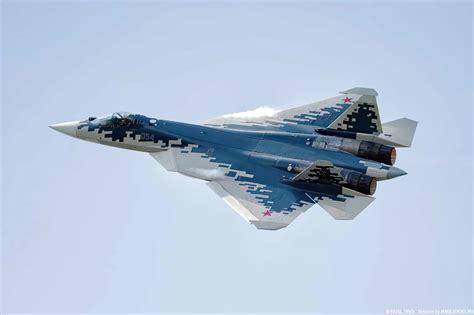
Conversely, the F-22 employs two-dimensional thrust-vectoring Pratt & Whitney F119 engines, providing excellent pitch control but somewhat limited yaw maneuverability compared to the Su-57. However, modern air combat prioritizes BVR engagements, where the F-22’s stealth and superior sensor fusion reduce the likelihood of entering close-range engagements where the Su-57 could exploit its agility advantage.
Avionics and Beyond-Visual-Range (BVR) Combat: F-22’s Systemic Dominance
The F-22 is equipped with the AN/APG-77 active electronically scanned array (AESA) radar, capable of detecting threats over 400 km away and simultaneously tracking 30 targets while engaging 8. This system, combined with the AIM-120D AMRAAM missile (180 km range), gives the Raptor an overwhelming first-strike advantage.
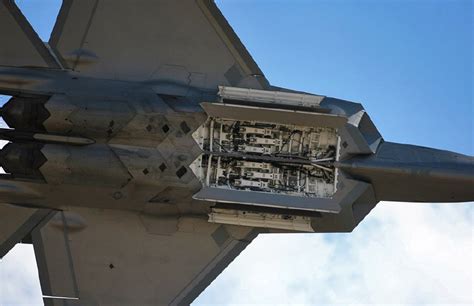
In comparison, the Su-57’s N036 Byelka AESA radar has a similar 400 km detection range but suffers from inferior signal processing and electronic counter-countermeasures (ECCM) due to Russia’s relative lag in avionics technology. Additionally, the Su-57’s long-range R-37M missiles require external mounting, compromising its stealth profile when armed for BVR combat.
Weapons and Combat Systems: F-22’s First-Strike Capability
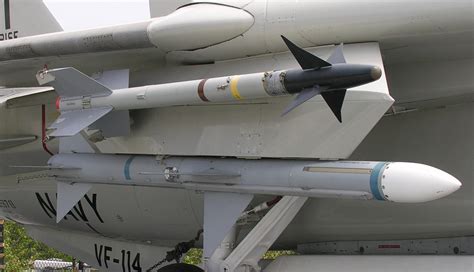
F-22 Raptor’s Arsenal
- 8 internal missiles: Typically a mix of AIM-120D AMRAAM (BVR) and AIM-9X Sidewinder (short-range).
- AIM-9X features 90-degree off-boresight targeting, allowing the F-22 to engage threats at extreme angles using helmet-mounted displays.
- Planned upgrades for 2025 include Infrared Search and Track (IRST) sensors and reduced-drag external fuel tanks, extending its range.
Su-57’s Arsenal
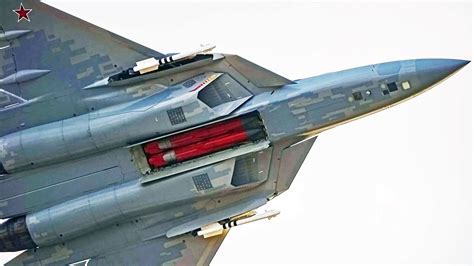
- R-77 medium-range and R-73 short-range air-to-air missiles
- Optional hypersonic Kinzhal missile, but requires external carriage, greatly reducing its stealth.
- Lacks a mature high-off-boresight targeting system like AIM-9X, reducing effectiveness in close engagements.
Production and Deployment: Numbers Matter
The F-22 Raptor’s production was limited to 187 units, with approximately 180 still in service. However, the US Air Force continuously upgrades the fleet with new software, electronic warfare capabilities, and enhanced sensors, keeping it combat-relevant through at least 2040.
In contrast, the Su-57 faces severe production constraints. As of 2025, Russia has only deployed 22 units, with a total order of just 76 aircraft. Financial constraints and supply chain difficulties in radar and avionics components have significantly hampered full-scale deployment, leaving the Su-57 fleet too small to challenge the US Air Force strategically.
Combat Network and Support Systems: F-22’s Integrated Warfare Advantage
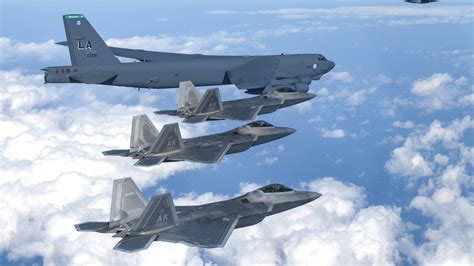
The F-22 benefits from a robust networked warfare ecosystem, integrating with:
- E-3 AWACS early warning aircraft
- Satellite-based communications
- Secure datalinks like Link 16 This allows the F-22 to receive real-time battlefield intelligence, further enhancing its ability to dominate in BVR engagements.
On the other hand, the Su-57’s support network is significantly weaker. Russia’s A-50 AWACS aircraft are outdated and exist in limited numbers, making it difficult for the Su-57 to operate with the same level of battlefield awareness as the F-22.
Real-World Combat Scenarios: How They Would Clash
Beyond-Visual-Range Engagement
- The F-22 would likely detect and fire upon the Su-57 first, thanks to its stealth and superior avionics.
- The Su-57’s higher RCS makes it vulnerable before it can respond.
Within-Visual-Range Dogfight
- If the Su-57 survives the first missile barrage and closes in, its superior agility may pose a threat.
- However, the F-22’s AIM-9X off-boresight missiles and advanced pilot interface still make it a formidable opponent in close combat.
Network-Centric Warfare
- The F-22 operates as part of a wider US military network, allowing for coordinated attacks and real-time intelligence.
- The Su-57, with weaker support infrastructure, may find itself isolated and disadvantaged.
Conclusion: A Battle of Air Combat Philosophies
The F-22 Raptor is the epitome of stealth, advanced avionics, and networked warfare, making it superior in BVR engagements and integrated air combat scenarios. The Su-57, while agile and versatile, lacks the necessary stealth and system integration to consistently challenge the Raptor in modern warfare.
Ultimately, the F-22 is a hunter that strikes unseen, while the Su-57 is a high-agility warrior designed to endure and retaliate. In a head-to-head clash, the F-22 holds the upper hand in all key areas except close-range maneuverability, where the Su-57 may briefly excel.
FAQ
1. Why was F-22 production limited to 187 units?
The F-22 program was curtailed due to budget constraints, shifting military priorities, and the emergence of the F-35, which was seen as a more cost-effective multi-role fighter.
2. Can the Su-57 defeat the F-22 in combat?
The Su-57 could pose a threat in close-range combat due to its agility, but the F-22’s superior stealth, avionics, and weapons systems give it a significant overall advantage.
3. What upgrades are planned for the F-22?
The US Air Force plans to enhance the F-22 with improved electronic warfare systems, new infrared search and track (IRST) sensors, and next-generation weapons, ensuring its dominance until at least 2040.