The Chengdu J-20 and the Lockheed Martin F-22 Raptor represent two of the most advanced fifth-generation fighter jets developed by China and the United States, respectively. While both aircraft emphasize stealth, maneuverability, and avionics, their design philosophies and strategic roles differ significantly. This article provides a detailed comparison of their stealth capabilities, maneuverability, avionics, weapons payload, and strategic roles, offering an in-depth analysis of their strengths and weaknesses.
Stealth Capabilities: Balancing Technology and Maintenance
F-22 Raptor: Pioneering Stealth Excellence
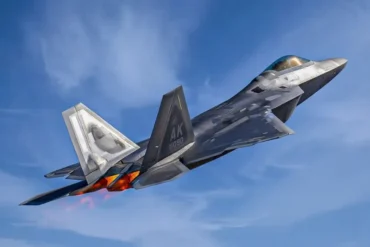
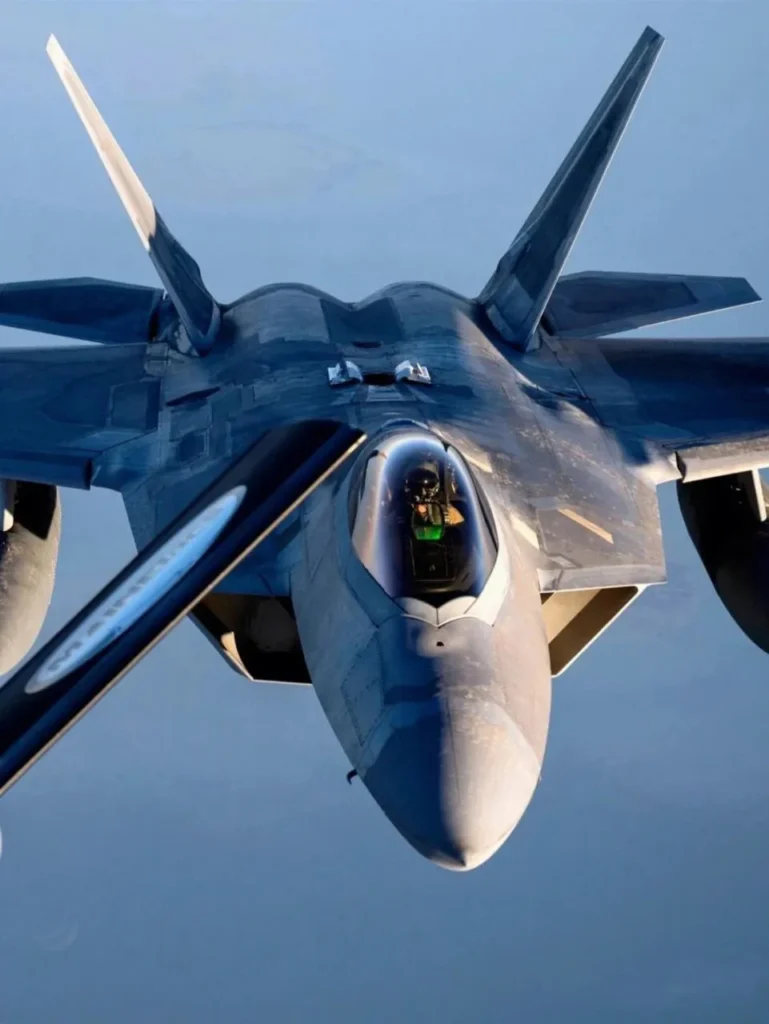
The F-22 was the world’s first operational fifth-generation fighter, featuring an advanced stealth design with elements such as a diamond-shaped fuselage, radar-absorbent coatings, and internal weapon bays. These features allow it to achieve an extremely low radar cross-section (RCS) of approximately 0.01 square meters, making it virtually invisible to most radar systems. However, this advanced stealth technology comes at a cost:
- High maintenance requirements, including a specialized climate-controlled hangar.
- Expensive stealth coatings that require frequent maintenance, significantly increasing operational costs.
J-20: Optimized for Practical Stealth
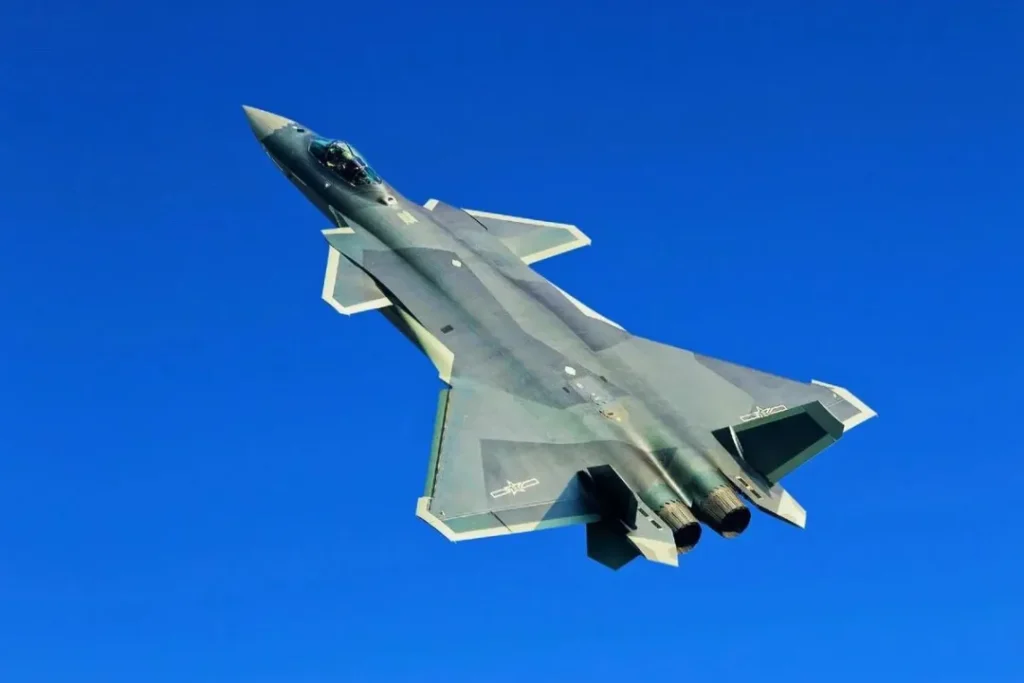
The J-20, China’s premier stealth fighter, incorporates a blended wing-body design, Diverterless Supersonic Inlet (DSI), and an S-shaped engine intake to minimize radar signature. While its frontal RCS is slightly larger than the F-22 at around 0.027 square meters, its stealth features provide superior side and rear-angle stealth. Additionally, its nanomaterial-based radar-absorbent coatings are:
- More durable and easier to maintain than the F-22’s.
- Less reliant on expensive maintenance infrastructure, making it more practical for sustained deployments.
Conclusion: The F-22 remains superior in frontal stealth, but the J-20’s all-aspect stealth and lower maintenance demands make it more adaptable for long-term operations.
Maneuverability and Engine Performance
F-22: Air Superiority Through Agility
Powered by two Pratt & Whitney F119 engines, each producing 18 tons of thrust, the F-22 boasts:
- Thrust vectoring nozzles, enabling extreme post-stall maneuvers like the Cobra maneuver.
- Exceptional dogfighting agility, making it one of the most maneuverable fighter jets in close combat.
- A supercruise speed of Mach 1.7, allowing sustained supersonic flight without afterburners.
J-20: High-Speed Interception and Beyond
The J-20’s maneuverability has significantly improved with the integration of the WS-15 engines, which provide over 18 tons of thrust each. Key advantages include:
- A supercruise speed of Mach 1.8, slightly outperforming the F-22.
- A maximum speed of Mach 2.8, significantly faster than the Raptor.
- Canard-delta wing configuration and thrust vectoring nozzles, improving high-speed interception and over-the-horizon targeting.
Conclusion: The F-22 dominates close-range dogfighting, but the J-20 is better suited for long-range engagements and high-speed interception.
Avionics and Information Warfare Capabilities
F-22: Aged but Effective Systems
While still formidable, the F-22’s avionics were designed in the 1990s, limiting its adaptability to modern digital warfare. Notable features include:
- AN/APG-77 AESA radar, providing excellent detection and tracking range.
- Lacks modern sensor fusion systems like EODAS, making it less effective in network-centric warfare.
J-20: Cutting-Edge Digital Combat Systems
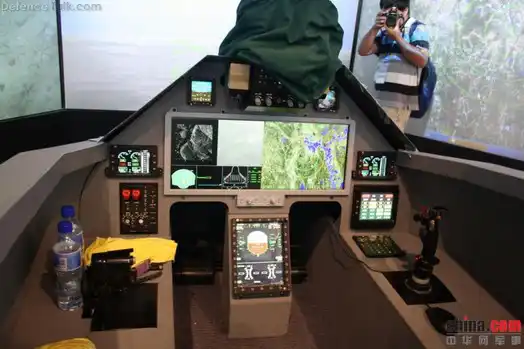
As a more recent design, the J-20 integrates state-of-the-art avionics such as:
- An advanced AESA radar with a 350+ km detection range.
- Electro-Optical Targeting System (EOTS) and Distributed Aperture System (DAS), similar to the F-35’s.
- Superior data-link capabilities, enabling seamless coordination with AWACS, stealth drones, and hypersonic missiles.
Conclusion: The J-20’s avionics and networking capabilities outclass the F-22, making it more suited for modern information-centric warfare.
Weapons Payload and Combat Radius
F-22: Limited Payload, Focused on Air Superiority
The F-22 carries:
- 6 AIM-120 AMRAAMs + 2 AIM-9X Sidewinders internally.
- No long-range strike capability, limiting its versatility.
- A combat radius of 759 km, requiring frequent refueling for extended missions.
J-20: Designed for Extended Engagements
The J-20, with its larger internal weapons bays, carries:
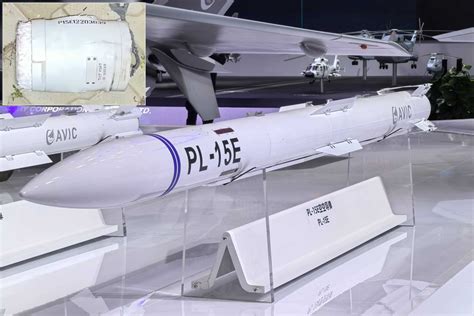
- 4 PL-15 beyond-visual-range missiles (200+ km range) + 2 PL-10E short-range missiles.
- Potential for hypersonic missile integration.
- A combat radius of 1,700 km, more than double the F-22’s, allowing deep-penetration strikes.
Conclusion: The J-20 offers superior long-range strike and operational reach, while the F-22 remains an elite short-range dogfighter.
Production Scale and Strategic Role
F-22: A Dying Breed
- Production ceased in 2011 due to high costs (~$350 million per unit).
- Only 187 units remain, with many set for decommissioning.
- Mainly serves as an elite air superiority platform.
J-20: Expanding Fleet and Future Developments
- Annual production exceeds 100 units, with over 250 already in service.
- Deployed across multiple theaters, making it China’s primary strategic air dominance fighter.
- Future upgrades include AI-driven combat capabilities and unmanned variants.
Conclusion: The J-20 is continuously evolving, while the F-22 is reaching obsolescence.
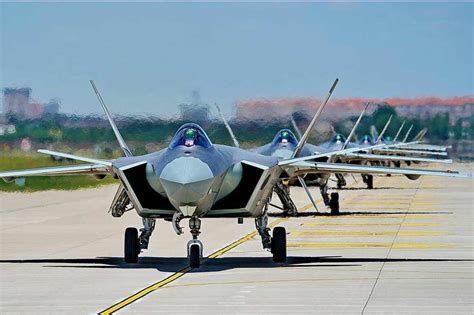
Final Verdict
- The F-22 still leads in stealth and close-range combat.
- The J-20 excels in avionics, combat radius, and long-range engagements.
- Future warfare favors networked, information-driven operations, an area where the J-20 outperforms the F-22.
FAQs
1. Can the J-20 defeat the F-22 in air combat?
While the F-22 has superior maneuverability, the J-20’s advanced avionics, missile capabilities, and longer range give it an advantage in beyond-visual-range (BVR) engagements.
2. Why was the F-22 discontinued?
The F-22 was deemed too expensive to maintain and produce, leading to its early termination in 2011, with resources diverted to the F-35 program.
3. What makes the J-20 a “fifth-and-a-half generation” fighter?
With enhanced avionics, advanced data links, and evolving stealth technology, the J-20 is poised to surpass traditional fifth-generation fighters, earning it the unofficial “5.5-gen” classification.