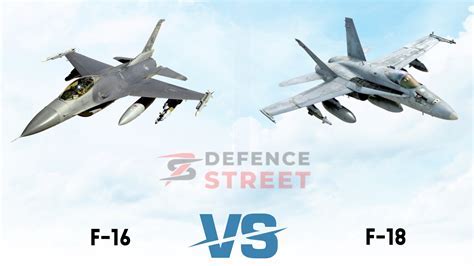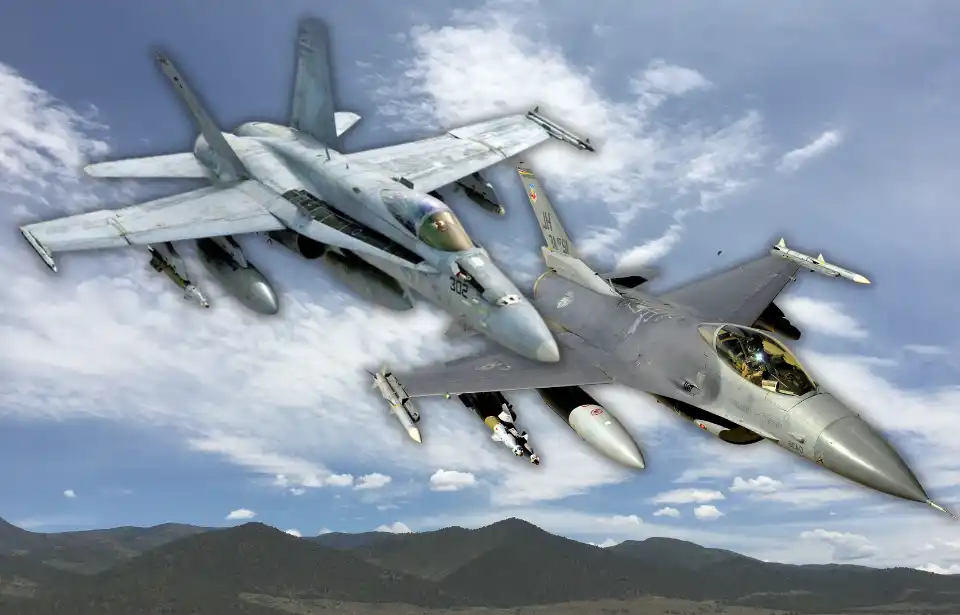
The F-16 Fighting Falcon and the F/A-18 Hornet/Super Hornet are two of the most widely used fighter jets in modern military aviation. While both were designed by the United States, their operational roles, performance capabilities, and mission adaptability set them apart. This article provides a detailed comparison of these two legendary aircraft, analyzing their design, performance, payload capacity, operational context, and combat effectiveness.
Design Origins and Primary Roles
F-16 Fighting Falcon
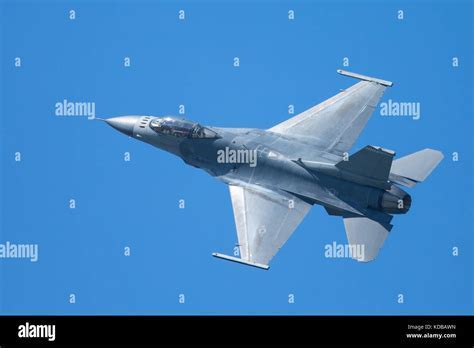
The F-16 was developed as a lightweight, single-engine multirole fighter for the U.S. Air Force. It was designed with a focus on agility, speed, and cost-effectiveness. Initially conceptualized for air-to-air combat, the platform evolved into a highly versatile fighter capable of executing ground-attack, reconnaissance, and air superiority missions. With its affordability and adaptability, the F-16 has become a cornerstone of many international air forces.
F/A-18 Hornet & Super Hornet
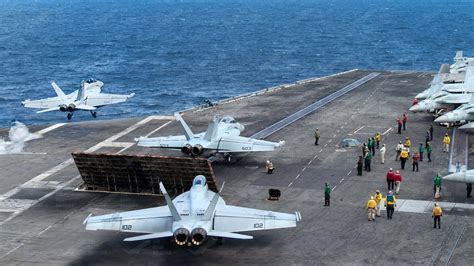
In contrast, the F/A-18 was developed as a twin-engine, carrier-based multirole fighter for the U.S. Navy and Marine Corps. It was designed for durability in naval environments, incorporating reinforced landing gear, corrosion-resistant materials, and all-weather capability. The Super Hornet (F/A-18E/F), an upgraded version, features enhanced stealth characteristics, increased range, and a larger payload capacity, making it a formidable platform for both air combat and strike missions.
Performance and Maneuverability
Speed
- F-16: Mach 2 (2,414 km/h), benefiting from a streamlined airframe and an optimized fixed inlet design for high-speed performance.
- F/A-18: Mach 1.6 (1,915 km/h), designed with a focus on low-speed control and carrier landings, leading to higher aerodynamic drag.
Maneuverability
- The F-16’s lightweight structure and superior thrust-to-weight ratio make it highly maneuverable in dogfights, with excellent turn rates and agility.
- The F/A-18 sacrifices raw speed for extreme angle-of-attack (AoA) capabilities, allowing it to sustain controlled flight at high AoA, which is crucial for evasive and close-range engagements.
Payload and Versatility
F-16 Fighting Falcon
- Payload Capacity: 17,000 lbs of ordnance.
- Compatible with AIM-120 AMRAAM, JDAMs, anti-radiation missiles, and external fuel tanks.
- Smaller size limits internal fuel storage, necessitating external tanks for extended missions.
F/A-18 Hornet/Super Hornet
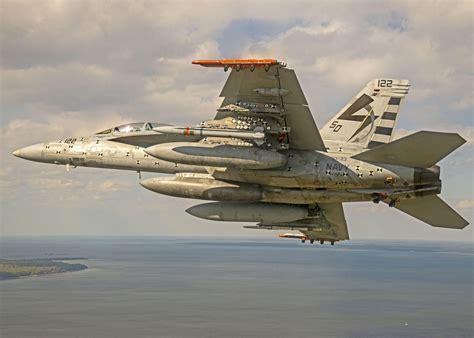
- Payload Capacity: 21,000 lbs, significantly greater than the F-16.
- Carries AGM-158 JASSM, JDAMs, air-to-air and air-to-ground missiles.
- Equipped with larger internal fuel reserves, extending operational range.
- The EA-18G Growler variant specializes in electronic warfare.
Operational Context
F-16 Fighting Falcon
- Operates in over 30 countries.
- Suited for land-based missions, even on shorter runways.
- More cost-effective, with unit prices between $18–35 million.
- Popular among nations seeking affordable, high-performance fighters.
F/A-18 Hornet/Super Hornet
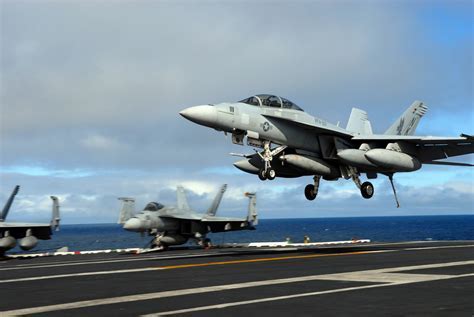
- Designed for carrier-based operations, featuring robust landing gear.
- Operates extensively in naval combat scenarios.
- More expensive, with the Super Hornet costing ~$70 million per unit.
- Some nations, including Ukraine, declined older F/A-18 models due to high refurbishment costs, favoring the F-16 instead.
Combat Effectiveness
Air-to-Air Combat
- The F-16 excels in close-range dogfights due to higher thrust-to-weight ratio and agility.
- The F/A-18 is superior in beyond-visual-range (BVR) engagements, leveraging advanced radar and AIM-120D AMRAAMs.
Ground Attack Capabilities
- The F/A-18’s larger payload and advanced targeting systems provide better long-range strike capabilities.
- The F-16 remains highly versatile but requires external fuel tanks for long-duration missions.
Key Takeaways
| Aspect | F-16 Fighting Falcon | F/A-18 Hornet/Super Hornet |
|---|---|---|
| Primary Role | Multirole Fighter (Air Force) | Naval Multirole Fighter (Navy/Marines) |
| Speed | Mach 2 | Mach 1.6–1.8 |
| Maneuverability | Superior turn rate | High AoA stability |
| Payload | 17,000 lbs | 21,000 lbs (Super Hornet) |
| Cost | $18–35M | ~$70M (Super Hornet) |
The F-16 is an agile, cost-effective land-based fighter, while the F/A-18 is a versatile, carrier-capable aircraft designed for multi-mission naval roles. Their differences highlight their tailored designs for specific operational needs.
FAQs
1. Which fighter jet is better for air-to-air combat?
The F-16 excels in close-range dogfights, thanks to its lightweight design and high agility. However, the F/A-18 has better capabilities in beyond-visual-range engagements, with advanced radar and missile systems.
2. Why is the F/A-18 more expensive than the F-16?
The F/A-18’s twin-engine design, naval durability, and advanced avionics increase its cost. Additionally, its ability to operate from aircraft carriers requires reinforced landing gear and specialized systems, making it more expensive than the single-engine F-16.
3. Why did Ukraine choose the F-16 over the F/A-18?
Ukraine favored the F-16 due to lower operational costs, greater availability, and ease of maintenance. Older F/A-18 models required expensive refurbishments, making them less practical for immediate deployment.