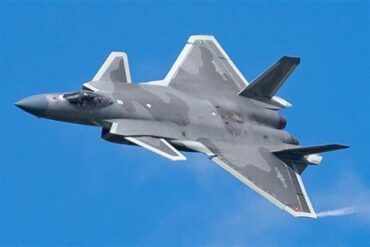
China’s rapid advancements in stealth fighter technology have placed the J-20 Mighty Dragon and the J-35 Fighter at the forefront of global military aviation discussions. While both belong to the fifth-generation stealth fighter category, their designs, capabilities, and strategic purposes diverge significantly. One is tailored for air superiority and long-range interception, the other for carrier-based multirole maritime operations. Together, they represent the dual-edge of China’s aerial strategy for the next several decades.
Evolution of China’s Fifth-Generation Fighters
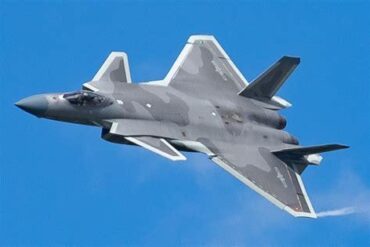
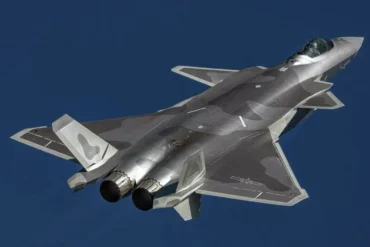
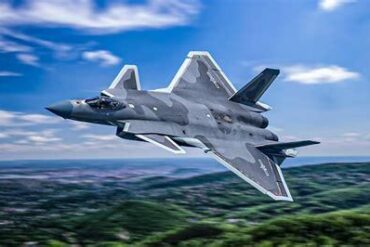
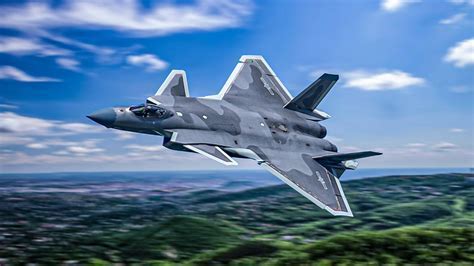
The Chengdu J-20 Mighty Dragon emerged from the J-XX program in the late 1990s, aiming to counter U.S. air dominance in the Asia-Pacific. First flown in January 2011 and entering service in 2017, the J-20 reflects China’s leap from reverse-engineering Soviet designs to producing a world-class stealth fighter capable of challenging the F-22 Raptor.
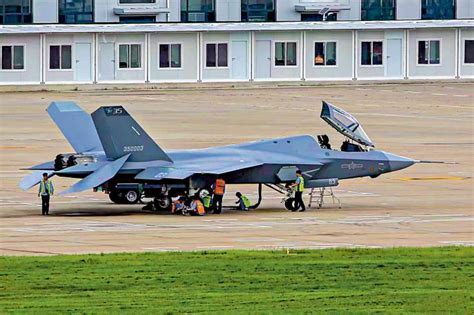
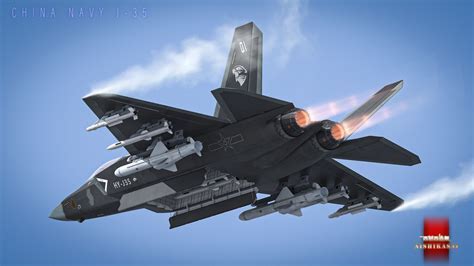
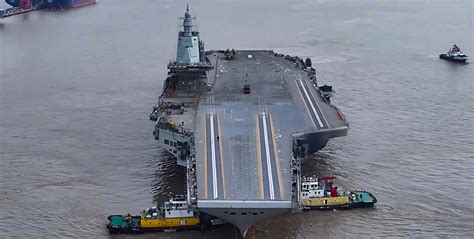
The Shenyang J-35, initially known as the FC-31 Gyrfalcon, took a different path. First flown in 2012, it began as a private export-oriented project before being reconfigured as a carrier-capable stealth fighter. The naval prototype’s first flight in 2021 marked China’s entry into stealth naval aviation, designed to operate from carriers like the Type 003 Fujian.
Design Philosophy and Airframe Differences
J-20 Mighty Dragon
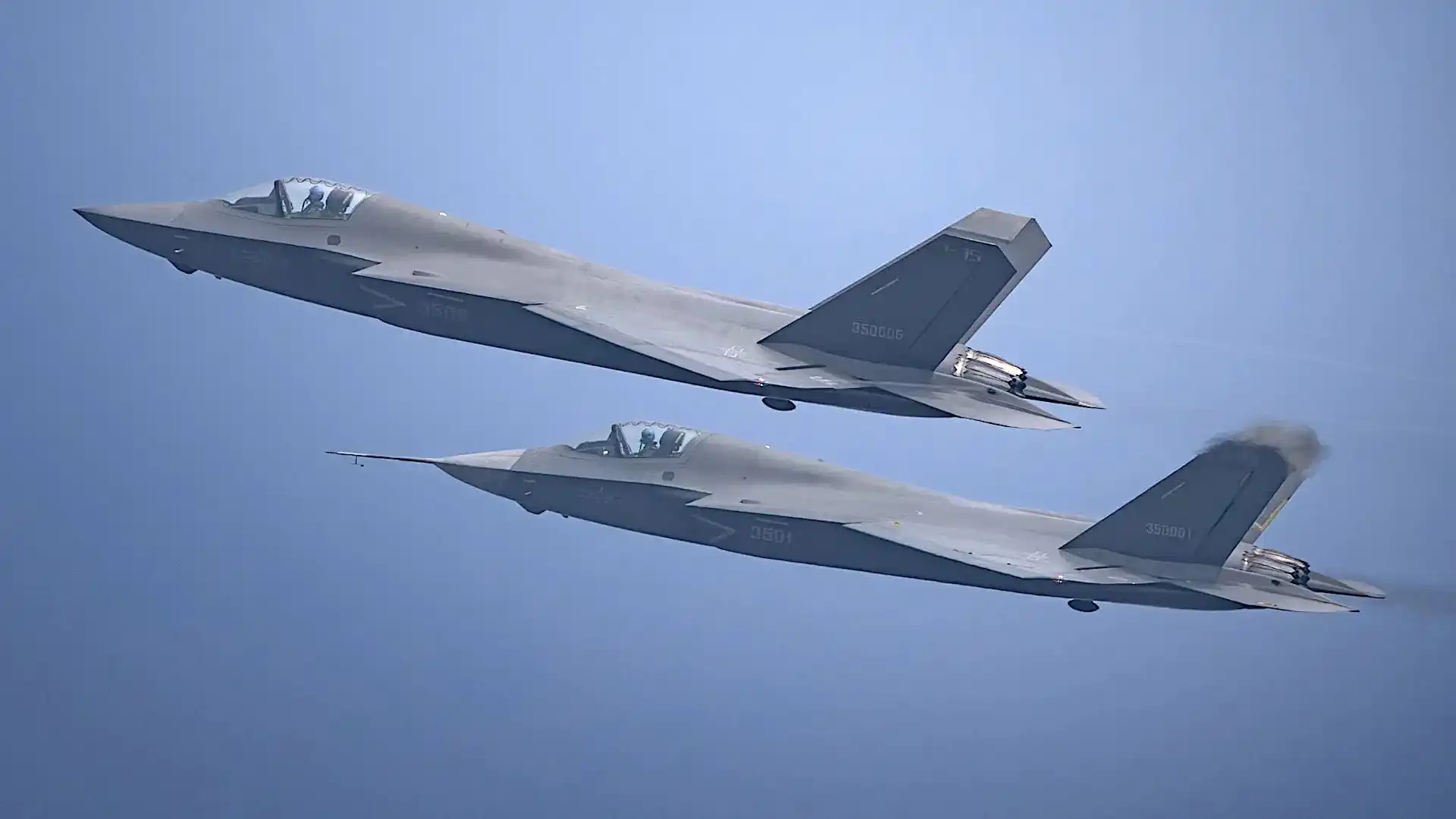
The J-20 is a large, twin-engine, canard-delta wing aircraft measuring about 20.3 meters in length with a 13-meter wingspan. Its canards improve agility without compromising stealth when paired with diverterless supersonic inlets (DSI). A larger fuselage allows for increased internal fuel storage, giving the J-20 a longer combat radius—essential for deep penetration strikes and high-altitude interception.
J-35 Fighter
The J-35 takes inspiration from the F-35 Lightning II with its sleeker, compact stealth design and folding wings for carrier storage. Measuring 17 meters in length with an 11.5-meter wingspan, it features reinforced landing gear for arrested carrier landings. Its smaller profile optimizes it for deck operations while still maintaining a low radar cross-section.
Stealth Characteristics
Stealth is central to both aircraft but tailored to mission profiles. The J-20 has an estimated radar cross-section (RCS) of 0.05–0.1 m², optimized for frontal aspect stealth. Radar-absorbent materials and infrared suppression reduce detectability in beyond-visual-range (BVR) combat.
The J-35 potentially achieves a smaller RCS of about 0.05 m², thanks to its compact fuselage and improved shaping. Its materials are optimized for maritime corrosion resistance while preserving stealth against shipborne radars.
Avionics and Sensor Suites
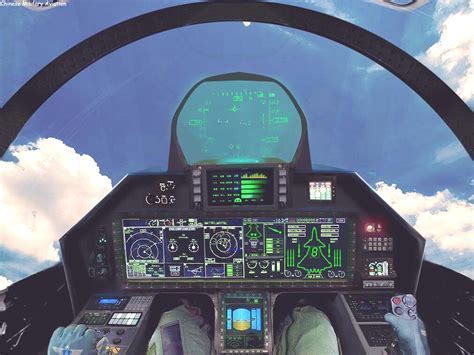
The J-20 mounts the Type 1475 AESA radar, electro-optical targeting systems, passive infrared search and track (IRST), and secure datalinks for network-centric warfare. It has partial sensor fusion capabilities, but not at the integration level of the F-35.
The J-35, designed for naval warfare, is expected to carry a carrier-optimized AESA radar, helmet-mounted display systems (HMDS), and sensor fusion for multirole operations, including anti-ship and strike missions.
Engine Performance and Flight Characteristics
The J-20 initially relied on WS-10B engines but is transitioning to WS-15 turbofans with an estimated 18,000 kgf thrust each, enabling speeds over Mach 2 and potential supercruise. A combat radius of 2,000 km allows deep operations without refueling.
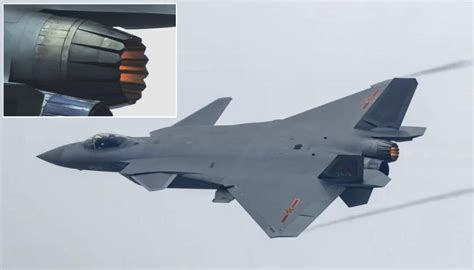
The J-35 is likely powered by upgraded WS-13E or future WS-19 engines producing around 13,000–14,000 kgf thrust each, allowing speeds up to Mach 1.8 and a combat radius between 1,200–1,500 km. Supercruise remains unverified.
Weapons and Payload
Both fighters carry weapons internally to maintain stealth but can use external hardpoints when stealth is not critical.
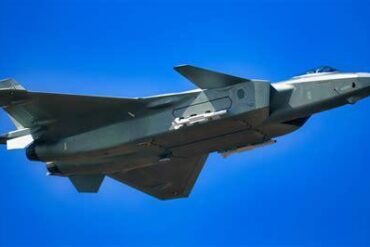
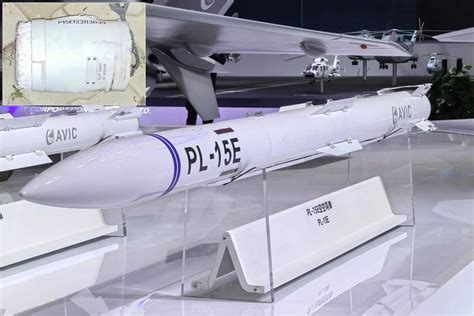
- J-20: Central bay for PL-15 long-range AAMs, side bays for PL-10 short-range missiles, plus PGMs for strike missions.
- J-35: Two main internal bays, compatible with PL-series AAMs, anti-ship missiles, and precision-guided munitions, optimized for maritime strike.
Operational Roles and Strategic Impact
The J-20 is an air superiority and interception platform, operating from mainland bases for A2/AD (Anti-Access/Area Denial) missions. It is the PLAAF’s spearhead against hostile air incursions.
The J-35 strengthens PLANAF’s carrier strike capability, enabling blue-water naval aviation. From fleet defense to sea-based power projection, it extends China’s reach into contested waters.
Comparative Data Table
| Specification | J-20 Mighty Dragon | J-35 Fighter |
|---|---|---|
| Role | Air superiority, interception | Carrier-based multirole |
| Developer | Chengdu Aerospace Corp | Shenyang Aircraft Corp |
| First Flight | 2011 | 2012 (naval: 2021) |
| Length | 20.3 m | 17 m |
| Wingspan | 13 m | 11.5 m |
| Engines | WS-15 (18,000 kgf) | WS-19 (\~14,000 kgf) |
| Max Speed | Mach 2+ | Mach 1.8 |
| Combat Radius | ~2,000 km | ~1,200–1,500 km |
| Radar Cross-Section | 0.05–0.1 m² | ~0.05 m² |
| Internal Weapon Bays | 1 central, 2 side | 2 main bays |
| Entry to Service | 2017 | Expected mid-2020s |
Future Outlook
The J-20 will continue evolving with thrust vectoring, AI-assisted two-seat variants, and improved WS-15 engines. The J-35 will be refined through carrier qualifications, increasing China’s maritime stealth strike options. Together, they create a dual-domain dominance—the J-20 owning the skies inland, the J-35 ruling the seas.
FAQ
1. Why does China need both the J-20 and the J-35?
The J-20 provides long-range, high-performance air superiority for mainland defense and deterrence, while the J-35 ensures carrier-based maritime strike capabilities. They fulfill distinct operational niches.
2. Is the J-35 superior to the U.S. F-35?
While the J-35 mirrors some F-35 design aspects, the U.S. fighter has more mature sensor fusion and operational experience. However, the J-35 may excel in certain maritime stealth strike roles.
3. Can the J-20 match the F-22 in combat?
The J-20 rivals the F-22 in speed, range, and stealth profile but may lag in avionics integration. Its larger airframe and fuel capacity make it more suited for long-range interception.