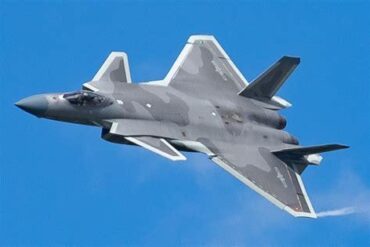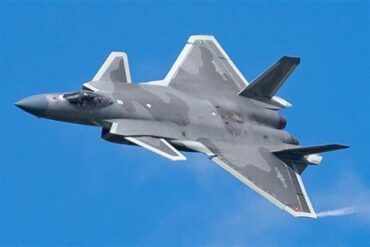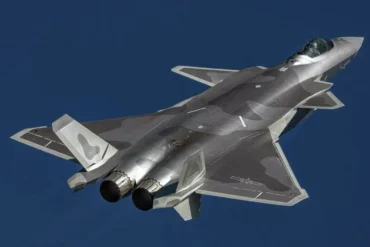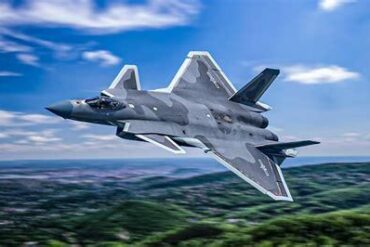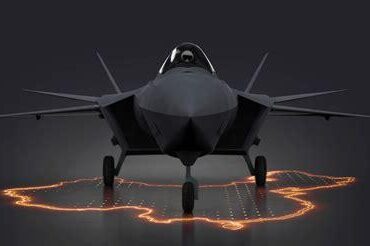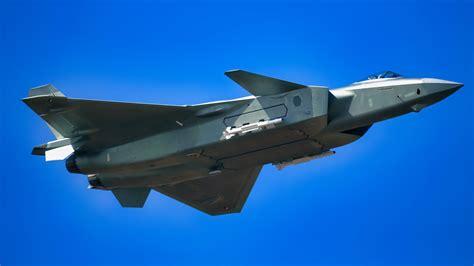
China’s J-20 Mighty Dragon represents one of the most ambitious military aviation projects ever undertaken by the People’s Republic of China. As Beijing races to match the air dominance of the United States and its allies, the J-20 has emerged as the crown jewel of the People’s Liberation Army Air Force (PLAAF). Yet beneath its sleek stealth design and formidable long-range capabilities lies a vulnerability that no coating of radar-absorbing material can hide: lack of real combat experience.
Unveiled to the public at the 2016 China International Aviation & Aerospace Exhibition and entering operational service in 2017, the J-20 is a fifth-generation stealth fighter that draws global attention not only for what it includes—but for what it doesn’t.
The Origins of the J-20: A Decades-Long Dream Realized
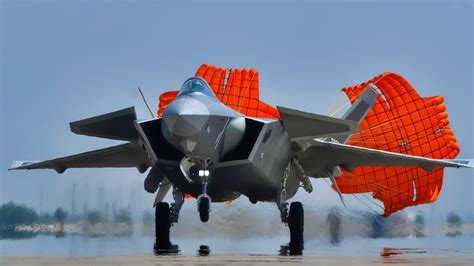
The J-20’s roots trace back to the J-XX program of the 1990s, born out of China’s recognition that air dominance would be pivotal in any future regional conflict. Built by Chengdu Aircraft Industry Group, the jet made its maiden flight on January 11, 2011, signaling China’s entry into the exclusive club of nations with stealth aircraft capability.
By 2017, the aircraft had achieved operational status, quickly becoming a centerpiece in China’s modern air doctrine. Today, estimates suggest that more than 300 J-20 airframes have been produced, a number reflecting both urgency and ambition.
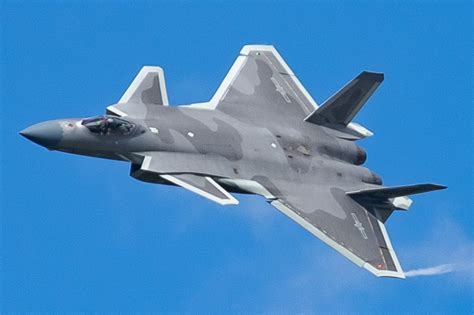
Two major variants—the J-20A, featuring aerodynamic and radar signature improvements, and the twin-seat J-20S—demonstrate the program’s adaptability and evolution.
Breaking Down the Beast: Key Specs of the J-20
While the J-20 Mighty Dragon is often compared with the American F-22 Raptor and F-35 Lightning II, it holds a unique position with distinctive technical characteristics:
- Crew: 1 (or 2 for twin-seat version)
- Length: 69 ft 7 in
- Wingspan: 42 ft 8 in
- Height: 15 ft 5 in
- Max Takeoff Weight: 81,571 lbs
- Engines: 2 × Shenyang WS-10C afterburning turbofans
- Max Speed: Mach 2.0
- Combat Range: 1,200 miles
- Service Ceiling: 52,000 feet
- Rate of Climb: 59,800 ft/min
In terms of weaponry, the J-20 is no slouch. Armed with:
- 2 short-range PL-10 air-to-air missiles, placed in side weapon bays
- 6 to 8 medium-range PL-12 or PL-15 missiles, stored in a central internal bay
This suite supports its role as a beyond-visual-range (BVR) specialist, optimized to neutralize threats long before visual contact.
The Missing Piece: No Internal Gun System
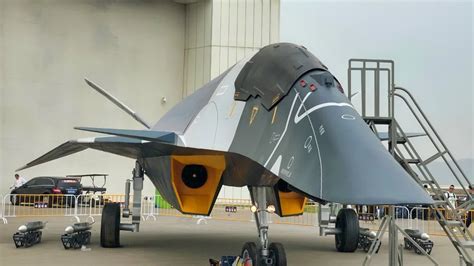
Despite its cutting-edge radar signature and powerful air-to-air missile array, the J-20 lacks a built-in cannon—a decision that sets it apart from all other operational fifth-generation stealth fighters, including the F-22, F-35, and Su-57.
China’s decision to forgo a gun reflects a deliberate doctrinal choice: focus on long-range missile engagements, not close-quarters dogfighting. The theory goes that in the age of high-speed, networked warfare, traditional dogfights are outdated.
However, history suggests otherwise. The only supersonic gun kill ever recorded was in 1972, when an American F-4E Phantom II used its M61 Vulcan cannon to down a North Vietnamese MiG-19. More recently, gun systems have played a vital role in intercepting unmanned threats. In December 2024, a Ukrainian F-16 used its cannon to destroy two Russian cruise missiles, reinforcing that aircraft guns still have a role in modern warfare.
The lack of an internal gun also restricts the J-20 from performing close air support missions or engaging in strafing runs against ground targets—a limitation that could prove critical in a multifaceted combat theater.
No Blood in the Water: The Combat Experience Gap
Yet, even more consequential than the absence of a gun is the J-20’s complete lack of real-world combat experience. The aircraft has never been tested in a live-fire warzone, nor has China faced a major conflict since its brief 1979 war with Vietnam.
Compare this to the battle-proven nature of U.S. platforms like the F-35, which has seen action in Syria, Iraq, and multiple Middle Eastern theaters. Even Russia’s troubled Su-57 has reportedly flown missions during the war in Ukraine, albeit under highly controlled conditions.
Though the J-20 has conducted numerous sorties in the Taiwan Strait, including a notable show-of-force mission on October 14, 2024, it remains untested in the crucible of actual war.
A Glimpse at an Encounter: J-20 Meets the F-35
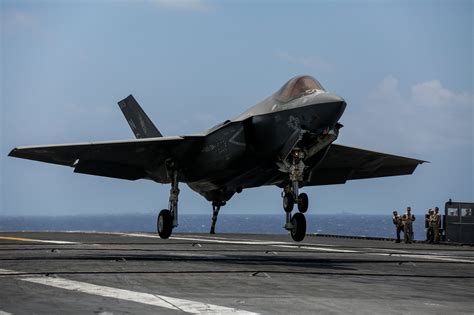
One of the few known close encounters between the J-20 and American stealth fighters occurred over the East China Sea in 2022. General Kenneth Wilsbach, Commander of the U.S. Pacific Air Forces, confirmed that F-35s had come into proximity with J-20s, but stopped short of labeling the interaction a confrontation.
According to Gen. Wilsbach, the U.S. was “relatively impressed with the command and control associated with the J-20.” This suggests that China’s systems integration and pilot coordination are improving, but observation under peacetime rules of engagement can never substitute for real combat validation.
Doctrine vs. Practicality: Is the PLAAF Betting Too Much on Tech?
By emphasizing missile-centric engagements and avoiding close combat, China is betting on a high-tech, sanitized battlefield where machines win over manned instincts. But real-world conflicts rarely cooperate with theory.
Wars often descend into the unpredictable. Pilots might be forced into short-range engagements, operate under compromised electronic warfare conditions, or face dispersed guerrilla forces requiring close air support. In such chaos, the J-20’s lack of gun and combat exposure could become catastrophic vulnerabilities.
Furthermore, if China were to engage in a conflict against a peer adversary like the United States or a coalition involving Japan, Australia, or India, the J-20 would be entering combat against aircraft with superior combat experience, proven sensors, and veteran pilots.
Geopolitical Implications: The J-20 as a Tool of Projection
Despite its shortcomings, the J-20 remains a potent symbol of Chinese military modernization. Beijing uses the fighter in highly publicized sorties around Taiwan, South China Sea, and near Japanese airspace, hoping to reinforce its claim as a peer to American air power.
These displays are not just about strategic intimidation—they’re also psychological. By showing off its stealth assets, China aims to deter potential adversaries and reassure domestic audiences of its technological prowess.
Yet all the posturing in the world cannot change the one fact that undermines it all: no combat-tested track record. Until the J-20 fires a missile in anger, takes damage, adapts mid-battle, and brings its pilot home, its prowess remains theoretical.
Final Thoughts: A Dragon in the Shadows, Not Yet in Fire
The J-20 Mighty Dragon is a technological marvel and a milestone in Chinese aerospace achievement. It has narrowed the gap in stealth capabilities, asserted Beijing’s role as a military innovator, and introduced a new player in the fifth-generation arms race.
Yet the absence of an internal cannon and more crucially, real combat experience, casts a long shadow over its glowing reputation. These weaknesses could limit the aircraft’s utility in high-intensity scenarios where unpredictability reigns supreme.
China may indeed field a numerically superior stealth fleet in the coming decade. But unless those jets are tested, refined through combat, and supported by seasoned tactics, they will remain—as of now—untested dragons, lurking in the skies with impressive teeth, but no confirmed bite.