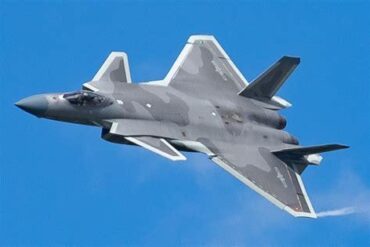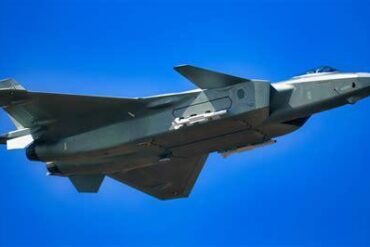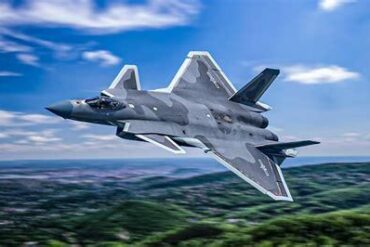
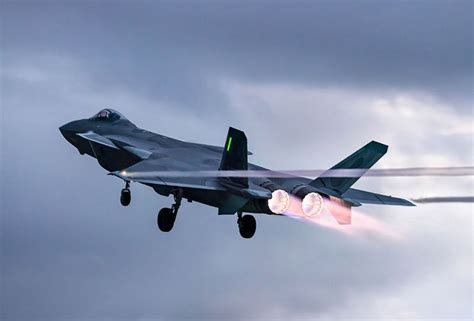
Fifteen years after its first flight, China’s J-20 “Mighty Dragon” has moved from a controversial prototype to the centerpiece of Beijing’s airpower ambitions. On January 11, 2011, when the angular stealth fighter lifted off for the first time from a Chengdu runway, skepticism dominated global defense circles. Analysts questioned China’s ability to master stealth shaping, advanced avionics, and—most critically—high-performance jet engines. Today, the J-20 stands as a mature fifth-generation platform, fielded in large numbers, powered by indigenous engines, and routinely deployed at the sharp edge of China’s most sensitive military theaters.
The anniversary is more than symbolic. It reflects the speed at which China’s aerospace ecosystem has evolved, compressing what took decades for other powers into little more than a decade and a half. The J-20 is not merely a technological achievement; it is a strategic signal, designed from inception to confront the United States’ premier air dominance fighters, the F-22 Raptor and the F-35 Lightning II, across the vast expanses of the Indo-Pacific.
From its earliest design cues, the J-20 was conceived as an air superiority fighter with multirole flexibility. Its large internal weapon bays, stealth-optimized airframe, advanced sensor fusion, and growing emphasis on network-centric warfare underscore a doctrine focused on controlling airspace, denying adversary access, and shaping battles long before enemy aircraft realize they are being tracked. In Chinese state media narratives, the aircraft symbolizes a historic leap—one that has redefined perceptions of what China’s aviation industry can deliver.
Origins of a Stealth Ambition: From J-XX to Mighty Dragon
The roots of the J-20 program stretch back to the late 1990s, when China launched the classified J-XX initiative. At the time, the United States was already fielding the F-22, and the lessons of modern air warfare—from the Gulf War to the Balkans—had made stealth and information dominance non-negotiable elements of air power. For Beijing, the objective was clear: leapfrog incremental upgrades and develop a true fifth-generation fighter capable of contesting advanced adversaries.
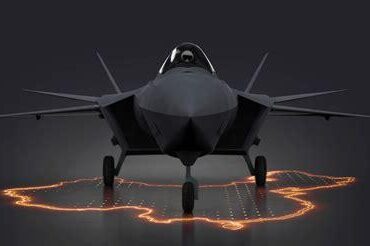
In 2008, after years of conceptual studies and internal competition, the People’s Liberation Army Air Force selected Chengdu Aircraft Corporation’s design. The choice reflected a balance between ambition and manufacturability. The resulting aircraft featured a distinctive canard-delta configuration, diverterless supersonic inlets, and a fuselage optimized for both stealth and internal fuel capacity. When the J-20 first flew in 2011, its timing—coinciding with a visit by U.S. Defense Secretary Robert Gates to Beijing—was widely interpreted as a calculated demonstration of intent.
What followed was a rapid prototyping phase. Multiple airframes tested variations in inlet design, sensor placement, and stealth coatings. Low-altitude handling, high-speed performance, and weapons bay integration were refined in parallel. By the time the J-20 made its public debut at the Zhuhai Air Show in 2016, it was clear that China was moving far faster than many had anticipated.
Accelerated Maturity and Entry into Service
One of the most striking aspects of the J-20 story is the speed at which it transitioned from first flight to operational service. The aircraft was formally inducted into the PLAAF in March 2017, just six years after its maiden flight. For a nation fielding its first stealth fighter, this timeline was extraordinary. It contrasted sharply with the prolonged development cycles experienced by earlier fifth-generation programs elsewhere.
This acceleration was not without trade-offs. Early production aircraft relied on Russian-supplied Saturn AL-31 engines, a pragmatic stopgap that allowed China to field the platform while continuing to mature its own propulsion technology. These engines provided adequate thrust but limited the J-20’s full stealth potential and supercruise ambitions. Even so, the decision enabled pilots, maintainers, and tacticians to begin integrating the aircraft into operational doctrine, shortening the learning curve.
Operational deployment quickly followed. The J-20 was assigned to elite PLAAF units, tasked with air superiority missions and high-value interception roles. Its presence at major national events reinforced its status as a symbol of technological confidence, while behind the scenes, iterative upgrades continued at a relentless pace.
Breaking Free from Foreign Engines: The WS-10C Milestone
Propulsion has long been the Achilles’ heel of China’s military aviation. For decades, reliance on foreign engines constrained performance, sustainment, and strategic autonomy. The J-20 program became the proving ground for breaking this dependency.
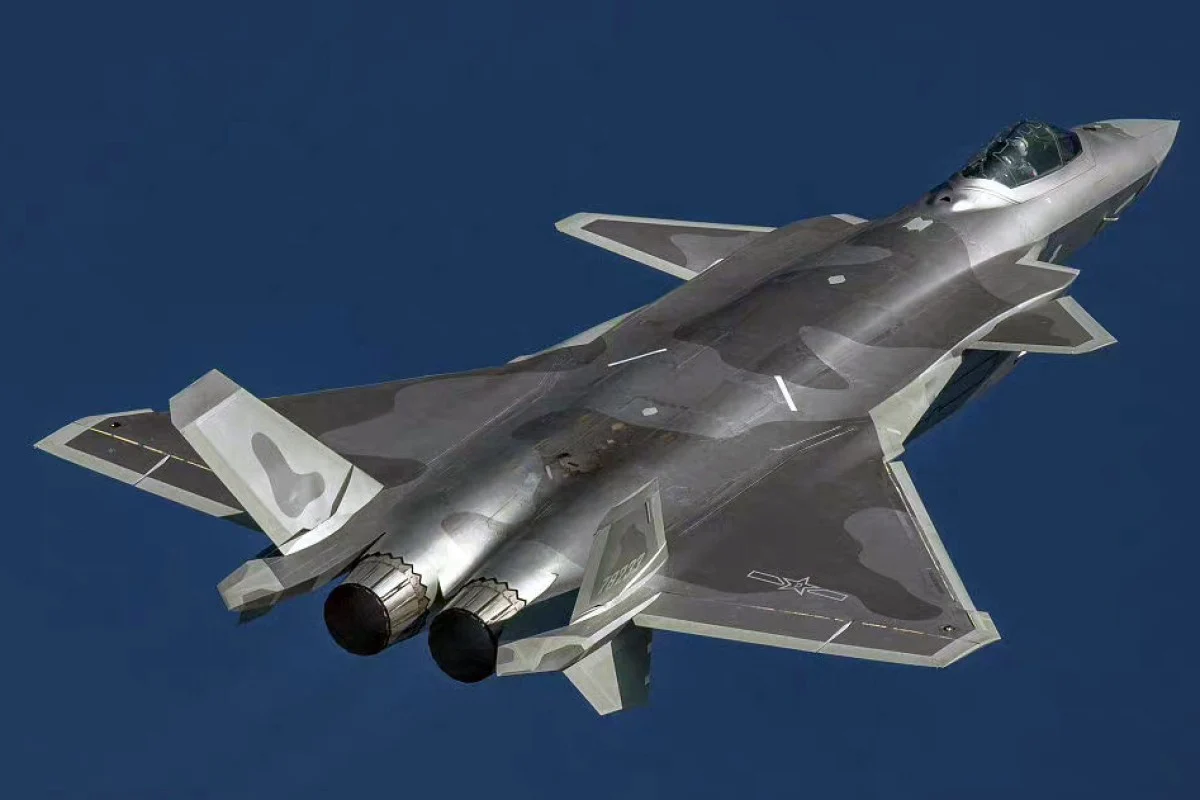
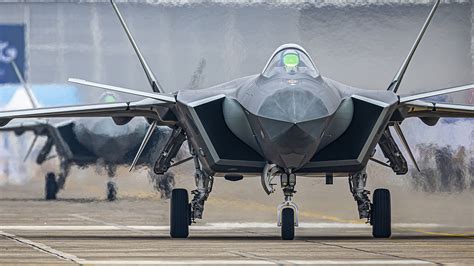
The transition to the indigenous Shenyang WS-10 series marked a turning point. The WS-10C variant, introduced between 2019 and 2021, brought more than just incremental improvements. Its serrated exhaust nozzles reduced radar and infrared signatures, directly enhancing the aircraft’s stealth profile. With thrust in the 14- to 15-ton class, the engine enabled limited supercruise capability, a critical requirement for modern air dominance missions.
While the ultimate goal remained the more powerful WS-15, the widespread adoption of the WS-10C across operational J-20 units signaled that China had crossed a threshold. The fighter was no longer constrained by interim solutions. It was evolving as a fully indigenous system, with propulsion technology increasingly aligned with its ambitious design philosophy.
Operational Signaling at the Indian Border
The J-20’s first high-profile operational deployment near an active flashpoint came during the 2020 standoff along the Line of Actual Control with India. Stationed at Hotan airbase, within striking distance of Ladakh, the presence of fifth-generation stealth fighters sent a clear message. This was not merely about air defense; it was about strategic signaling.
Former Indian Air Force chief Air Chief Marshal RKS Bhadauria later revealed that China deployed J-20s in ratios designed to counter India’s newly inducted Rafale fighters. As India’s Rafale numbers increased, so did the J-20 presence, reflecting a deliberate effort to assert air dominance in a high-altitude, contested environment. The deployment underscored how Beijing viewed the J-20 not just as a deterrent against peer adversaries, but as a tool for regional power projection.
Grey Zone Pressure and the Taiwan Theater
If the Himalayan deployment showcased the J-20’s regional role, its operations around Taiwan highlighted its strategic utility in grey zone warfare. Following U.S. House Speaker Nancy Pelosi’s visit to Taiwan in August 2022, J-20s were among the assets used in large-scale PLA exercises simulating encirclement and coercive pressure.
In subsequent years, claims by Chinese pilots of flying near or over Taiwan without interception—though widely debated—served a psychological purpose. They fueled narratives of inevitability and questioned the effectiveness of Taiwan’s air defense network. Reports of J-20 activity during the “Justice Mission 2025” drills further reinforced the aircraft’s role as a spearhead platform, designed to operate in contested airspace while shaping the information environment.
Chasing Supercruise: The Arrival of the J-20A
Supercruise capability has long been a benchmark of elite air dominance fighters, epitomized by the F-22 Raptor. For the J-20, achieving sustained supersonic flight without afterburners has been both a technical challenge and a strategic imperative. The introduction of the WS-15 engine represents China’s most ambitious attempt to close this gap.
In September 2025, China unveiled the upgraded J-20A variant during the Victory Day Parade. Described by state media as a spearhead force for future air combat, the J-20A incorporates refinements aimed at optimizing supersonic performance. A raised section at the rear of the canopy reduces airflow separation and drag, directly benefiting high-speed flight. Enhanced avionics, a likely new AESA radar, and an upgraded electronic warfare suite point to a broader systems-level upgrade.
The sighting of the first production J-20A powered by serial-produced WS-15 engines on its maiden flight marked a watershed moment. While debates continue over how the WS-15 compares to the F-119 engine of the F-22, the trajectory is unmistakable. China is closing the propulsion gap that once defined the limits of its fighter programs.
Redefining Roles with the J-20S Twin-Seater
In September 2025, China surprised observers by unveiling the J-20S, the world’s first two-seat stealth fighter. This variant reflects an evolving understanding of modern air combat, where information management, electronic warfare, and command-and-control can be as decisive as raw kinematic performance.
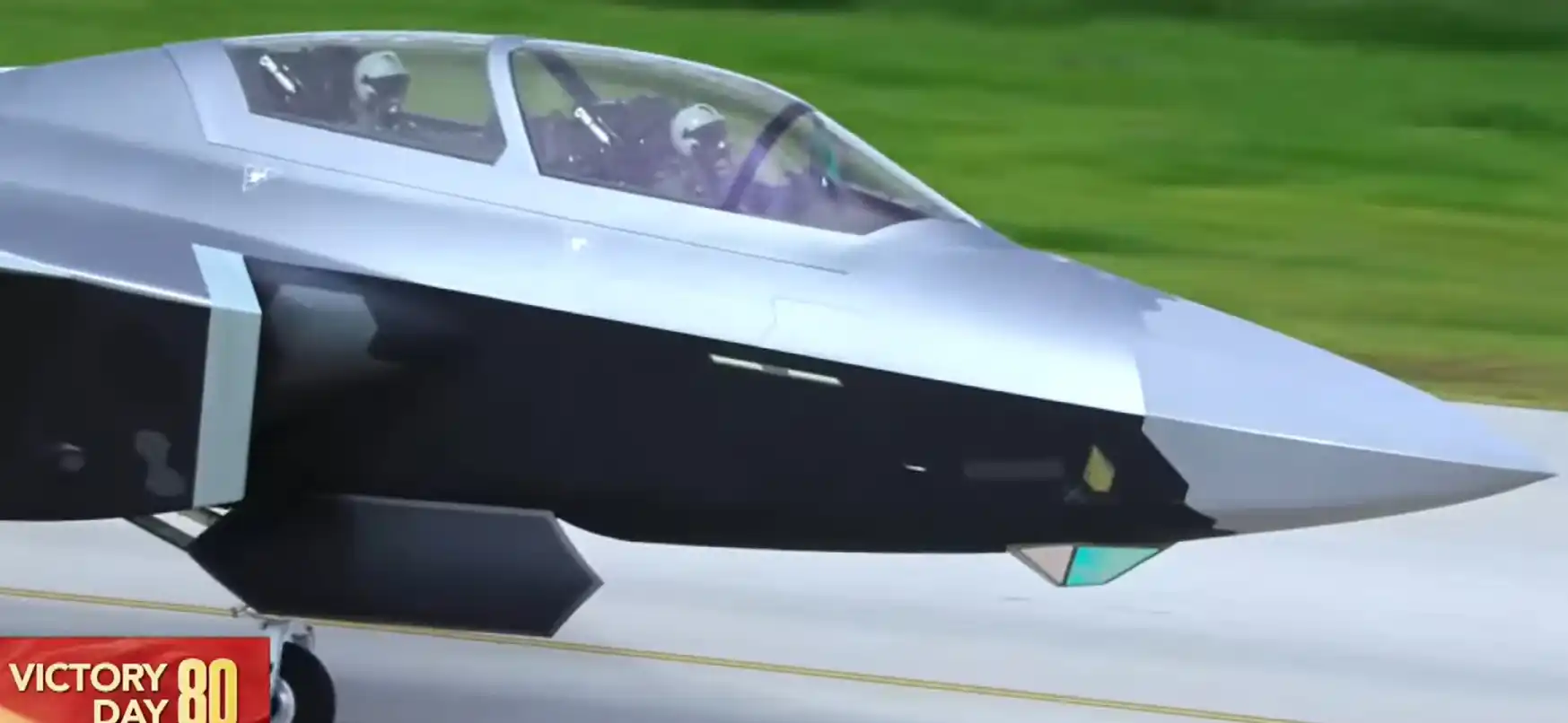
The J-20S is classified as a medium-to-long-range, heavy multirole stealth fighter, capable of precision strikes against land and maritime targets while retaining air superiority credentials. Analysts point to its advanced electro-optical system beneath the nose, providing 360-degree coverage akin to the F-35’s sensor suite. The presence of a second crew member opens new operational possibilities, from managing complex sensor fusion to coordinating unmanned assets and conducting electronic attack missions.
Rather than diluting the J-20’s core mission, the twin-seat configuration expands it, positioning the platform as a central node in future networked air operations.
Encounters with American Stealth Fighters
The ultimate measure of the J-20’s relevance lies in how it performs against its intended peers. Reports of encounters with U.S. stealth aircraft offer rare glimpses into this dynamic. In March 2022, General Kenneth Wilsbach, Commander of U.S. Pacific Air Forces, acknowledged a close interaction between F-35s and J-20s over the East China Sea. While careful in his wording, he noted being “relatively impressed” with the J-20’s command and control.
Subsequent claims by Chinese state media in 2025 of J-20s intercepting and expelling U.S. F-35A and F/A-18 aircraft remain unconfirmed by Washington. Yet the absence of public rebuttals has only fueled speculation. Whether these encounters involved tactical maneuvering, sensor shadowing, or electronic probing, they underscore a new reality: fifth-generation aircraft from rival powers are now routinely operating within proximity, testing doctrines and capabilities in real time.
Mass Production and Strategic Scale
Perhaps the most consequential aspect of the J-20 program is its scale. With more than 300 aircraft produced and annual output estimated at 100 to 120 units, China has built the world’s largest fleet of stealth fighters. New assembly lines at Chengdu Aircraft Corporation have enabled this surge, transforming what was once an experimental program into a cornerstone of national defense.
Pentagon projections suggesting that China could field up to 400 operational J-20s by the end of 2025 highlight the strategic implications. Unlike the F-22, whose production ceased years ago, the J-20 remains in active, expanding manufacture. This scale alters the balance of airpower in the Indo-Pacific, forcing adversaries to contend not just with technological parity, but with numerical weight.
A Fighter That Redefined China’s Aerospace Trajectory
At fifteen years old, the J-20 Mighty Dragon is no longer a question mark. It is a living program, continuously evolving, absorbing new technologies, and shaping doctrine. Designed to battle the F-22 and outmatch the F-35 in specific mission profiles, it reflects China’s determination to compete at the highest levels of military aviation.
More broadly, the J-20’s journey mirrors China’s ascent as a comprehensive aerospace power. From reliance on foreign engines to indigenous supercruise ambitions, from cautious deployments to assertive grey zone operations, the Mighty Dragon has grown alongside the strategic confidence of the nation that built it. As upgrades continue and variants proliferate, the J-20 is poised to remain a defining feature of global airpower debates for years to come.