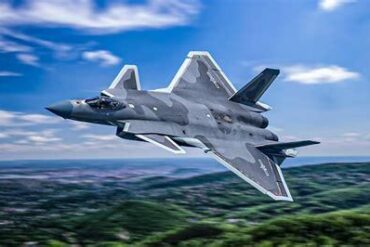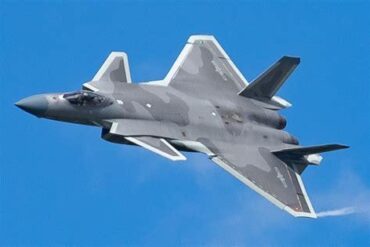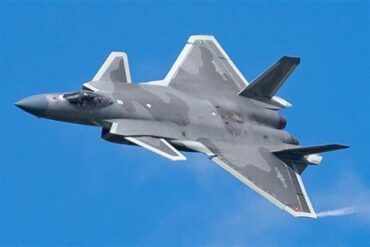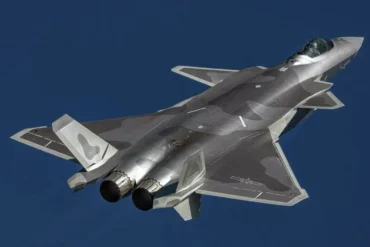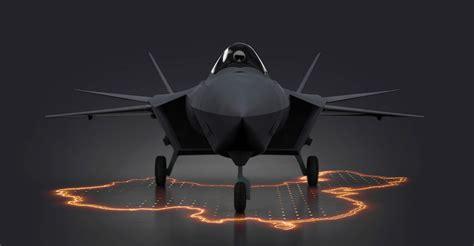
The Chengdu J-20 Mighty Dragon has emerged as the centerpiece of China’s ambitions to rival the world’s top-tier stealth fighters. Since its debut flight in 2011 and its induction into the People’s Liberation Army Air Force (PLAAF) in 2017, the J-20 has rapidly evolved from a mere prototype into an operational backbone of Beijing’s modern aerial warfare doctrine. But how many J-20 jets does China truly possess as of mid-2025? The answer reveals a stunning acceleration in production and deployment, one that underscores China’s intent to close the technological and numerical gap with the United States and its allies.
The Fog Around China’s Numbers: Estimating the J-20 Fleet
Publicly available data on Chinese military assets remains sparse and often deliberately opaque. However, a combination of military intelligence assessments, open-source imagery, and defense analysis firms like Janes provide a more solid foundation than ever before. As of 2022, the J-20 fleet was estimated at a modest 40 aircraft. That picture changed drastically in the years that followed.
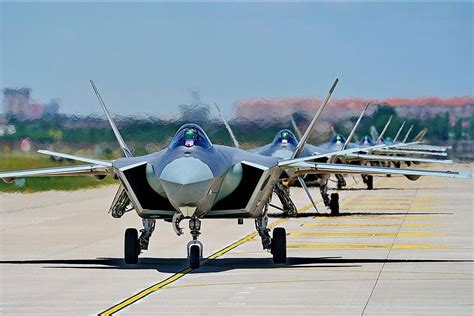
By 2024, the PLAAF was reported to have an estimated 195 J-20s distributed across 12 air brigades, with three brigades dedicated exclusively to the J-20 platform. This structural integration into front-line combat units reflects not only volume growth but also strategic adoption across different Chinese theaters of operation.
Rapid Acceleration: Satellite Evidence and Monthly Output
Satellite surveillance and military base activity between July 2023 and May 2024 revealed a sharp uptick in J-20 production. More than 70 new aircraft were identified during that window alone, averaging a production rate of 6.5 jets per month. If that pace held steady—and all indications suggest it has—China would now field over 270 J-20s as of mid-2025.
This growth trajectory is nothing short of staggering. Between 2022 and 2025, the number of J-20s more than sextupled, transforming it from a symbol of technological aspiration into a numerical juggernaut. This aligns closely with the broader strategic priorities of the People’s Republic of China (PRC), which increasingly views air dominance as a vital pillar of its military modernization efforts.
Anatomy of the Mighty Dragon: Size, Stealth, and Firepower
The J-20’s physical dimensions immediately set it apart. With a 67-foot length, 44-foot wingspan, and a maximum take-off weight (MTOW) of 81,660 pounds, the aircraft dwarfs its contemporaries in several respects. For context, the F-35A Lightning II, widely fielded by the U.S. and its allies, measures just 51 feet long with a 35-foot wingspan and an MTOW of approximately 70,000 pounds.
Originally powered by Russian AL-31FM2 engines derived from the Sukhoi Su-27, early J-20 variants relied heavily on imported propulsion systems. But recent iterations have shifted toward Chinese-designed WS-10B engines, and there are ongoing tests of the WS-15, a next-generation engine expected to deliver supercruise capabilities and improved stealth characteristics. The current J-20 variants using WS-10B engines are capable of reaching speeds up to Mach 2.
Armament and Combat Roles: Designed for Dominance
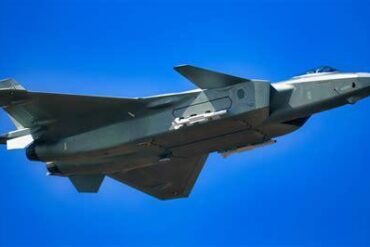
The J-20 is not just a stealth platform—it is a long-range precision strike and air superiority fighter. Its internal bays can house a formidable array of weapons, including:
- PL-15 beyond-visual-range air-to-air missiles (BVR AAMs)
- PL-21 ultra-long-range missiles reportedly capable of reaching AWACS or tanker aircraft
- LS-6 precision-guided bombs for ground attack missions
This arsenal allows the J-20 to engage adversaries across a spectrum of mission profiles, from air superiority and anti-access/area denial (A2/AD) enforcement to limited strike operations. The internal weapons bays also preserve the jet’s low observable (LO) radar cross-section, crucial for remaining undetected deep within contested airspace.
The Two-Seat Variant: J-20S and Future Capabilities
One of the most intriguing developments in the J-20 program is the emergence of the J-20S, a two-seat variant unveiled in November 2024. This configuration is highly unusual among stealth fighters, none of which in the West currently offer a two-seat version. The J-20S suggests future adaptability for:
- Manned-Unmanned Teaming (MUM-T) with loyal wingman drones
- Electronic warfare (EW) or mission command roles
- Tactical coordination and pilot workload reduction in complex operations
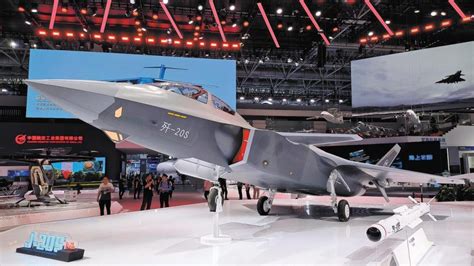
Though still in testing phases, the J-20S could signal a new multi-role doctrine within the PLAAF that fuses next-gen air combat with human-machine teaming. The two-seat configuration also allows enhanced training and mission flexibility, paving the way for broader use of the jet beyond traditional air superiority roles.
Industrial Capability: Chengdu’s Mass Production Edge
The driving force behind the J-20’s proliferation is the Chengdu Aircraft Industry Group, a key player within the Aviation Industry Corporation of China (AVIC) conglomerate. With modernized assembly lines, advanced composite fabrication capabilities, and heavy state backing, Chengdu has scaled up production at a pace that rivals even the Lockheed Martin F-35 program.
What’s particularly telling is the geographical spread and activity of PLAAF units. Brigades operating J-20s are increasingly deployed across Eastern and Southern Theater Commands, highlighting their relevance not only for defense but also for power projection over the East China Sea, South China Sea, and the Taiwan Strait.
Strategic Implications: Challenging U.S. Air Dominance
The quantitative rise of the J-20 alters the balance of power in the Indo-Pacific region. For years, American fifth-gen fighters such as the F-22 Raptor and F-35 enjoyed uncontested supremacy. With China now fielding a fifth-generation fleet potentially exceeding 270 aircraft, this monopoly is rapidly eroding.
While the U.S. Air Force still leads in aggregate fifth-gen strength, China’s J-20 fleet is notable not just for its size but for its concentrated regional focus. U.S. assets are globally dispersed, while the J-20 is deployed entirely within China’s borders or adjacent theaters, allowing rapid massing of airpower in any regional crisis.
Looking Ahead: The Road to 300 and Beyond
At the current production pace of 6–7 aircraft per month, the 300-jet milestone is likely to be reached before the end of 2025. Beyond this threshold, China could seek to diversify its J-20 fleet further through:
- Carrier-based variants, although the J-20’s size presents challenges
- Dedicated electronic warfare versions, building on J-16D experience
- Export or joint-venture models for friendly nations, although unlikely in the near term
China’s J-20 program reflects more than just numerical strength—it embodies an industrial awakening, an operational transformation, and a strategic reorientation. While questions remain about the J-20’s true stealth characteristics and combat-tested performance, its growing footprint within the PLAAF is undeniable.
Conclusion: A Stealth Revolution Taking Shape
The Chengdu J-20 Mighty Dragon is no longer a technological experiment—it is a mainstay, a statement of intent, and a symbol of China’s aerial ambition. From just 40 aircraft in 2022 to potentially over 270 by mid-2025, the J-20’s journey is one of extraordinary acceleration. With continued enhancements in propulsion, avionics, and multi-role flexibility, the J-20 is poised not just to match, but in some aspects redefine fifth-generation airpower—especially within the fast-changing strategic calculus of the Asia-Pacific.
As Beijing solidifies its military presence, the world is watching the Mighty Dragon with growing urgency.