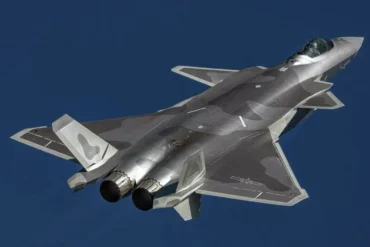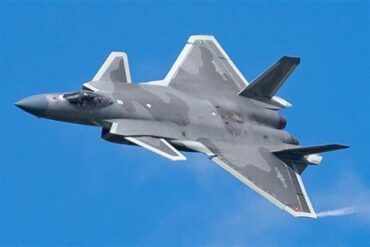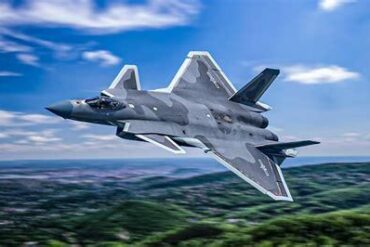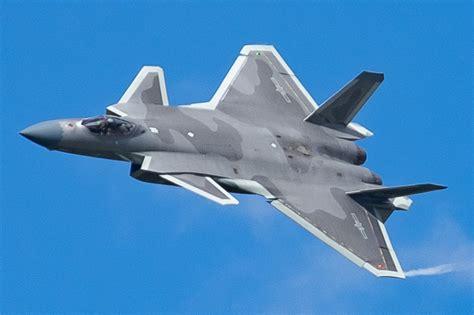
The Chengdu J-20 ‘Mighty Dragon’ is the crown jewel of China’s fifth-generation fighter program, a platform designed to rival America’s most advanced stealth aircraft. Engineered for air superiority, the J-20 combines stealth, long-range sensors, and precision-guided weaponry to pose a credible challenge to U.S. air dominance in the Indo-Pacific region and beyond. As the most widely produced fifth-generation stealth fighter behind the F-35, the J-20 symbolizes China’s bold aspirations to reshape the balance of power in aerial warfare.
Conceived as a counterweight to the F-22 Raptor, the J-20 has often drawn skepticism regarding its true stealth characteristics. However, what it may lack in extreme maneuverability or low-observable perfection, it attempts to offset with a sophisticated and increasingly lethal arsenal tailored for beyond-visual-range (BVR) engagements, short-range dogfighting, and limited strike roles.
Stealth by Design: Internal Bays and Signature Reduction
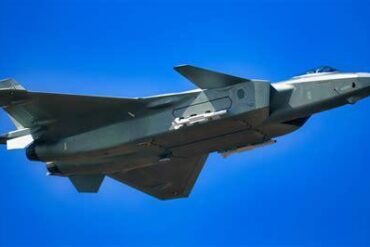
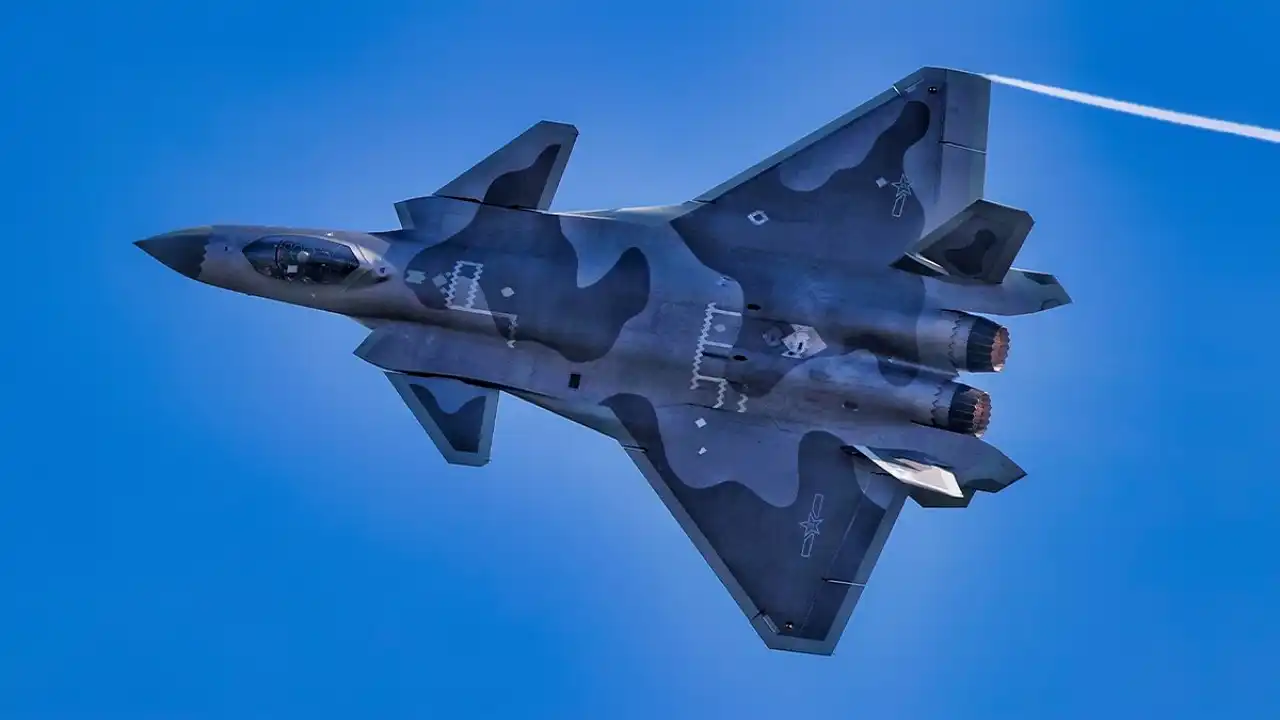
One of the defining features of the J-20 is its internal weapons carriage, crucial for maintaining low radar observability. The aircraft is equipped with three internal weapons bays: a large central bay located under the fuselage and two smaller side bays flanking the air intakes. These internal spaces are where the fighter stores its most crucial armament: the PL-15 and PL-10 missiles.
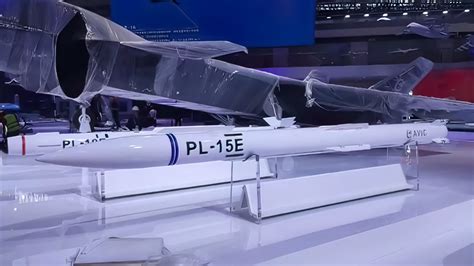
The central bay carries the long-range PL-15 air-to-air missiles—the backbone of the J-20’s air superiority capability. This missile, equipped with an Active Electronically Scanned Array (AESA) radar seeker, is designed to track and eliminate targets beyond 150 kilometers away, even under heavy jamming. It gives the J-20 a distinct advantage in BVR engagements, positioning it to strike high-value aerial targets like AWACS and aerial refueling tankers from far outside their engagement envelope.
Complementing the PL-15 is the PL-10, housed in the side bays. This infrared-guided short-range missile excels in close-in dogfights. Comparable to the U.S. AIM-9X and the European IRIS-T, the PL-10 is highly maneuverable and capable of engaging agile threats during high-G turning battles.
Multirole Capabilities: Ground Attack and Strike Versatility
Despite being optimized for air superiority, the J-20 is no one-trick pony. China has built secondary strike capabilities into the platform, giving it the flexibility to perform ground attack and suppression of enemy air defenses (SEAD). Precision-guided munitions like the LS-6 glide bombs and FT-series bombs can be carried internally or, when stealth is not a concern, externally.
There are indications that the J-20 may be compatible with anti-radiation missiles such as the CM-102, hinting at a potential SEAD role in future conflicts. While unconfirmed, reports also suggest that stealthy cruise missiles could be integrated into the airframe for deep penetration strikes. These additions would significantly increase the J-20’s threat profile.
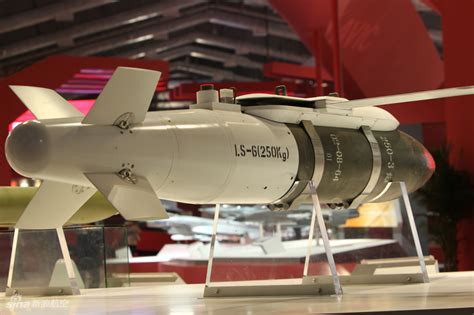
In non-stealth missions, the aircraft can utilize external hardpoints beneath its wings. These increase its maximum payload capacity to around 26,000 lbs, allowing the fighter to carry additional bombs, missiles, or fuel tanks. Though external stores compromise its radar signature, they make the J-20 more versatile in low-threat or long-range ferry operations.
Development Timeline: From Concept to Combat-Ready
The J-20’s development began in earnest during the early 2000s. It made its first public appearance in 2011 at the Zhuhai Airshow, surprising many in the West. By 2017, the aircraft had officially entered service with the People’s Liberation Army Air Force (PLAAF), marking a milestone in China’s aviation history.
The aircraft’s design is distinct and futuristic. Featuring a canard-delta wing configuration, twin-engine layout, and stealth-optimized airframe, the J-20’s structure reflects lessons learned from both indigenous design efforts and acquired foreign technologies. The angular fuselage, aligned surfaces, and radar-absorbent materials (RAM) reduce its radar cross-section, while shrouded engine nozzles help lower infrared emissions.
Sensor Suite and Avionics: Digital Dominance in the Sky
The J-20’s avionics suite is a critical enabler of its modern warfare capabilities. At its core is an AESA radar system, believed to be comparable to Western counterparts. It allows for multi-target tracking, high-resolution imaging, and superior resistance to electronic countermeasures.
Its Distributed Aperture System (DAS) offers 360-degree infrared coverage for missile detection and situational awareness. Supplementing this is an electro-optical targeting system (EOTS) under the nose that enables precision target tracking and passive engagement in high-threat environments.
The cockpit design incorporates a wide-angle Head-Up Display (HUD), multiple multifunction displays (MFDs), and voice command systems, indicating that the aircraft is meant to be flown with pilot-friendly data fusion at its core. Radar Warning Receivers (RWRs), digital jammers, and data links enable networked operations, making the J-20 not just a standalone fighter, but an integral piece in multi-domain operations.
The PL-15: J-20’s Sword Beyond the Horizon
The PL-15 missile is the centerpiece of the J-20’s arsenal. With a range exceeding 150 kilometers, and potentially up to 200 km in future iterations, the PL-15 is designed to out-reach U.S. air-to-air missiles like the AIM-120D AMRAAM. Its onboard AESA seeker and two-way data link ensure it can adjust course mid-flight for increased hit probability.
Western analysts have pointed out the missile’s emphasis on long-range engagements as a reflection of Chinese air doctrine, which seeks to eliminate threats before they can engage Chinese assets. By leveraging standoff distances and advanced sensors, the J-20 can act as a strategic platform, holding key assets at risk without direct exposure.
The F-22 and F-35: How Does the J-20 Compare?
When put side by side with the F-22 Raptor, the J-20 falls short in certain key areas, particularly thrust-to-weight ratio and supermaneuverability. The F-22 remains the gold standard for aerial dogfighting, largely due to its powerful engines, thrust vectoring, and ultra-low observability. However, the J-20 compensates with range, missile reach, and multirole capabilities that the F-22 lacks.
Compared to the F-35 Lightning II, the J-20 offers longer-range engagements and potentially greater speed, especially with upcoming engine upgrades. Yet the F-35 outshines it in sensor fusion, networked warfare, and versatility. The Lightning II is equally adept in air-to-air, air-to-ground, and intelligence-gathering roles.
Powerplant Evolution: From AL-31 to WS-15
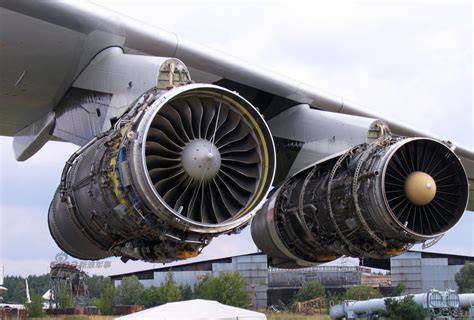
One of the biggest limitations of the early J-20 was its dependence on Russian AL-31 engines, which limited its supercruise capability and overall thrust. China is actively replacing these with the indigenous WS-10C, and in the near future, the WS-15—a powerful afterburning turbofan that promises thrust vectoring, lower emissions, and greater fuel efficiency.
The WS-15 is expected to elevate the J-20’s flight envelope significantly, bringing it closer to true fifth-generation performance standards.
Future Variants: Two-Seat J-20S and Expanded Roles
China is not resting on its laurels. A two-seat variant, the J-20S, has been spotted in testing. Analysts believe this version could serve multiple high-value roles, including drone command and control, electronic warfare, and mission coordination in network-centric battlespaces.
There are also signs that the radar system onboard the J-20 is undergoing incremental upgrades, potentially increasing its range and resilience to jamming. These evolutionary steps indicate that China views the J-20 as a long-term investment, not merely a symbolic competitor.
Conclusion: A Dragon That Breathes Fire at Range
The Chengdu J-20 ‘Mighty Dragon’ is no longer an experimental curiosity—it is a battle-ready platform with lethal capabilities. While it still lags behind the F-22 and F-35 in stealth and agility, its arsenal of advanced air-to-air missiles, emerging multirole options, and cutting-edge sensors make it a potent tool in China’s strategic kit. As more units roll off the production lines and critical upgrades take hold, the J-20 will continue to shape the future of aerial power projection in East Asia—and perhaps far beyond.