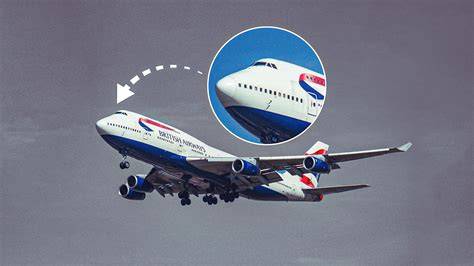
The Boeing 747 remains one of the most recognizable aircraft ever built. Its enormous wings, four engines, and distinctive raised forward section have made it a symbol of global aviation for more than half a century. However, one question continues to appear among aviation enthusiasts and casual travelers alike: was the Boeing 747’s famous hump created by accident?
The short answer is no. The hump was not the result of a styling experiment, an aerodynamic mistake, or a late decision to add luxury passenger space. Instead, the unusual shape came from a carefully calculated engineering solution that allowed Boeing to create an aircraft capable of carrying both passengers and massive cargo.
The raised upper deck was born from a combination of ambitious airline demands, uncertain predictions about the future of aviation, and Boeing’s desire to protect a massive investment. What appeared to be an unusual design choice became one of the most important engineering decisions in commercial aviation history.
The Boeing 747 Was Designed During Aviation’s Most Uncertain Era
When Boeing began developing the 747 during the mid-1960s, the future of commercial aviation looked very different from what we know today. Many industry leaders believed that supersonic passenger aircraft would soon dominate international travel. Aircraft such as the Concorde and Boeing’s own proposed 2707 Supersonic Transport (SST) project were expected to carry passengers across oceans at unprecedented speeds.
At the time, traditional subsonic aircraft appeared to have a limited future. Airlines and manufacturers feared that large conventional jets could become outdated within a decade.
This uncertainty created a major challenge for Boeing. Developing a new aircraft required billions of dollars in investment, but there was no guarantee that passengers would still prefer slower widebody jets once supersonic travel became widely available.
Boeing needed a solution that could survive multiple market conditions. The company could not simply build the largest passenger aircraft possible. It needed an aircraft that could remain valuable even if the passenger market changed.
The answer was not a bigger cabin. It was flexibility.
Under the leadership of chief engineer Joe Sutter, Boeing developed the 747 with a second purpose in mind: becoming a highly capable freight aircraft. The aircraft was designed to transport large industrial loads, including standardized shipping containers, if passenger demand eventually declined.
That cargo-first thinking directly created the aircraft’s famous hump.
The Raised Cockpit Was A Cargo Solution, Not A Luxury Feature
The most common misunderstanding about the Boeing 747’s upper deck is that Boeing simply wanted to create an unusual appearance or add a premium passenger lounge. While airlines later transformed the upper deck into one of the most exclusive spaces in commercial aviation, that was not the original reason for its existence.
The true purpose was much more practical.
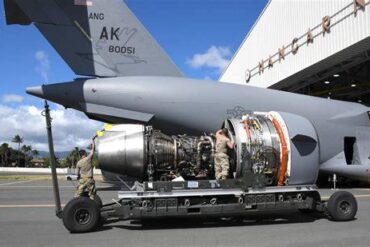
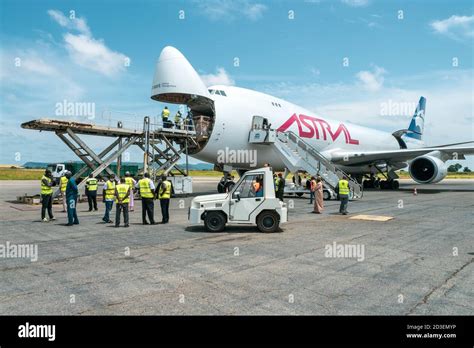
Boeing wanted the 747 to carry large freight containers through the front of the aircraft. Traditional aircraft designs placed the cockpit at the nose, which would make front-loading cargo extremely difficult. Every time the nose opened, critical flight control systems, wiring, and hydraulic components would have to be moved or disconnected.
This was not an acceptable solution for an aircraft intended to handle heavy cargo operations.
The engineering team instead moved the flight deck above the main fuselage. By placing the cockpit on an elevated level, Boeing could create a large upward-opening nose door while keeping the cargo area completely unobstructed.

This arrangement created a continuous cargo space extending from the aircraft’s front section toward the rear pressure bulkhead. The famous hump was therefore not a decorative addition. It was the structural consequence of moving the cockpit out of the way.
The design allowed cargo crews to load oversized freight directly into the aircraft without navigating around a cockpit structure.
How Cargo Containers Helped Shape The Queen Of The Skies
The Boeing 747’s development was closely connected to the rise of modern global logistics. During the 1960s, shipping industries were rapidly adopting standardized intermodal containers. These containers transformed ocean transportation, and Boeing recognized that aviation could benefit from similar efficiency.
The company designed the 747’s enormous fuselage around the dimensions of these standardized containers. The aircraft’s wide body, measuring more than 20 feet (6.1 meters) across, allowed it to carry two large containers side by side.
This was revolutionary.
Before widebody aircraft, airlines relied heavily on narrow-body jets such as the Boeing 707, which offered impressive speed and range but limited cargo volume. The 747 introduced an entirely new category of aircraft, combining passenger capacity with unprecedented freight capability.
Although Boeing ultimately lost the US Air Force’s Heavy Logistics System competition to the Lockheed C-5 Galaxy, the experience influenced the company’s approach to the 747. The high cockpit and front-loading concept developed during military studies became a perfect solution for a commercial aircraft.
The hump was therefore the result of military-inspired logistics thinking adapted for global passenger aviation.
Pan Am Wanted A Giant Aircraft, But Boeing Wanted A Flexible One
The launch customer, Pan American World Airways, played a crucial role in the creation of the Boeing 747. In 1966, Pan Am chairman Juan Trippe ordered 25 aircraft and demanded an airliner capable of carrying twice as many passengers as the Boeing 707.
Trippe originally imagined something closer to a full double-deck passenger aircraft. With airports becoming increasingly crowded, he believed a two-level cabin could maximize passenger capacity.
However, Joe Sutter disagreed.
A true double-deck passenger aircraft created significant engineering and regulatory challenges. Emergency evacuation rules, structural weight, and operational complexity made the concept risky. Sutter believed that Boeing needed an aircraft that could survive beyond the predicted supersonic era.
His argument was simple: if supersonic aircraft replaced long-range passenger jets, the 747 could transition into a freighter.
This decision proved remarkably accurate.
The supersonic revolution never developed as expected. The Concorde entered service but remained limited by high operating costs, environmental restrictions, and a small passenger market. Boeing’s 2707 SST program was canceled in 1971.
Meanwhile, the 747 continued evolving.
The decision to keep a raised cockpit and cargo-friendly architecture transformed the aircraft into one of aviation’s longest-lasting platforms.
The Hump Became A Passenger Advantage By Accident
Although the hump was not created for passengers, airlines quickly discovered that the extra space had enormous potential.
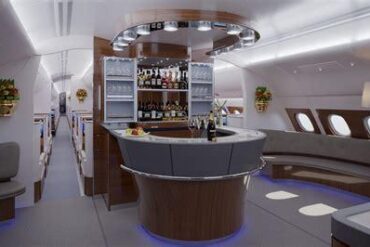
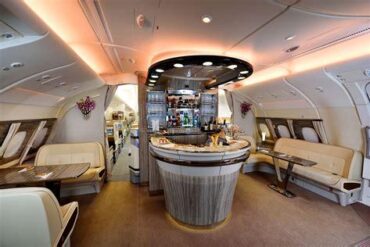
Early Boeing 747 operators transformed the upper deck into luxurious passenger areas. Airlines such as Pan American World Airways and Trans World Airlines created exclusive lounges featuring bars, comfortable seating, and premium services.
The upper deck became a symbol of first-class travel during aviation’s golden age.
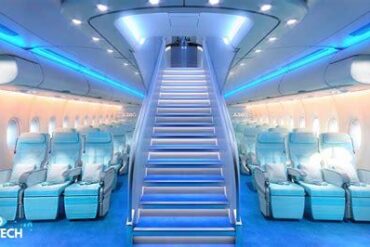
Over time, airlines discovered even more uses for the space. Later versions, including the Boeing 747-400, expanded the upper deck to provide additional passenger seating. The once purely functional area became one of the most desirable cabins in commercial aviation.
In Japan, airlines took the concept in a completely different direction.
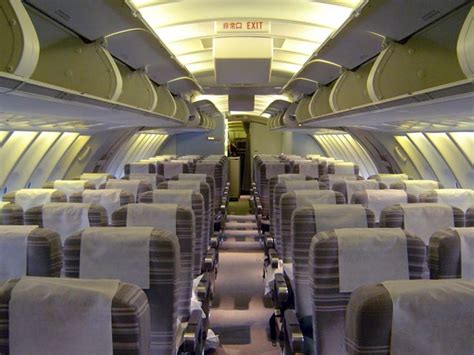
Japanese carriers such as Japan Airlines (JAL) and All Nippon Airways (ANA) operated high-density domestic versions of the 747. Aircraft like the 747SR and 747-400D used both decks to carry hundreds of passengers on busy domestic routes.
Some configurations carried more than 560 passengers, turning the hump from a cargo requirement into a solution for extremely high-volume passenger transportation.
The Hump Was Also An Aerodynamic Challenge
Creating the 747’s unusual shape was not easy. Engineers faced a significant aerodynamic problem: placing a large raised section on top of the forward fuselage could create excessive drag.
At first glance, the hump looked like it should hurt performance. A sudden bump on an aircraft’s upper surface could disrupt airflow, increase turbulence, and reduce fuel efficiency.
Boeing engineers solved this problem by carefully shaping the rear section of the upper deck. Instead of creating a simple box-like extension, they developed a smooth teardrop-shaped fairing that gradually blended into the fuselage.
The result was surprisingly effective.
The hump became an aerodynamic feature rather than merely a compromise. Its shape helped reduce airflow disruption around the forward fuselage and improved performance at the aircraft’s cruising speed of approximately Mach 0.85.
This careful engineering turned a necessary structural feature into part of the aircraft’s recognizable identity.
Why The Boeing 747 Hump Will Probably Never Be Repeated
Modern aviation has moved in a different direction. Aircraft manufacturers today focus on highly efficient twin-engine widebody aircraft such as the Boeing 777 and Airbus A350.
These aircraft use advanced composite materials, efficient engines, and optimized single-deck layouts. The operational advantages of a raised cockpit and front cargo door no longer justify the additional structural complexity for most airlines.
Regulations also make future passenger aircraft with similar designs unlikely. Modern evacuation requirements, including strict emergency exit standards, make large multi-level passenger aircraft challenging to certify.
The aviation industry has chosen efficiency over the extreme versatility that defined the 747.
However, the cargo world still values the aircraft’s unique capabilities.
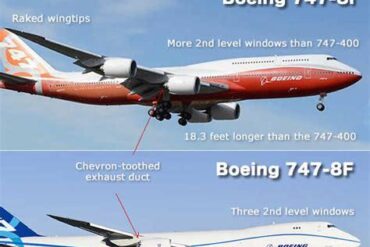
The Boeing 747-8F remains one of the few aircraft capable of loading exceptionally large and heavy cargo through its nose door. Aerospace components, industrial machinery, and oversized equipment can be transported more easily because of the design decision made more than five decades ago.
The Boeing 747’s Hump Was A Brilliant Engineering Decision
The idea that the Boeing 747’s hump appeared by accident is one of aviation’s most persistent myths. The reality is much more interesting.
The raised upper deck was a deliberate engineering solution created to solve a difficult cargo-loading problem. Boeing needed an aircraft that could carry passengers, transport freight, and survive a future that many believed would be dominated by supersonic travel.
The hump represented practicality before appearance. It was created because engineers needed to move the cockpit, not because designers wanted a distinctive silhouette.
Yet that functional decision became the defining feature of the most famous airliner ever built.
The Queen of the Skies proved that great engineering often creates beauty through necessity. What began as a cargo-focused solution became an aviation icon, a luxury symbol, and one of the most recognizable shapes in human transportation history.