The idea that the United States Air Force simply repaints aging airline jets and presses them into military service has become a persistent myth, fueled by the familiar silhouettes of aircraft that look suspiciously like passenger planes. At a glance, a gray-painted widebody sitting on a military ramp can resemble a retired airliner granted a second life. That surface similarity, however, hides a far more complex reality. The Air Force does rely on aircraft that originate from commercial designs, and in limited circumstances it has acquired pre-owned civilian airframes, but the notion of “refurbished” jets dramatically understates the scale, cost, and sophistication of what actually happens next.
What the Air Force values is not a bargain-bin airframe, but the engineering maturity and reliability that commercial aircraft programs offer. These designs come with decades of testing, established supply chains, and predictable performance. When missions demand long range, stable flight characteristics, and large internal volume rather than high-speed combat maneuvering, starting with a proven civilian platform makes strategic sense. The aircraft that eventually enter military service may look familiar from the outside, yet internally they become something fundamentally different.
This distinction is essential to understanding why the claim is only partially true. Yes, the Air Force sometimes operates aircraft derived from airliners, and in rare cases those airframes may have flown previously in civilian service. But once selected, they undergo such extensive modification that calling them refurbished is misleading. They are, in effect, rebuilt into specialized national assets, with systems and capabilities that far exceed anything required in commercial aviation.
Why Commercial Aircraft Designs Appeal to the Air Force
Commercial airliners are among the most thoroughly tested machines ever built. They are designed to fly long hours, withstand repeated pressurization cycles, and operate reliably across the globe. For the Air Force, these traits translate directly into operational advantages. Instead of funding a clean-sheet aircraft for missions that do not require stealth or extreme performance, military planners can adapt an existing platform with confidence in its baseline safety and durability.
The misconception begins with language. A jet can be “commercial” by design even if it is purchased brand new from the manufacturer. Conversely, a pre-owned aircraft can be acquired purely for strategic reasons, such as accelerating delivery schedules or supporting long-term sustainment. In either case, the original passenger configuration is largely irrelevant. Seats, galleys, and overhead bins are stripped away early in the process, making room for wiring, racks, and mission equipment that dominate the aircraft’s interior.
Cost is another misunderstood factor. The airframe itself is rarely the main expense. What drives budgets upward are secure communications, encryption, electromagnetic hardening, redundant power systems, and long-term certification requirements. These additions transform a civilian shell into a military platform capable of operating in sensitive and potentially hostile environments. The familiar exterior shape remains, but almost everything else changes.
What “Conversion” Really Means in Military Aviation
The transformation from airliner to military asset is not a cosmetic upgrade. Contractors begin by reengineering the aircraft’s electrical architecture to support far greater loads than commercial systems ever demand. Secure radios, satellite communications, and encrypted data links require new antennas, miles of additional wiring, and cooling systems capable of managing constant heat output from mission electronics.
Cybersecurity is another invisible but critical layer. Military aircraft must protect sensitive data against interception and intrusion, even while operating in congested electromagnetic environments. That requirement drives extensive testing and validation, ensuring that every system functions without interfering with others. Each modification must be documented, certified, and tracked for decades, creating a configuration-control burden far beyond civilian standards.
In certain missions, defensive systems are added as well. Missile warning sensors, countermeasure dispensers, and hardened flight controls may be installed depending on threat assessments. Even when these systems are not visible externally, they shape the aircraft’s design and operational procedures. The result is a platform that shares lineage with a commercial jet but operates under entirely different assumptions about risk and survivability.
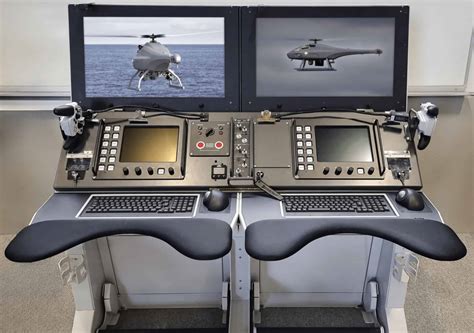
The VC-25B and the Presidential Airlift Mission
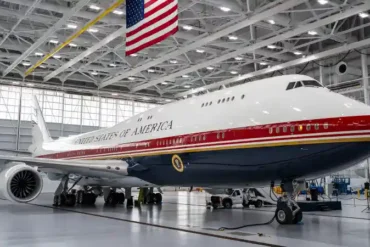
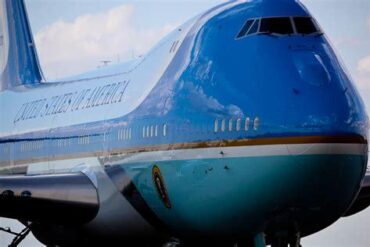
Few aircraft illustrate this reality better than the VC-25B, the next generation of presidential transport commonly known as Air Force One. Based on the Boeing 747-8, it begins life as a commercial widebody, yet its final configuration bears little resemblance to any passenger jet. The moment an aircraft is tasked with serving as a flying seat of government, its priorities shift dramatically toward continuity of command and national security.
The Air Force’s decision to acquire additional 747-8 airframes that previously flew for an airline was not about cutting costs or reusing old jets. It was about sustainment strategy. With 747 production ended, maintaining a specialized fleet requires access to spare parts, training platforms, and maintenance tooling. Used airframes can support testing, crew proficiency, and logistics planning without exposing the primary aircraft to unnecessary risk.
Inside, the VC-25B is transformed into a hardened command platform. It includes secure conference spaces, redundant communications systems, and power generation capacity that far exceeds commercial needs. Its ability to function during global crises depends on systems designed to remain operational even when ground infrastructure is compromised. In that context, the origin of the airframe becomes secondary to the mission it ultimately supports.
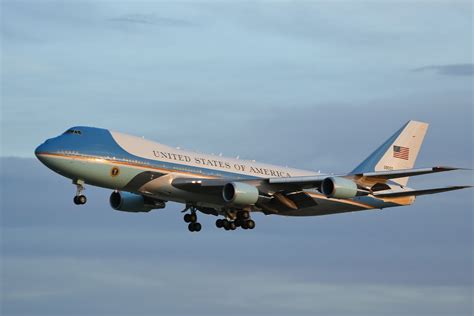
The C-32 and Everyday Executive Lift
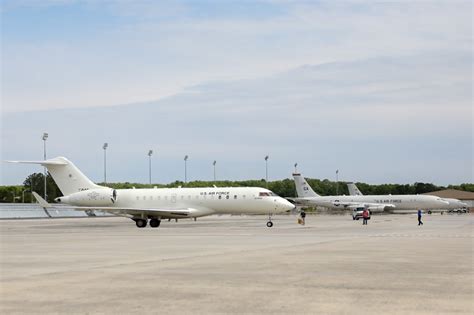
While the presidential aircraft captures headlines, the C-32 represents the daily reality of civilian-derived military aviation. Based on the Boeing 757-200, the C-32 supports senior leaders and high-priority government travel where reliability and flexibility are paramount. The 757’s combination of range, runway performance, and airport compatibility makes it particularly well suited to this role.
Conversion turns the aircraft into a secure working environment rather than a high-density passenger carrier. Interiors are arranged around meeting spaces, staff workstations, and communications equipment that allow missions to continue in flight. Avionics and navigation systems are tailored to military requirements, integrating with protected airspace procedures and specialized mission planning.
Operationally, the C-32 exists in a different world from commercial aviation. Maintenance schedules are mission-driven, not revenue-driven. Airfield access, passenger handling, and security protocols follow military standards that prioritize readiness and protection. Even though the aircraft’s lineage is unmistakably civilian, its day-to-day use reflects a completely different philosophy.
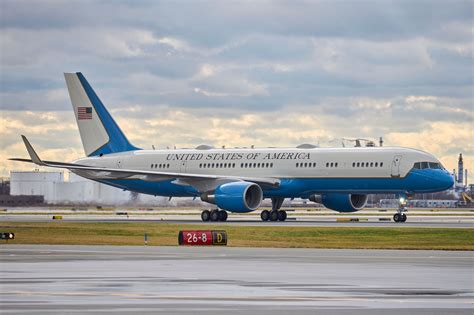
The C-40 and the Power of a Global Support Network
The C-40, derived from the Boeing 737, highlights another advantage of commercial designs: global supportability. The 737’s ubiquity ensures access to parts, trained technicians, and established maintenance practices nearly anywhere in the world. For missions that demand rapid deployment and predictable performance, that ecosystem is invaluable.
Different C-40 variants serve different purposes. Some emphasize executive transport with reconfigured interiors and communications suites, while others focus on logistical flexibility. What unites them is a reliance on the mature commercial supply chain that underpins the 737 family. This predictability reduces technical risk and simplifies long-term fleet management.
Calling these aircraft refurbished misses the point. Their value lies not in reused cabin fittings but in the ability to leverage decades of civilian aviation experience while layering on military-specific capabilities. The result is a fleet that may look ordinary but performs extraordinary roles with consistency.
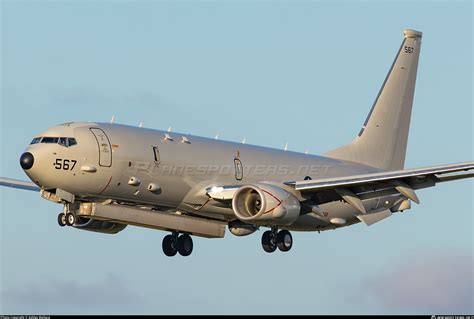
Why These Aircraft Are So Expensive Despite Familiar Origins
Observers are often surprised by the price tags attached to civilian-derived military aircraft. The explanation lies in everything that cannot be seen. Secure networks, redundant systems, hardened components, and exhaustive testing account for the majority of program costs. Each change must be validated under military airworthiness standards, then supported for decades through documentation and training.
Unlike commercial programs, which respond quickly to market demand, military fleets are designed for stability across geopolitical cycles. That stability requires investment upfront, ensuring that aircraft remain viable even as technology and threats evolve. In this context, the airframe is simply a starting point, not the finished product.
The Bottom Line on Refurbished Commercial Jets
The claim that the Air Force uses refurbished commercial jets is both misleading and incomplete. It is true that many military aircraft originate from civilian designs, and in specific cases the Air Force has acquired pre-owned airframes for strategic reasons. What is untrue is the implication that these aircraft are lightly modified hand-me-downs.
In reality, once a civilian platform is selected, it undergoes a transformation so extensive that its previous life becomes almost irrelevant. The Air Force invests not in aluminum and paint, but in secure capability, verified performance, and long-term readiness. These aircraft may share silhouettes with jets seen at civilian airports, yet their missions, systems, and operational roles place them in an entirely different category.
Commercial derivatives have become essential tools for executive transport, command continuity, and global mobility. Without them, many of the Air Force’s most visible and critical missions would be harder, riskier, and more expensive to sustain. Familiar shapes may invite easy assumptions, but beneath the surface lies a level of engineering and strategic planning that makes the word “refurbished” an oversimplification of a far more deliberate process.