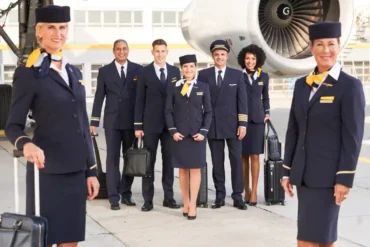
The image of a private jet flight attendant often carries a certain mystique. Tailored uniforms, discreet luxury, champagne poured at 45,000 feet, and a clientele whose time is worth more than entire aircraft. To outsiders, it feels plausible—almost inevitable—that this role might come with a six-figure paycheck. Yet aviation is an industry famous for paradoxes, where glamour and grind coexist in tight quarters. The question is not whether the job looks lucrative, but whether the numbers truly support the idea that private jet flight attendants can earn over $100,000 a year.
At first glance, this claim sounds exaggerated, especially when compared to the commercial airline world. Many airline flight attendants start on modest salaries, sometimes barely clearing the cost of living in major hubs. Seniority matters enormously, and only the most experienced crew members at top-paying legacy carriers come close to six figures. Private aviation, however, operates by a very different logic—one shaped less by unions and rigid pay scales, and more by exclusivity, discretion, and individualized service.
Understanding whether six-figure salaries are real requires peeling back layers of regulation, aircraft design, client expectations, and compensation structures. The truth lives in the details, and those details reveal a career path that can indeed be highly rewarding—but only for a small, carefully selected group.
Why Private Jet Flight Attendants Exist at All
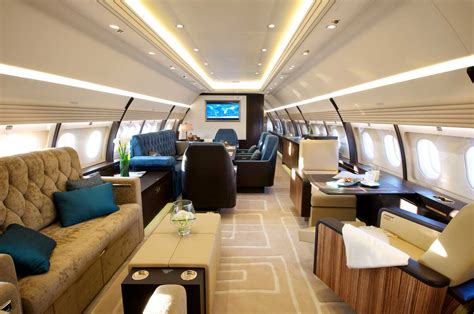
Commercial aviation conditions most travelers to assume that flight attendants are always present for safety. In private aviation, that assumption quickly collapses. Under FAA regulations, a flight attendant is only required when an aircraft is certified to carry more than 19 passengers. In practice, this applies almost exclusively to executive airliners such as the Airbus ACJ and Boeing BBJ families—essentially VIP-configured versions of commercial jets.
Purpose-built business jets, even the largest and most capable models from Gulfstream and Bombardier, are deliberately designed with a maximum capacity of 19 passengers or fewer. This design choice eliminates the regulatory requirement for cabin crew, meaning many private jets fly with pilots only. When a flight attendant is present, it is not because the law demands it, but because the owner or operator wants a particular level of service.
This distinction reshapes the entire role. Private jet flight attendants exist primarily to enhance the onboard experience, not to fulfill mandatory safety staffing. Operators like VistaJet and NetJets frequently assign flight attendants to their larger, long-range aircraft, especially on intercontinental routes with fully equipped galleys and complex catering requirements. Smaller jets, by contrast, often operate without cabin crew altogether.

A Hospitality Role Disguised as an Aviation Job
Because safety is not the core justification for their presence, private jet flight attendants are trained first and foremost as elite hospitality professionals. Their passengers are high-net-worth individuals, corporate executives, celebrities, and heads of state—people accustomed to precision, privacy, and customization.
Service standards in private aviation routinely exceed those found in first class or even international business class on commercial airlines. Flight attendants are expected to master fine dining presentation, premium wine and spirit knowledge, cultural etiquette, and highly personalized service. Remembering preferences is not a bonus; it is a baseline expectation. The cabin is not a standardized product—it is a floating extension of a luxury home or corporate office.
This elevated service standard is one of the key justifications for higher pay. The role demands discretion, adaptability, and a level of polish that cannot be taught quickly. Employers are not simply paying for time in the air; they are paying for judgment, emotional intelligence, and the ability to anticipate needs before they are voiced.
How Private Jet Flight Attendant Pay Actually Compares
In the commercial airline world, flight attendant pay generally ranges from roughly $30,000 at the low end to close to $100,000 for the most senior crew members at major U.S. legacy carriers such as American Airlines, Delta Air Lines, and United Airlines. Pay is heavily seniority-based, calculated primarily through hourly flight time, supplemented by per diem allowances and minor commissions.
Private aviation rewrites this formula. Positions are far scarcer, and hiring standards are often significantly higher. Many employers require prior airline experience, luxury hotel or restaurant backgrounds, or specialized corporate aviation training. In return, salaries typically start higher, often around $40,000 to $70,000, with a much higher ceiling depending on the employer.
In well-paid corporate flight departments or elite charter operations, total compensation can exceed $100,000 per year. This is not the norm, but it is very real. Unlike airlines, private operators are not bound by collective bargaining agreements, allowing them to offer premium pay to secure top-tier talent.
The Eye-Watering Outliers That Skew Perception
Occasionally, a salary figure appears that seems almost unbelievable. In 2023, reports emerged that Netflix was offering up to $385,000 for a private jet flight attendant role. The figure made headlines for a reason—it surpassed the salaries of many commercial airline pilots and even some captains.
This example represents the extreme edge of the spectrum. Only one individual landed that job, and the expectations attached to it were extraordinary. Still, the listing served as proof that, under the right circumstances, private jet flight attendants can command compensation that rivals senior aviation professionals.
Such roles typically involve constant availability, extensive travel, absolute discretion, and a workload that blurs the line between professional and personal service. The pay reflects not just skill, but sacrifice.
Understanding the Many Ways Private Crew Are Paid
One reason pay varies so dramatically in private aviation is the lack of a single standard compensation model. Some flight attendants are paid hourly, similar to airline crew, earning money only when the aircraft is moving under its own power. Others receive daily rates, monthly retainers, or fixed annual salaries.
Per diem allowances remain common, typically ranging from $2 to $4 per hour, designed to offset meals and incidental expenses during layovers. While modest on paper, per diem can accumulate into a meaningful annual sum, especially on long-haul or high-utilization aircraft.
Benefits also vary widely. Many private operators offer health insurance, paid training, accommodation during training, and sometimes uniforms. Unlike airlines, however, private aviation offers fewer formal advancement pathways. There is no purser ladder, no large-scale seniority system, and fewer structured pay increases. High salaries are often negotiated individually and justified by performance rather than tenure.
Why the Job Is Harder Than It Looks
The prestige of private aviation hides a workload that can be far more demanding than airline flying. On commercial aircraft, cleaning crews reset the cabin, catering teams load meals, and ground staff handle baggage. On a private jet, these responsibilities often fall directly on the flight attendant.
Cabins must be cleaned and staged to perfection. Luggage is loaded and unloaded by hand. Meals are not reheated—they are plated, garnished, and served restaurant-style. Timing errors or presentation flaws are noticed immediately by passengers accustomed to excellence.
Schedules are another challenge. Many private jet flight attendants live on call, sometimes for days or weeks at a time. Trips can be added with little notice, extended unexpectedly, or canceled abruptly. When working for an individual owner rather than a charter company, duties may expand to reflect personal preferences that go far beyond traditional aviation service.
These realities explain why private aviation often pays more. The compensation reflects not only skill, but resilience and flexibility.
Aircraft Size and Crew Expectations Matter
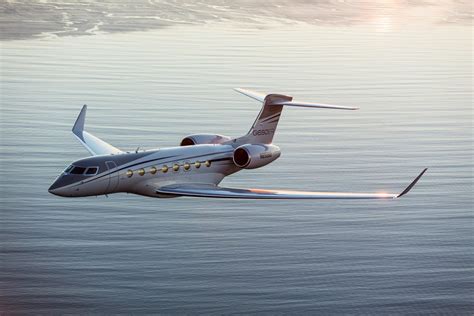
The number of flight attendants required varies dramatically by aircraft type. A Gulfstream G650ER, despite its intercontinental range and lavish interior, typically operates with just one flight attendant. Compare that to an Airbus A321, which may require four cabin crew, or a Boeing 787-9, which can carry eight.
Fewer crew members mean broader responsibilities and higher expectations for each individual. On a private jet, there is no hiding behind a large team. Performance is highly visible, and excellence is non-negotiable.
So, Is the $100,000 Salary Claim True?
The short answer is yes—but with important caveats. Most private jet flight attendants earn more than their airline counterparts, but only a minority cross the six-figure threshold. Those who do typically work for high-end charter operators, Fortune 500 flight departments, or ultra-wealthy individuals who value continuity and discretion.
These roles are competitive, demanding, and often lifestyle-intensive. They reward experience, polish, and trustworthiness far more than seniority alone. For the right person, the payoff can be substantial, both financially and professionally.
In the end, private jet flight attendants occupy a unique space in aviation. They are neither traditional cabin crew nor purely hospitality staff, but a hybrid of both—operating in an environment where expectations are sky-high and compensation can rise to meet them. For a select few, earning over $100,000 a year is not a myth. It is the price of excellence in one of aviation’s most exclusive niches.