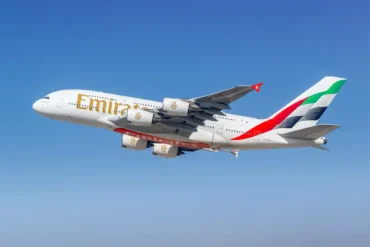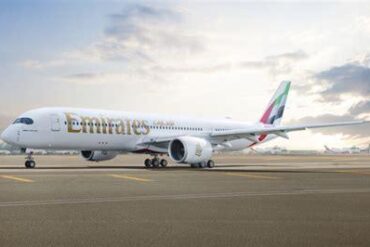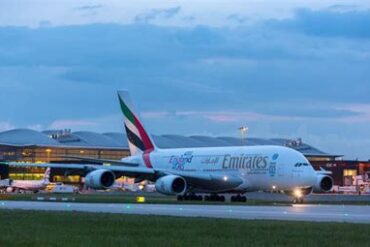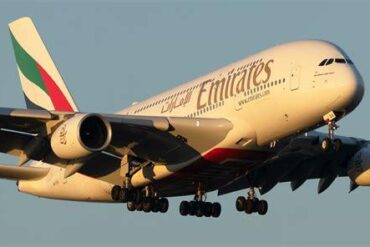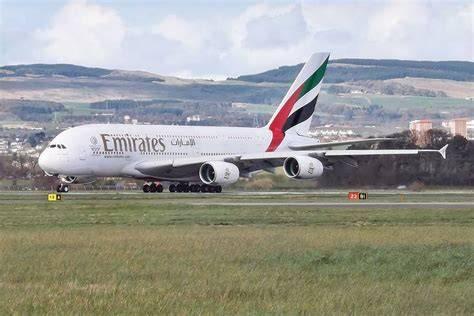
Emirates has temporarily suspended Airbus A380 operations on two European long-haul routes, removing the iconic superjumbo from services between Dubai International Airport and Prague, Czech Republic, and Glasgow, Scotland during the 2026 summer schedule. However, the decision does not represent a permanent withdrawal from either market, as both destinations are scheduled to regain daily Airbus A380 flights from October 1.
The changes highlight Emirates’ flexible approach to fleet deployment, where aircraft assignments are regularly adjusted according to seasonal passenger demand. While the airline continues operating one of the world’s largest Airbus A380 networks, the superjumbo is being temporarily shifted away from these two routes during the third quarter of 2026.
Prague and Glasgow Temporarily Lose the Emirates Superjumbo
A comparison of Emirates’ Airbus A380 schedules between the third quarter of 2025 and the third quarter of 2026 shows that Prague and Glasgow are the only destinations temporarily removed from the carrier’s A380 network. Both cities will continue receiving Emirates flights, but the aircraft type changes during the July to September period.
Instead of the double-deck Airbus A380, Emirates will operate Boeing 777-300ER aircraft on both routes throughout the temporary suspension. This allows the airline to maintain daily connectivity while matching available capacity with expected summer demand.
The Dubai–Prague route will continue operating daily with the Boeing 777-300ER before the Airbus A380 returns on October 1. The Czech capital will initially receive Emirates’ 487-seat four-class A380 configuration before transitioning to the airline’s newer 569-seat three-class Airbus A380 from October 25.
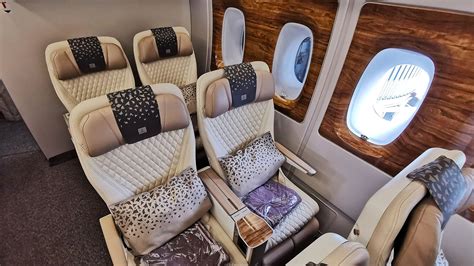
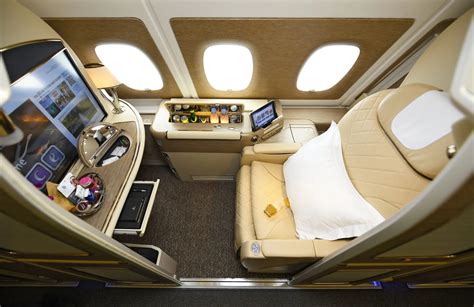
Glasgow will also return to A380 operations on October 1, with Emirates planning to deploy its 519-seat four-class A380 featuring First Class, Business Class, Premium Economy, and Economy Class cabins.
A Seasonal Fleet Strategy Rather Than a Route Reduction
The temporary suspension demonstrates how Emirates uses its mixed fleet of Airbus A380s and Boeing 777s to optimize operations throughout the year. Rather than permanently reducing capacity, the airline can move its largest aircraft toward markets experiencing stronger demand while maintaining service elsewhere with smaller aircraft.
During the northern hemisphere summer months, passenger demand patterns can change significantly. Some European routes experience lower demand as business travel slows and holiday schedules shift. By replacing the A380 with the Boeing 777-300ER for a limited period, Emirates can reduce available seats while preserving its global network.
The restoration of A380 service in October reflects expectations of stronger demand during the winter travel season. Dubai typically experiences increased tourism activity during cooler months, attracting international visitors seeking warmer weather, shopping experiences, and major events. Business travel also tends to recover after the traditional summer holiday period.
Returning the Airbus A380 allows Emirates to increase seat capacity without adding additional flight frequencies, making the aircraft an efficient solution for high-demand periods.
Emirates Continues Expanding and Modernizing Its A380 Fleet
The Prague schedule change also provides insight into Emirates’ wider Airbus A380 modernization program. The airline has been investing heavily in cabin upgrades, including refreshed interiors and the introduction of Premium Economy seating across selected aircraft.
From late October, Prague is expected to become one of the destinations served by Emirates’ newer 569-seat three-class A380 configuration. This aircraft layout increases passenger capacity while introducing a more modern cabin experience compared with older four-class versions.
The larger configuration reflects Emirates’ strategy of maximizing the value of its A380 fleet. While the aircraft requires significant operational investment, its enormous passenger capacity makes it highly effective on routes where demand supports high seat volumes.
Glasgow, meanwhile, will continue receiving a premium-oriented 519-seat A380 configuration. The aircraft remains one of the largest passenger jets operating regularly in Scotland, offering substantially more capacity than the Boeing 777 used during the temporary summer adjustment.
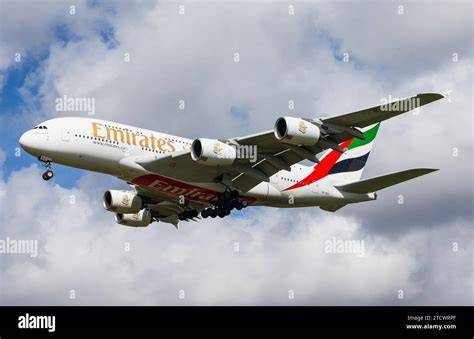
The Airbus A380 Remains Central to Emirates’ Long-Haul Network
Despite ongoing discussions about the future of the Airbus A380 globally, Emirates continues to rely on the aircraft as a key part of its long-haul strategy. The airline operates the world’s largest A380 fleet and has repeatedly demonstrated its commitment to keeping the aircraft active through refurbishment programs and network optimization.
The temporary removal of the A380 from Prague and Glasgow should therefore be viewed as a seasonal adjustment rather than a sign of declining confidence in the aircraft. Emirates has maintained both routes and already scheduled the superjumbo’s return, showing that the airline still sees strong value in operating the A380 where demand justifies its capacity.
As Emirates continues refining its fleet deployment plans, aircraft assignments will likely remain dynamic. The airline’s ability to shift between the Airbus A380 and Boeing 777 provides operational flexibility while allowing it to match capacity with changing market conditions.
For passengers traveling between Dubai and Europe, the Airbus A380 experience on these routes will only be temporarily unavailable. Beginning in October 2026, both Prague and Glasgow are expected to once again welcome Emirates’ flagship double-deck aircraft.