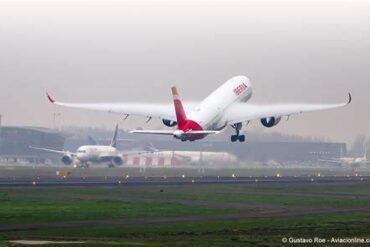
The sudden suspension of Iberia’s direct flights between Madrid and Havana is reshaping summer travel across the Atlantic, leaving thousands of passengers scrambling for alternatives. Beginning June 1 and lasting through at least October 24, 2026, the airline will halt its nonstop service linking Adolfo Suárez Madrid–Barajas Airport (MAD) with José Martí International Airport (HAV)—a route long considered a vital corridor between Europe and Cuba.
This decision arrives at a moment when Cuba’s tourism sector is already under visible strain. Iberia’s move reflects a convergence of declining passenger demand, operational instability, and persistent infrastructure challenges on the island. While framed as temporary, the suspension underscores deeper systemic issues that continue to ripple across the aviation industry serving the Caribbean.
Declining Demand Forces Iberia’s Strategic Retreat
Iberia’s withdrawal from the Madrid–Havana route was not abrupt but rather a calculated scaling back. The airline reduced frequencies to three weekly flights in April and two in May before confirming a complete suspension for the summer season. This gradual decline signals how sharply travel demand to Cuba has weakened, particularly from key European markets.
The route has historically played a crucial role for both tourism and visiting friends and relatives (VFR travel), especially given Spain’s longstanding cultural and historical ties with Cuba. However, those connections have not been enough to offset falling passenger numbers. Reports indicate that international arrivals to Cuba dropped significantly, with a 25% decline recorded in early 2025 alone.
The downturn is even more pronounced among certain traveler groups. Russian tourism—once a growing segment—has fallen by more than 29%, contributing to the broader contraction in inbound traffic. These shifts have made it increasingly difficult for airlines like Iberia to justify maintaining direct service on a commercially sustainable basis.
Fuel Shortages and Infrastructure Issues Disrupt Operations
Beyond weak demand, operational challenges within Cuba have played a decisive role in Iberia’s decision. The country is grappling with a persistent energy crisis, which has led to widespread shortages of aviation fuel. This has forced airlines to adopt costly and inefficient workarounds, including refueling stops outside Cuban territory.
Airports across the island have experienced inconsistent fuel availability, complicating scheduling and undermining reliability. For airlines operating long-haul routes, these disruptions translate into higher operating costs, longer flight times, and increased uncertainty—factors that erode profitability and passenger confidence alike.

These constraints are not isolated to Iberia. Industry reports suggest that more than 1,700 flights could be canceled, rerouted, or technically adjusted by April 2026 as the fuel crisis intensifies. The resulting reduction in connectivity has created a feedback loop: fewer flights lead to fewer यात्रers, which in turn discourages airlines from maintaining service.
Passengers Face Longer, More Complex Journeys
For travelers still determined to reach Cuba, the suspension of nonstop flights introduces a new layer of complexity. Iberia has pointed to alternative options through its codeshare partnership with Copa Airlines, allowing passengers to connect via Panama City. While functional, these routes significantly extend travel times and introduce additional logistical considerations.
Instead of a single direct flight, travelers must now navigate multi-leg itineraries, longer layovers, and increased risk of delays. For leisure travelers, this may diminish the appeal of Cuba as a destination. For those visiting family, it adds both time and cost to already challenging journeys.
The shift toward indirect routing also places greater pressure on connecting hubs, particularly in Latin America, as airlines redistribute capacity away from Cuba. This reconfiguration highlights how localized disruptions can ripple outward, reshaping global travel patterns in subtle but meaningful ways.
Tourism Decline Signals Broader Economic Strain
Tourism has long been a cornerstone of Cuba’s economy, generating approximately $1.3 billion in revenue in 2023. Yet the sector is now facing one of its most significant downturns in recent years. Visitor numbers fell to around 1.8 million in 2025, a sharp decline that reflects both external pressures and internal challenges.

While still above pandemic-era lows, the trend is unmistakably downward. Reduced airline capacity, infrastructure limitations, and shifting traveler preferences have all contributed to the slump. Competing Caribbean destinations—offering more stable conditions and easier access—are increasingly drawing travelers away.
This decline has broader implications beyond tourism. Reduced visitor spending affects local businesses, employment, and foreign exchange earnings, further complicating the country’s economic recovery efforts.
Iberia Expands Elsewhere Despite Cuba Suspension
Interestingly, Iberia’s decision to suspend flights to Cuba stands in stark contrast to its broader network strategy. The airline is planning a record 21.4 million seats for summer 2026, signaling strong demand across other regions. This expansion includes new long-haul routes and increased capacity on existing services.
The contrast makes one point clear: the Cuba suspension is not indicative of weakness within Iberia itself but rather a route-specific response to local conditions. In markets where demand remains robust and operational stability is assured, the airline continues to invest and grow aggressively.
Outlook: Conditional Return Hinges on Recovery
Looking ahead, Iberia has indicated that flights to Havana could resume in November 2026—provided conditions improve. This caveat highlights the uncertainty surrounding Cuba’s aviation environment. Recovery will depend on resolving fuel shortages, stabilizing infrastructure, and rebuilding traveler confidence.
Until then, capacity between Europe and Cuba will remain constrained, and travelers will need to plan with flexibility in mind. Monitoring airline updates, exploring alternative routes, and preparing for longer journeys are now essential steps for anyone considering travel to the island.
The suspension serves as a stark reminder that even well-established routes can falter when confronted with sustained economic and operational pressures. For Cuba, the challenge now lies in reversing these trends and restoring the conditions that once made it a vibrant hub for international travel.