The mood in Miami has shifted from cautious hope to electric certainty. For decades, Cuban exile circles argued that Havana’s fate was inseparable from Caracas, that the survival of the Cuban system depended on Venezuela’s oil, cash, and political oxygen. With Nicolás Maduro now removed from power and a compliant government installed in Caracas, that theory has abruptly stopped being academic. It has become strategy. In Washington, the conversation is no longer about whether Cuba can be pressured into change, but how fast and how cleanly it can be done.
Statements from senior U.S. officials since early January have been striking not for their ambiguity, but for their bluntness. The language is no longer diplomatic fog; it is deliberate signaling. Havana is being warned in public, repeatedly, that its insulation has vanished. The subtext is unmistakable: Venezuela was the keystone. Remove it, and the arch begins to crack.
This is not a sudden impulse. The United States has pursued regime change in Cuba for over seven decades. What makes 2026 different is not desire, but alignment of conditions—economic fragility, geopolitical distraction among Cuba’s allies, and a White House openly committed to reasserting hemispheric dominance under a revived, hard-edged Monroe Doctrine.
The Caracas-Havana Axis Finally Breaks
For 26 years, subsidized Venezuelan oil kept Cuba’s power plants running, its hospitals lit, and its ration system barely functional. Hugo Chávez made that bargain in 1999, trading cheap energy for Cuban intelligence, security personnel, and political support. His successors maintained it because the alliance was existential. Without Caracas, Havana bleeds.
That bleeding is no longer theoretical. U.S. intelligence assessments reportedly describe weeks—not months—of remaining oil reserves. Power blackouts, already routine, risk becoming systemic collapse. Food shortages are deepening. Medicines are scarce. Transportation is grinding down. This is what strategic vulnerability looks like on an island economy with no energy independence and limited access to hard currency.
Washington has made its position explicit. No Venezuelan oil will reach Cuba. No backdoor cash transfers will be tolerated. The pressure is designed to be relentless but controlled—economic suffocation rather than shock-and-awe. Geography favors enforcement. Cuba is an island. The Caribbean is already saturated with U.S. naval assets. No massive deployment is required. The infrastructure of pressure is already in place.
Rubio, Trump, and the Personal Edge of Policy
Policy becomes sharper when it is personal. Secretary of State Marco Rubio, the son of Cuban immigrants, has never hidden his hawkish stance on Havana. His recent remarks were not off-the-cuff bravado; they were calculated warnings. When Rubio says Cuban officials should be “concerned,” it carries the weight of long-held intent now backed by leverage.
President Trump’s role is equally central. His vision of the Western Hemisphere is unapologetically hierarchical—a modernized Monroe Doctrine, recast with transactional bluntness. In that worldview, a communist state ninety miles from Florida is not a relic; it is an affront. Venezuela’s fall was step one. Cuba, in this framing, is the final unresolved anomaly.
Ending Havana’s support network would not only reshape regional politics; it would cement Trump’s legacy as the president who concluded a Cold War chapter that outlived the Cold War itself.
Why China and Russia May Watch, Not Intervene
On paper, Cuba is not alone. China and Russia have both pledged support, offering aid packages, diplomatic backing, and symbolic visits. Beijing’s financial commitments and Moscow’s security outreach signal solidarity. Yet solidarity is not intervention.
Russia is consumed by Ukraine, its resources stretched and its appetite for a Western Hemisphere confrontation sharply reduced. China is more cautious still. Challenging U.S. dominance in the Caribbean would risk escalation far from Beijing’s primary theaters, with little strategic upside.
After Venezuela, the message is clear: Washington is willing to act decisively in its backyard. Neither Moscow nor Beijing appears eager to test that resolve over an economically drained island with limited strategic return.
Havana’s Economy at the Breaking Point
Cuba’s internal weaknesses amplify external pressure. The island’s economy is not merely struggling; it is structurally brittle. Tourism has failed to rebound to pre-pandemic levels. Remittances fluctuate under tightening scrutiny. State-run industries remain inefficient, overstaffed, and technologically obsolete.
One critical vulnerability stands out: overseas medical missions. For years, Cuba exported doctors as a source of hard currency and political influence. Washington now views these programs less as humanitarian outreach and more as coerced labor pipelines. Visa bans and targeted sanctions against facilitators threaten to choke off one of Havana’s last reliable revenue streams.
Taken together—oil shortages, energy collapse, shrinking foreign income—the economic picture resembles a slow-motion implosion. The strategy is patience, not invasion.
The Intelligence Hunt for an Internal Deal-Maker
Unlike Venezuela, Cuba lacks a visible, organized opposition capable of stepping into power. Seven decades of one-party rule have hollowed out civil society. Independent media barely exists. Dissident movements are fragmented and heavily surveilled.
This reality has shifted Washington’s focus inward. Intelligence agencies are reportedly searching for figures within the Cuban government willing to negotiate a transition. The ideal outcome is not a violent overthrow but an elite fracture—a deal that preserves order while dismantling the system from within.
Such deals are rare, fragile, and morally messy. Yet history suggests they are often how entrenched regimes end when external force is constrained by geography and humanitarian risk.
Why Cuba Is a “Tough Nut” by Design
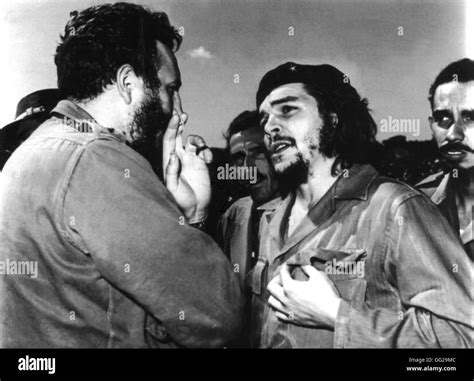
Cuba’s resilience is not accidental. It was forged under siege. From the moment Fidel Castro seized power in 1959, Havana expected hostility. The Bay of Pigs invasion in 1961 confirmed those fears, embedding a permanent siege mentality into the state’s DNA.
Subsequent CIA-backed sabotage campaigns, assassination plots—some bordering on the absurd—and decades of sanctions hardened the regime’s security apparatus. The Cuban Missile Crisis burned one lesson into both sides: miscalculation near Cuba carries global risk.
That legacy matters. Any U.S. strategy must avoid triggering mass migration, military escalation, or nationalist backlash that could paradoxically strengthen the regime.
Why a Venezuela-Style Operation Won’t Work
Venezuela had a visible opposition, electoral infrastructure, and a fractured military. Cuba has none of these in comparable form. A simple decapitation strategy—remove the leader, install a successor—would likely fail. Power in Cuba is diffuse, institutional, and security-centered.
Moreover, Cuba’s proximity to Florida raises stakes. Even limited military action risks a humanitarian surge across the Florida Straits. For an administration prioritizing border control, that scenario is unacceptable.
This is why the current approach emphasizes economic exhaustion and elite defection, not amphibious landings or covert paramilitaries.
The Long Game Toward 2026
Time is the variable Washington believes favors it. Each month without Venezuelan oil tightens the vise. Each blackout erodes public patience. Each empty pharmacy undermines legitimacy. The hope is not immediate revolt, but cumulative pressure that leaves the regime with only bad choices.
If collapse comes organically, the United States can present itself as stabilizer rather than conqueror. If it does not, options remain on the table—but they are clearly sequenced, not impulsive.
A Hemisphere Rewritten—or a Gamble Replayed
A successful transition in Cuba would redraw the political map of the Americas. It would end the last major communist holdout in the Western Hemisphere and validate a hardline approach long criticized as outdated. Failure, however, would reinforce Havana’s mythology of resistance and hand propaganda victories to Washington’s rivals.
The administration understands the stakes. That is why caution accompanies confidence. Cuba is weaker than it has been in decades, but it is not passive. The next year will test whether economic gravity is stronger than revolutionary inertia.
What is clear is that the post-Caracas moment has closed a chapter. The question now is whether 2026 becomes the year Havana finally turns the page—or doubles down on survival against the odds.