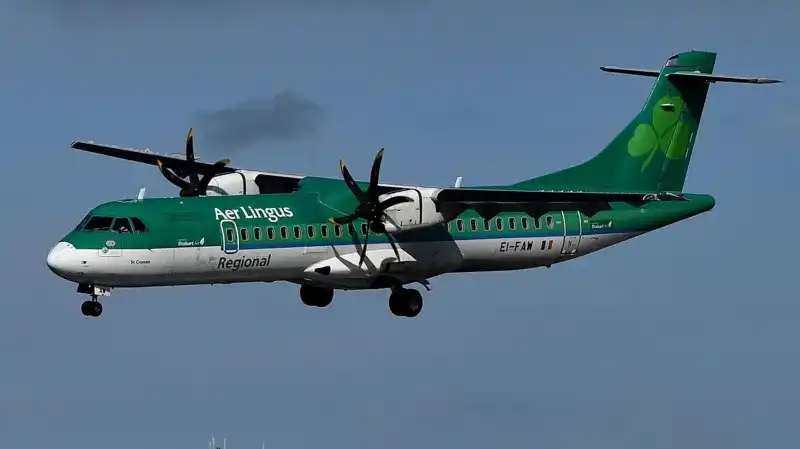
In a startling incident that raised serious questions about aviation safety and aircraft maintenance protocols, flight EI3670, operated by Emerald Airlines on behalf of Aer Lingus Regional, was forced to turn back to Belfast City Airport after a section of the plane’s exterior panel reportedly detached mid-flight. The event occurred shortly after takeoff on the morning of Sunday, June 9, 2025, en route to Leeds Bradford Airport, prompting an emergency response from local authorities and aviation personnel.
Emergency Response Initiated as Aircraft Returns to Belfast
The Police Service of Northern Ireland (PSNI) was alerted to the emergency at approximately 07:20 BST. Alongside the Northern Ireland Fire and Rescue Service and airport emergency crews, the PSNI swiftly mobilized at Belfast City Airport in anticipation of the aircraft’s return. A PSNI spokesperson confirmed that a report had been received indicating that “a piece of panelling had fallen from an aircraft whilst in flight.”
The flight, carrying a full complement of passengers, turned back shortly after takeoff as a precautionary measure. In a statement released by Emerald Airlines, the operator emphasized that the return was due to a “technical issue,” noting that the aircraft landed “normally” without further incident.
What Exactly Happened Mid-Air? A Look at the Panel Loss Incident
While aviation mishaps are not entirely uncommon, the detachment of an aircraft panel during flight represents a serious structural failure with potential implications for both aircraft integrity and passenger safety. Exterior panels are not merely cosmetic elements; they can serve essential aerodynamic, protective, or access-related functions.
Witnesses on board reported no noticeable turbulence or distress signals from the crew before the aircraft’s return was announced. This suggests that either the detachment occurred in a non-critical location of the fuselage or was detected by maintenance systems or ground observers rather than by the onboard experience. However, a full investigation is expected to confirm the specifics.
Emerald Airlines and Aer Lingus Regional: Under the Microscope
Emerald Airlines operates regional routes under the Aer Lingus Regional banner, utilizing ATR 72-600 turboprop aircraft, which are widely recognized for their fuel efficiency and suitability for short-haul European routes. While the specific aircraft involved in the incident has not yet been publicly identified by registration number, the ATR fleet has historically maintained a strong safety record.
However, any in-flight detachment of structural components—no matter how minor—will likely result in mandatory grounding and inspection of the affected aircraft, along with reviews of maintenance logs, flight crew reports, and manufacturing history. In light of this incident, regulatory scrutiny could also extend to Emerald Airlines’ maintenance procedures, potentially involving oversight from Ireland’s Air Accident Investigation Unit (AAIU) and UK Civil Aviation Authority (CAA).
Passengers React to the Unexpected Turnaround
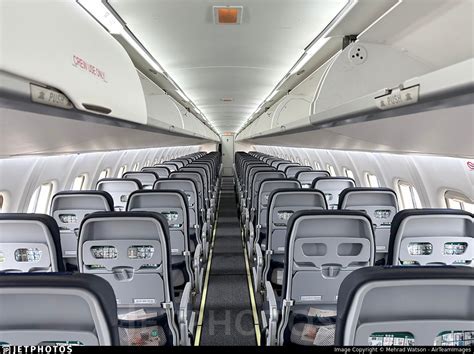
Passengers aboard flight EI3670 described a calm but curious atmosphere once the announcement of the return was made. One passenger, speaking anonymously, said: “We hadn’t noticed anything unusual until the captain said we’d be turning back for Belfast due to a technical issue. Everyone stayed calm, but there were definitely a few raised eyebrows.”
Fortunately, the flight landed without incident. All passengers were disembarked safely and were reportedly offered alternative travel arrangements. Emerald Airlines reiterated its commitment to passenger safety and expressed regret for the inconvenience caused.
Panel Detachment Incidents in Aviation History
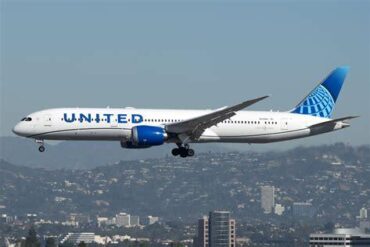
Although rare, panel loss incidents have occurred in commercial aviation history, with varying degrees of severity. In 2018, a United Airlines Boeing 777 suffered a cowling detachment mid-flight, prompting emergency landing procedures. In most cases, such failures are traced back to fatigue stress, improper maintenance, or manufacturing defects.
In the case of regional aircraft like the ATR 72-600, which operates at lower altitudes and speeds compared to jetliners, the consequences of such structural losses may be less dramatic—but the underlying risks remain significant. Any external breach introduces the potential for aerodynamic imbalance, depressurization, or damage to other components if debris is not ejected cleanly.
Safety Protocols and Aircraft Engineering: How Failures Are Caught
Modern aircraft are engineered with redundant safety systems, including real-time monitoring of pressure differentials, vibration patterns, and structural stress. Any deviation from expected norms is logged, often in-flight, and analyzed post-landing. Furthermore, pre-flight inspections—carried out visually and through diagnostics—are designed to catch physical inconsistencies or loosened components.
In this instance, it is not yet clear whether the panel was inspected and passed in pre-flight checks, or if the failure occurred after takeoff due to in-flight mechanical stress. If the latter is confirmed, it could lead to fleet-wide advisories and updated inspection requirements for similar aircraft models.
Implications for Maintenance Standards and Regulatory Oversight
The incident shines a light on the often-invisible world of aircraft maintenance regimes, which involve complex cycles of inspections—from A-checks done every few hundred flight hours, to D-checks, which are full overhauls done every 6-10 years. The question now is whether the panel detachment could have been prevented through better oversight or earlier component replacement.
Both Aer Lingus and Emerald Airlines now face the task of reassuring the public that the incident was isolated and does not indicate a broader pattern of structural unreliability. It is also expected that the AAIU will release preliminary findings in the coming weeks, offering insight into what exactly failed, why, and what changes, if any, will be implemented across the fleet.
Public Confidence and Airline Reputation Management
Airline reputations are built as much on their ability to handle crises as they are on day-to-day performance. In this case, Emerald Airlines responded swiftly by coordinating with emergency services, safely landing the aircraft, and communicating clearly with passengers. However, the long-term impact on its brand will depend on the transparency of its technical explanations and the effectiveness of corrective actions.
Passenger trust, once shaken, is difficult to rebuild. Incidents like this can also have financial implications, including increased insurance premiums, regulatory compliance costs, and potential lawsuits if negligence is discovered. Even if the investigation reveals no fault, the incident becomes part of the carrier’s operational history.
Looking Ahead: What This Means for Regional Aviation
Regional airlines operate under immense pressure to maintain tight schedules and cost efficiency, often relying on smaller aircraft and rapid turnaround times. As such, even minor component failures demand close attention. This event will likely serve as a case study in operational safety, emphasizing the need for rigorous adherence to maintenance standards and proactive identification of component wear.
For passengers, it’s a reminder that while modern aviation is extraordinarily safe, it is also highly complex, with countless variables that must align perfectly for each flight. The industry’s ability to learn from near-incidents is one of the key reasons air travel remains the safest mode of transportation globally.
In conclusion, the flight EI3670 panel loss incident is far more than a routine technical hiccup. It raises fundamental questions about aircraft maintenance, regulatory scrutiny, and passenger confidence. As the investigation unfolds, all eyes will be on Emerald Airlines and the authorities overseeing aviation safety in both the UK and Ireland.