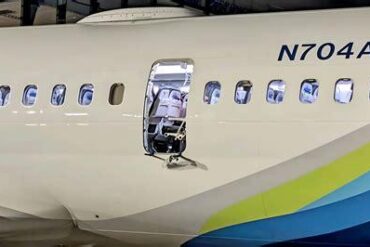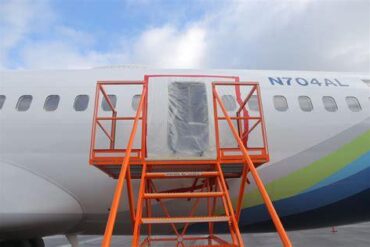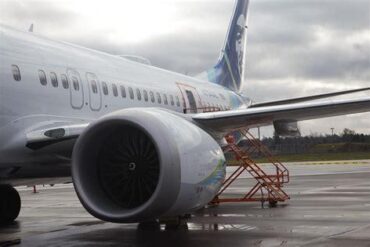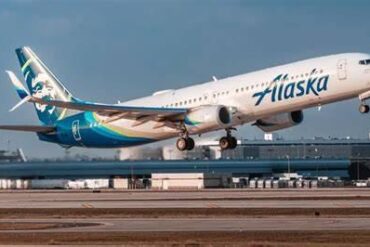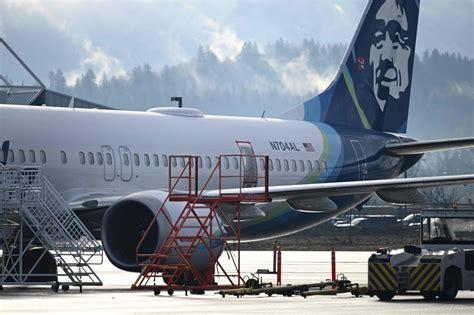
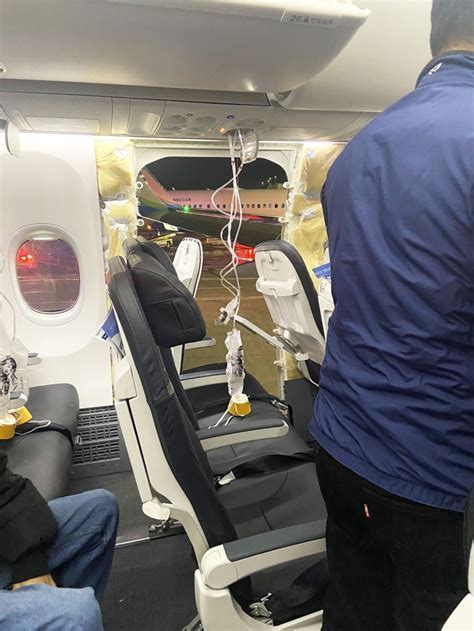
On January 5, 2024, Alaska Airlines Flight 1282 departed from Portland, Oregon, bound for Ontario, California. Merely ten minutes into its journey, a terrifying failure occurred: a door plug — a panel covering an unused emergency exit — blew off the fuselage of the Boeing 737 MAX 9 at approximately 16,000 feet, triggering a rapid decompression and chaos inside the cabin.
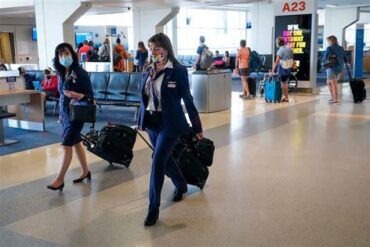
What followed was a frantic emergency response from the flight crew, including four Alaska Airlines flight attendants, who sprang into action to protect passengers. Though miraculously, no fatalities or critical injuries were reported, the psychological toll was profound. Now, nearly a year later, those very attendants are suing Boeing, alleging that negligence and reckless production practices have left them both physically and emotionally scarred.
The Lawsuits: Legal Action in the Wake of Terror
Filed in King County Superior Court in Seattle, the lawsuits allege that Boeing failed in its duty of care during the manufacturing, inspection, and assembly processes of the MAX 9 jet. The plaintiffs — whose names have not been publicly disclosed — argue that the aircraft was defective from the moment it left the production line.
Each of the flight attendants is seeking monetary compensation for a range of injuries:
- Physical injuries sustained during the blowout incident
- Long-term psychological trauma, including post-traumatic stress disorder
- Emotional distress from the life-threatening nature of the event
- Past and future economic damages, including medical costs and potential career disruption
According to attorney Tracy Brammeier, who represents the plaintiffs, “Each of the four flight attendants acted courageously, following their training and putting their passengers’ safety first while fearing for their lives… They deserve to be wholly compensated for this life-altering traumatic experience.”
Boeing’s Silence and Legal Exposure
As of this writing, Boeing has declined to comment on the lawsuits. Meanwhile, Alaska Airlines has yet to issue a formal response. Boeing’s choice to withhold public statements may reflect the high stakes involved, particularly in light of ongoing investigations by federal regulators and mounting public scrutiny.
This legal action adds to Boeing’s growing list of crises. The company has faced repeated accusations of prioritizing speed and profit over safety — especially since the two deadly crashes involving the 737 MAX 8 in 2018 and 2019, which together killed 346 people. Though the MAX 9 is a different variant, the lawsuits and regulatory findings suggest that systemic quality control issues persist across the MAX production line.
NTSB Findings: A Damning Indictment
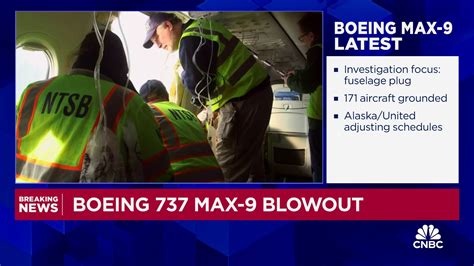
In early 2024, the National Transportation Safety Board (NTSB) released preliminary findings that painted a damning picture of Boeing’s internal operations. The report noted that four critical bolts meant to secure the door plug had not been installed during final assembly at Boeing’s factory. Investigators concluded that this catastrophic oversight directly led to the mid-air panel blowout.
Further, the NTSB criticized Boeing’s inadequate training protocols, lack of procedural oversight, and a culture that minimized safety warnings from employees. As if that weren’t enough, the report also took aim at the Federal Aviation Administration (FAA) for its ineffective regulatory oversight, accusing the agency of failing to hold Boeing accountable during key inspections and certifications.
Justice Department Intervention and Broader Implications
In a significant escalation, the U.S. Department of Justice (DOJ) has opened a criminal investigation into Boeing’s compliance with a 2021 deferred prosecution agreement (DPA). That agreement was part of the settlement over the MAX 8 crashes and required Boeing to implement sweeping changes in its safety culture and compliance systems.
The DOJ now contends that Boeing is in breach of that agreement, placing the company at risk of renewed criminal charges, fines, or potentially more restrictive federal oversight. If proven, this breach would not only amplify Boeing’s legal liabilities but also underscore the depth of dysfunction still embedded in its corporate fabric.
Human Cost: The Untold Psychological Toll
While much of the media attention has focused on the technical and regulatory failures, the flight attendants’ lawsuits spotlight the deeply human cost of Boeing’s alleged negligence. According to their legal filings, the plaintiffs continue to suffer from:
- Recurring nightmares and flashbacks of the event
- Panic attacks triggered by loud noises or sudden changes in air pressure
- Inability to return to work due to fear of flying
- Strained personal relationships caused by emotional instability
These cases serve as a stark reminder that the consequences of corporate oversight failures extend far beyond dollars and regulations — they impact real people who live with the fallout for years, sometimes decades.
Boeing’s Track Record: A Pattern of Negligence?
The blowout aboard Flight 1282 appears not as an isolated event but as part of a worrying pattern within Boeing’s recent history. From whistleblower complaints to parts mismanagement and improper documentation, the 737 MAX program has been marred by controversy since its inception.
Key concerns raised over the years include:
- Pressure on engineers to rush production to compete with Airbus
- Dismissal of safety concerns raised internally
- Overreliance on automated systems without adequate pilot training
- Repeated lapses in final quality control and inspection
All of this has culminated in a crisis of public trust for the once-iconic aircraft manufacturer. Each new revelation not only damages Boeing’s reputation but raises fundamental questions about its organizational priorities and ethical standards.
FAA Response and Industry-Wide Ripples
Following the Flight 1282 incident, the FAA temporarily grounded all 737 MAX 9 aircraft equipped with the same door plug configuration for intensive inspections. This led to dozens of flight cancellations, impacting thousands of travelers and underscoring the fragility of public confidence in Boeing’s jets.
The FAA has since mandated that all airlines using the MAX 9 model conduct rigorous inspections and implement new maintenance protocols. However, critics argue that these measures are reactive, not preventative, and that fundamental changes are needed in both Boeing’s internal processes and FAA’s certification framework.
What Lies Ahead: A Tipping Point for Accountability
The lawsuits from the Alaska Airlines flight attendants could be a tipping point in the broader reckoning Boeing is now facing. With criminal investigations underway, regulatory agencies under pressure, and public faith at an all-time low, Boeing must decide whether to continue its defensive posture or embrace transparent reform.
This moment is not just about financial liability; it’s about the future of aviation safety. The industry is watching — and so are the families, employees, and passengers whose lives hang in the balance every time a plane takes off.
Conclusion: Beyond the Courtroom
The trauma endured by the four flight attendants on Alaska Airlines Flight 1282 is a powerful testimony to the real-world consequences of lapses in corporate responsibility. Their lawsuits mark a pivotal chapter in Boeing’s ongoing saga, one that underscores the urgent need for transparency, accountability, and cultural transformation within the aerospace giant.
As court proceedings unfold, the world will be watching — not only to see whether justice is served, but to assess whether one of the most influential names in aviation is truly ready to learn from its past mistakes and chart a safer course forward.