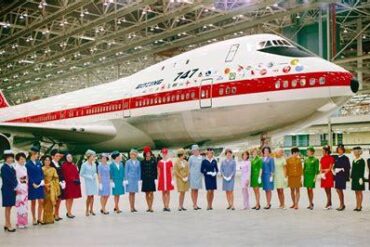
The Boeing 747, famously known as the Queen of the Skies, represents one of the most iconic chapters in commercial aviation history. For decades, the four-engine jumbo jet symbolized global travel, connecting continents with unmatched size, range, and presence. Yet by the 2010s, the aircraft appeared destined for retirement as airlines shifted toward more efficient twin-engine widebodies.
At Delta Air Lines, however, the Boeing 747 experienced an unexpected revival. After inheriting Northwest Airlines’ fleet of 747-400s during the 2008 merger, Delta became the final major US airline to operate the legendary jumbo jet. Instead of immediately disappearing, the aircraft enjoyed nearly a decade of renewed importance, carrying passengers across the Pacific and helping Delta preserve one of the world’s most important international networks.
The story of Delta’s 747 comeback was not about nostalgia alone. It was a combination of timing, network strategy, operational practicality, and the unique capabilities of a giant aircraft that still had a valuable role to play.
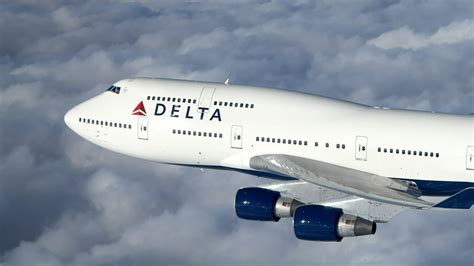
Delta Air Lines Inherited The Queen Of The Skies Through The Northwest Merger
When Delta Air Lines and Northwest Airlines completed their merger in 2008, the combined airline became one of the largest carriers in the world. The deal dramatically expanded Delta’s presence across Asia, especially through Northwest’s established Pacific network.
Northwest had spent decades developing long-haul routes from hubs including Detroit, Minneapolis, and Tokyo Narita. These routes relied heavily on the Boeing 747-400, an aircraft perfectly suited for high-capacity international operations.
At the time of the merger, Delta did not have a comparable aircraft. Its largest long-range aircraft was the Boeing 777-200ER, which offered excellent range but could not match the 747’s passenger capacity or enormous lower-deck cargo capability.
The Boeing 747-400 could carry around 400 passengers while transporting significant cargo loads beneath the main deck. This combination made it particularly valuable on busy transpacific routes where airlines needed maximum capacity between major Asian and North American cities.
Replacing the aircraft immediately would have created significant challenges. Delta would have needed to reduce capacity, add additional frequencies, or purchase new aircraft during a period when the airline industry was facing economic uncertainty.
Instead, Delta continued operating Northwest’s proven 747 fleet. The decision gave the aircraft something few expected: a second life.
Why Delta Kept Flying The Boeing 747 After The Merger
The decision to retain the 747 fleet was not simply emotional. From a business perspective, it was a logical move.
Most of Northwest’s Boeing 747-400 aircraft had already been heavily depreciated by the time of the merger. The airline had acquired the aircraft years earlier, meaning their ownership costs were relatively low compared with purchasing brand-new widebody aircraft.
In 2008, modern replacements such as the Airbus A350 and Boeing 787 Dreamliner were still years away from entering widespread airline service. Delta needed a solution that worked immediately, and the 747 was already available.
The aircraft also benefited from Northwest’s existing infrastructure. The merger transferred more than airplanes. Delta inherited:
- Experienced 747 flight crews
- Maintenance expertise
- Spare parts inventories
- Simulator facilities
- Operational knowledge
Creating a new 747 operation from scratch would have been expensive. Maintaining the existing system was far easier.
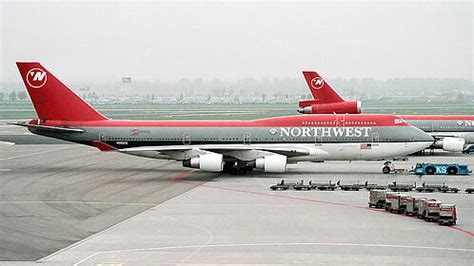
The timing also favored the jumbo jet. During the first years after the merger, Pacific cargo demand remained strong. The 747’s ability to carry passengers, freight, and fuel over long distances gave it an advantage on some of the world’s busiest international routes.
On routes between the United States and Asia, especially across the North Pacific, the aircraft’s size provided Delta with significant commercial value.
The Queen of the Skies was old, but it was still capable.
The Boeing 747 Became Delta’s Pacific Workhorse
Following the Northwest merger, Delta’s Boeing 747 fleet became central to its international strategy. The aircraft operated many important routes connecting North America with Asia.
Among the final routes operated by Delta’s 747s were:
- Detroit to Seoul Incheon
- Detroit to Tokyo Narita
- Detroit to Shanghai Pudong
- Honolulu to Tokyo Narita
- Honolulu to Los Angeles
These routes demonstrated why Delta continued using the aircraft. The 747 was not simply filling a temporary gap. It was supporting a global network that depended on large-capacity aircraft.
The aircraft was particularly valuable at airports where additional frequencies were difficult to add. For example, increasing flights into major Asian hubs such as Tokyo or Seoul required additional aircraft, crews, and valuable airport slots.
A single 747 could move hundreds of passengers while maximizing the value of limited airport capacity.
Passengers also appreciated the aircraft’s unique experience. By the 2010s, flying on a 747 had become increasingly rare. Travelers and aviation enthusiasts actively searched for opportunities to experience the aircraft before retirement.
Delta’s final years with the Queen of the Skies became almost a farewell tour that lasted several years.
The Final Era Of Delta’s Queen Of The Skies
Despite its popularity, the Boeing 747’s retirement became inevitable. The problem was not passenger demand. In fact, many Delta 747 flights continued operating with strong bookings.
The challenge was economics.
Compared with the newer Airbus A350-900, the Boeing 747-400 consumed significantly more fuel per seat. The four-engine aircraft also required more complex maintenance compared with modern twin-engine jets.
As the fleet aged, expensive heavy-maintenance inspections became unavoidable. At the same time, manufacturers were introducing aircraft that could perform the same missions more efficiently.
The aviation industry was changing. Airlines increasingly preferred aircraft like the Airbus A350 and Boeing 787, which offered long range with lower fuel consumption and fewer engines.
Delta understood that keeping the 747 forever would not be financially sustainable. The airline began preparing for a transition toward a new generation of widebody aircraft.
The Airbus A350 Replaced The Queen Of The Skies
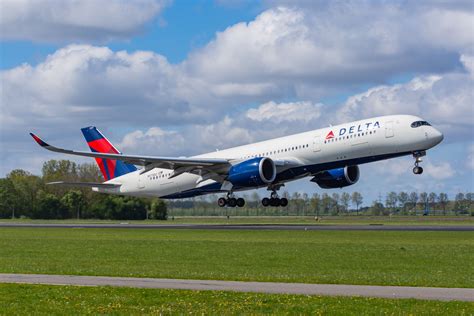
In 2014, Delta made a major commitment to the future by ordering the Airbus A350-900. The aircraft represented a completely different approach to long-haul flying.
Instead of relying on four engines and massive capacity, the A350 used advanced materials, efficient engines, and aerodynamic improvements to achieve similar missions with significantly lower operating costs.
The A350 became Delta’s first major new long-haul aircraft platform since the introduction of the Boeing 777 in the late 1990s.
Powered by Rolls-Royce Trent XWB engines, the A350 offered dramatic improvements in fuel efficiency. Its carbon-fiber composite structure reduced weight while increasing durability.
Although the aircraft carried fewer passengers than the 747, it provided a better economic balance. A typical Delta A350 configuration included:
- 32 Delta One Suites
- 48 Premium Select seats
- 226 Main Cabin seats
The aircraft also introduced a more modern passenger experience, featuring larger windows, improved cabin pressure, quieter operations, and advanced onboard systems.
The transition was gradual. As new A350 aircraft entered service, Delta retired its aging 747s one by one.
The final scheduled Delta Boeing 747 passenger flight departed Seoul Incheon for Detroit on December 31, 2017. The aircraft arrived in Detroit with a full load of passengers who wanted to experience the last commercial journey of Delta’s legendary jumbo jet.
Delta’s Last Boeing 747 Flight Became An Aviation Celebration
The retirement of Delta’s Boeing 747 was not a simple fleet change. It became a major moment for aviation enthusiasts around the world.
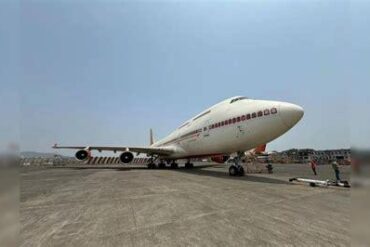
After completing its final passenger service, one of Delta’s last 747s made its way toward retirement. The aircraft eventually traveled to the desert storage and dismantling facilities in Arizona.
The farewell carried a strong emotional significance. Flight crews, mechanics, and passengers recognized that they were witnessing the end of an era.
One of Delta’s preserved aircraft now serves as a reminder of this history. The airline selected its first Boeing 747-400, an aircraft with special historical importance, for preservation at the Delta Flight Museum in Atlanta.
The preserved aircraft represents more than a single airplane. It represents the merger with Northwest, Delta’s expansion across the Pacific, and the final years when a US airline operated the world’s most famous jumbo jet.
Delta’s A350 Fleet Continues The Legacy Of Long-Haul Flying
Although the Boeing 747 disappeared from Delta’s passenger fleet, its mission continues through the airline’s growing Airbus A350 operation.
The A350 has become one of the most important aircraft in Delta’s international network. The airline expanded its fleet through additional purchases and aircraft acquisitions, including aircraft obtained through its partnership with LATAM Airlines.
By 2025, Delta operated dozens of A350 aircraft, with additional growth planned. The airline also ordered the larger Airbus A350-1000, which will provide additional capacity on major international routes.
The A350 does not replace the 747 emotionally. Few aircraft ever could. However, it replaces the jumbo jet operationally by offering the range, efficiency, and flexibility required in modern aviation.
The aircraft has allowed Delta to explore new international opportunities while reducing operating costs. It can serve routes across the Pacific, Europe, Africa, and other long-distance markets while maintaining strong cargo capability.
The Queen Of The Skies Left Delta, But Her Impact Remains
The Boeing 747’s return at Delta Air Lines was one of the most fascinating stories in modern aviation. A merger that could have ended the aircraft’s career instead gave it nearly another decade of meaningful service.
The Queen of the Skies survived because Delta needed what only the 747 could provide: enormous capacity, long-range performance, and proven reliability.
Eventually, technology moved forward. More efficient aircraft made the four-engine giant impossible to justify financially. Yet the final years of Delta’s 747 operation proved that the aircraft still had a valuable role long after many expected it to disappear.
Today, the Airbus A350 represents Delta’s next generation of global flying. But the memory of the Boeing 747 remains deeply connected with the airline’s history.
For aviation enthusiasts, Delta’s final 747 flights were not simply retirements. They were celebrations of one of the greatest aircraft ever built.
The Queen of the Skies may no longer fly for Delta, but her legacy continues to shape the airline’s long-haul ambitions.