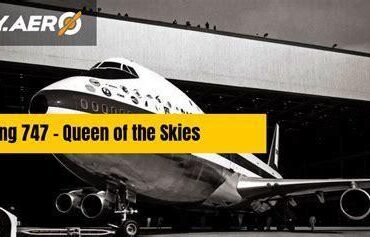
The Boeing 747-8 occupies a strange and fascinating place in commercial aviation in 2026. This is no longer the era when the Queen of the Skies dominated every major intercontinental corridor by default. Twin-engine widebodies have rewritten the economic rulebook, and airlines now obsess over flexibility, frequency, and fuel efficiency. Yet on a very small number of routes, the Boeing 747-8 remains not only viable, but uniquely powerful. These are the longest nonstop services flown by the type, routes where distance, demand, and operational constraints align just right to justify the world’s last and largest passenger 747.
These flights matter because they reveal how airlines think when the usual logic breaks down. When adding another frequency is impossible, when premium demand is thick enough to fill a massive front cabin, and when belly cargo revenue quietly tips the balance sheet, the Boeing 747-8 becomes a strategic weapon. In 2026, every remaining nonstop ultra-long-haul deployment of the aircraft is deliberate, data-driven, and economically surgical. This is a look at where those routes are, why they exist, and what they tell us about the final chapter of an aviation icon.
Understanding the Boeing 747-8’s Modern Role
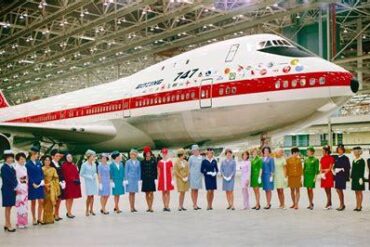
The Boeing 747-8 is the final evolutionary step of a lineage that reshaped global travel. Compared with earlier 747 variants, it is longer, quieter, and far more capable. New-generation engines, aerodynamic refinements, and a redesigned wing allowed it to stretch its legs further while carrying a heavier payload. On paper, it was built for a future that expected sustained growth in slot-constrained megahubs and ever-larger aircraft. Reality, of course, had other ideas.
By 2026, the aircraft’s role has narrowed dramatically. Airlines are no longer looking for a generalist long-haul workhorse. Instead, they deploy the 747-8 as a capacity concentrator. It shines when an airline needs to move a large number of passengers and cargo on a single departure, particularly on routes where airport slots are scarce or politically sensitive. The aircraft’s cavernous belly also gives it an advantage on sectors where cargo demand remains strong year-round, even when passenger demand fluctuates.
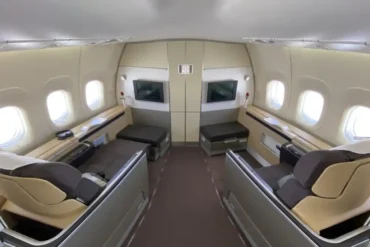
There is also a branding element that is impossible to ignore. The 747-8 is still a flagship. Its upper deck allows airlines to create premium cabins that feel spatially different from anything on a twinjet. That distinction matters on routes filled with high-yield corporate travelers, diplomats, and long-haul connecting passengers who associate the aircraft with prestige and reliability.
Frankfurt to Buenos Aires: The Longest of Them All
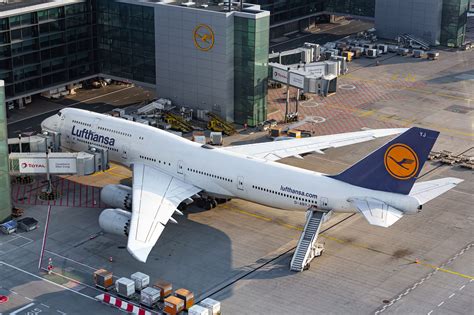
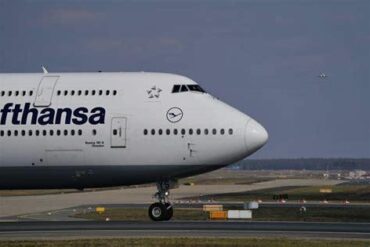
Among all scheduled passenger services operated by the Boeing 747-8 in 2026, one route stands above the rest in sheer distance and commitment. Lufthansa’s nonstop service between Frankfurt Airport (FRA) and Ministro Pistarini International Airport (EZE) in Buenos Aires is the longest regular Boeing 747-8 route in the world. This transatlantic and South Atlantic crossing links Germany directly with Argentina on a sector that pushes deep into ultra-long-haul territory.
What makes this route remarkable is not just its length, but its consistency. Lufthansa operates it daily, in both directions, using a standardized 364-seat configuration. That kind of regularity is rare for an aircraft with such high trip costs. Each rotation consumes a significant amount of block time, meaning that delays or cancellations can cascade across the wider network. Lufthansa’s willingness to commit the aircraft so heavily speaks volumes about the route’s underlying strength.
Economically, the numbers are immense. Each direction generates close to a billion available seat miles, meaning that even small shifts in load factor or yield can have an outsized impact on profitability. South America is also where the Boeing 747-8’s cargo capability becomes a decisive advantage. Agricultural exports, pharmaceuticals, and industrial goods fill the belly holds, allowing Lufthansa to balance passenger revenue with freight income in a way that smaller widebodies struggle to match on such long sectors.
Frankfurt to São Paulo: Heavy Demand Meets Heavy Metal
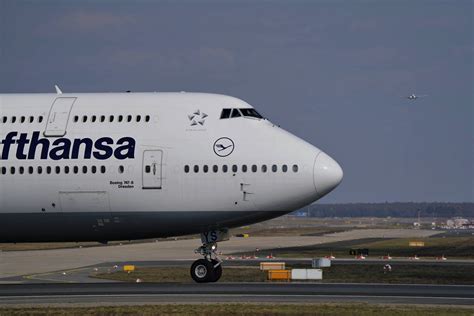
The second-longest Boeing 747-8 route in 2026 also originates in Frankfurt, reinforcing the city’s role as the type’s global stronghold. Lufthansa’s nonstop service to São Paulo–Guarulhos International Airport (GRU) is another daily operation that demonstrates how carefully the airline deploys this aircraft. While slightly shorter than the Buenos Aires route, the Frankfurt–São Paulo sector still produces enormous capacity, with more than 800 million available seat miles per direction.
This route sits at the intersection of business travel, leisure demand, and cargo flows. São Paulo is South America’s largest economic hub, and traffic between Brazil and Germany remains robust across multiple market segments. The Boeing 747-8 allows Lufthansa to funnel demand into a single high-capacity departure, reducing per-seat costs when loads are strong and preserving precious slots at both ends of the route.
Operationally, the aircraft’s range and payload margin are critical. Headwinds across the South Atlantic can be punishing, particularly during certain seasons. The 747-8’s ability to carry a full passenger load without severe cargo restrictions gives Lufthansa a level of schedule reliability that is hard to replicate with smaller aircraft on the same sector.
Transpacific Scale: Incheon to Los Angeles
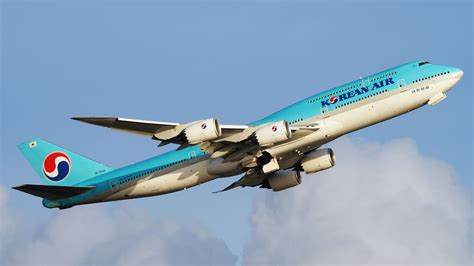
While Lufthansa dominates the South Atlantic with the Boeing 747-8, Korean Air has carved out its own niche across the Pacific. The airline’s nonstop service between Incheon International Airport (ICN) and Los Angeles International Airport (LAX) is the longest transpacific route regularly operated by the type in 2026. This is a market defined by intense competition, massive demand, and relentless pressure on airport infrastructure.
Korean Air deploys the 747-8 here for a combination of reasons that go beyond simple seat count. LAX is notoriously slot-constrained, especially at desirable times of day. Upgauging to a very large aircraft allows the airline to increase capacity without adding frequencies. At the same time, the route benefits from strong premium demand, including corporate travelers, entertainment industry traffic, and high-yield connecting passengers.
Cargo is once again a key part of the equation. The transpacific freight market remains one of the most lucrative in the world, and the 747-8’s belly capacity allows Korean Air to serve both passengers and cargo customers efficiently on a single flight. With hundreds of rotations per year, this route alone accounts for nearly a billion available seat miles in each direction, making it one of the most economically significant deployments of the aircraft anywhere in the world.
Lufthansa’s Ultra-Long-Haul Network Beyond South America
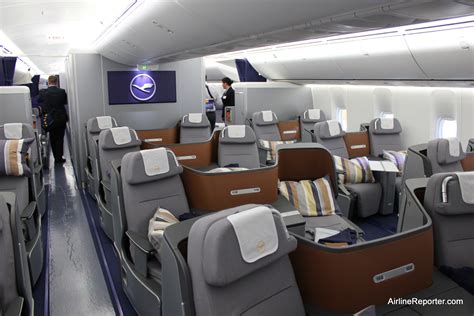
Beyond its headline routes to Argentina and Brazil, Lufthansa continues to use the Boeing 747-8 on a select group of ultra-long-haul services to North America and Asia. Destinations such as Los Angeles, San Francisco, Mexico City, and Tokyo Haneda see varying levels of 747-8 service depending on season and demand patterns. These routes are not always the absolute longest in distance, but they are among the most demanding in terms of capacity planning.
Mexico City, for example, presents unique operational challenges due to its high elevation and long runway requirements. The 747-8’s performance characteristics allow Lufthansa to operate the route with fewer payload compromises than some alternatives. In Asia, Tokyo Haneda’s severe slot restrictions make larger aircraft particularly attractive, as airlines have limited opportunities to add frequencies.
In all of these cases, Lufthansa treats the 747-8 as a flexible but precious asset. It is rotated carefully across the network, often appearing on routes during peak seasons or periods of constrained widebody availability. When demand softens, the aircraft is typically the first to be swapped out, reflecting its high fixed costs and sensitivity to load factors.
Who Still Flies the Passenger Boeing 747-8 in 2026?
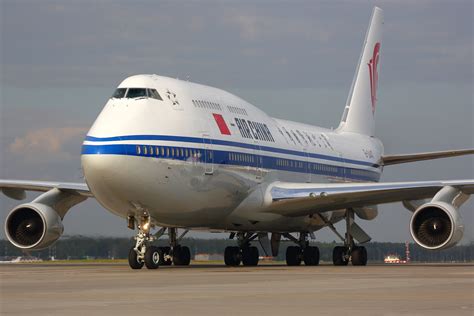
By 2026, only three airlines operate the passenger Boeing 747-8 in meaningful numbers: Lufthansa, Korean Air, and Air China. Among them, Lufthansa is by far the largest and most committed operator, using the aircraft as a cornerstone of its Frankfurt-centric long-haul strategy. The airline’s fleet allows it to cover multiple ultra-long-haul routes simultaneously while maintaining operational resilience.
Korean Air’s approach is more selective. With a much smaller fleet, the airline focuses on marquee routes where the aircraft’s size and cargo capacity deliver maximum value. These tend to be high-profile international services that also reinforce the airline’s brand presence in key markets.
Air China’s use of the Boeing 747-8 is more opaque and variable. The aircraft is primarily deployed on long-haul trunk routes out of Beijing when demand conditions justify its size. Fleet strategy shifts and geopolitical factors have influenced utilization patterns, but the underlying logic remains consistent: concentrate capacity on a small number of routes rather than spreading it thinly across the network.
Why These Routes Still Exist in a Twin-Engine World
The continued operation of the longest nonstop Boeing 747-8 routes in 2026 is not an accident or a nostalgic indulgence. It reflects a very specific economic reality. These routes combine high absolute demand, strong premium yields, slot constraints, and meaningful cargo revenue. Remove any one of those pillars, and the case for the aircraft collapses.
The 747-8 is expensive to operate, and airlines are acutely aware of that fact. It thrives only when it is full, or nearly full, and when its belly holds are generating revenue alongside the cabin. On the right route, however, it can still outperform smaller aircraft by concentrating demand and reducing per-seat costs at scale.
There is also an element of network stability at play. On ultra-long-haul sectors, reliability matters. The aircraft’s payload flexibility and range margins provide a buffer against weather, headwinds, and operational disruptions. That reliability can be worth more than marginal fuel savings when schedules are tightly interwoven across global hubs.
The Bottom Line: A Niche Giant with a Purpose

In 2026, the longest nonstop Boeing 747-8 routes represent the aircraft at its most focused and most effective. These flights are not relics clinging to relevance, but carefully chosen deployments that solve real network problems for the airlines that still operate the type. Routes like Frankfurt–Buenos Aires and Incheon–Los Angeles show how a very large aircraft can still make sense when the conditions are right.
The Boeing 747-8 remains one of the most capable passenger aircraft ever built, able to cross oceans with ease while carrying hundreds of passengers and substantial cargo. Its continued presence on a handful of ultra-long-haul routes is a reminder that aviation economics are not one-size-fits-all. Even in an age dominated by efficient twinjets, there is still room for a giant, provided it is used with precision, discipline, and a clear understanding of its strengths.
These routes are the final, fascinating proof that the Queen of the Skies still knows how to choose her stage.