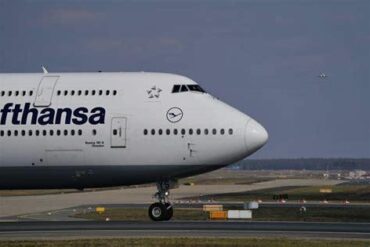
For aviation enthusiasts and luxury travelers alike, few experiences remain as iconic as flying in first class aboard a Boeing 747-8. As one of the last major airlines still operating passenger versions of the legendary jumbo jet, Lufthansa continues to offer a product that combines exclusivity, heritage, and premium service in a way that few competitors can match. In 2026, however, experiencing this level of luxury comes at a substantial cost, with fares varying dramatically depending on destination, demand, and market dynamics.
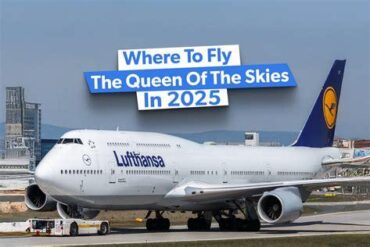
The airline’s Boeing 747-8 fleet operates exclusively from Frankfurt, connecting Germany’s largest hub to major destinations across North America, South America, Africa, and Asia. While the aircraft itself remains a symbol of aviation’s golden age, the pricing attached to its coveted nose-cabin first-class seats reveals how modern premium travel economics shape the luxury airline market.
The question many travelers ask is straightforward: How much does a Lufthansa Boeing 747-8 first-class ticket actually cost in 2026, and what exactly are passengers paying for?
The answer is far more interesting than a simple fare chart.
By examining Lufthansa’s entire Boeing 747-8 first-class network, a clear picture emerges of how one of the world’s most recognizable airlines values its flagship premium product.
After all, these are not simply airline seats. They are among the most exclusive commercial aviation experiences still available.
Lufthansa’s Boeing 747-8 First Class Network in 2026
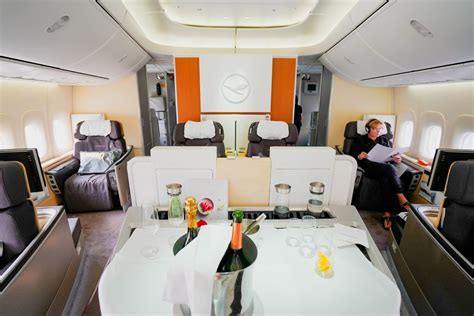
Lufthansa currently operates first class on its Boeing 747-8 fleet across eleven long-haul routes departing from Frankfurt. Unlike many airlines that have gradually removed first class from their fleets, Lufthansa continues to maintain the product as a critical component of its premium travel strategy.
The routes span four continents and serve some of the world’s most important business and leisure markets. Destinations include Los Angeles, San Francisco, Chicago, Newark, Miami, Washington D.C., Mexico City, Tokyo, Johannesburg, São Paulo, and Buenos Aires.
What makes these flights particularly special is the location of the first-class cabin itself. Unlike most premium cabins found behind the cockpit area, Lufthansa’s Boeing 747-8 first class occupies the aircraft’s distinctive nose section. Positioned beneath and ahead of the upper-deck cockpit, the cabin offers a uniquely quiet and private atmosphere that has become synonymous with premium 747 travel.
The exclusivity begins with numbers. Only eight passengers can occupy the entire cabin.
That limited capacity creates an experience that feels less like commercial aviation and more like a private club in the sky.
How Much Does Lufthansa First Class Cost on the Boeing 747-8?
In June 2026, round-trip first-class fares on Lufthansa’s Boeing 747-8 range from approximately $10,100 to nearly $14,850, creating a pricing gap of more than $4,700 between the least expensive and most expensive destinations.
The highest fares are found on routes serving major premium travel markets. Los Angeles ranks as the most expensive destination at roughly $14,842, closely followed by Tokyo at $14,831 and San Francisco at $14,749.
Chicago also commands a significant premium, with fares exceeding $14,000, while Mexico City approaches the same pricing territory.
On the East Coast of the United States, prices become somewhat more moderate. Newark, Miami, and Washington D.C. remain expensive but generally sit below the West Coast markets.
The biggest surprise appears in South America.
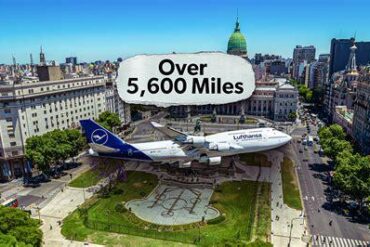
Despite being one of the longest flights in Lufthansa’s network, Buenos Aires emerges as the least expensive first-class destination at approximately $10,100. São Paulo follows closely behind, while Johannesburg occupies a middle position between the South American and North American markets.
The fare differences demonstrate an important reality about premium aviation: passengers are rarely paying solely for distance.
They are paying for market demand.
Why Distance Does Not Determine First-Class Pricing
Many travelers assume longer flights automatically cost more. Lufthansa’s Boeing 747-8 first-class pricing proves otherwise.
Buenos Aires represents one of the airline’s longest scheduled routes, yet it remains the cheapest first-class destination in the entire network. Meanwhile, Tokyo and Los Angeles command the highest fares despite not being the longest sectors.
This pricing strategy reflects the economic realities of global premium travel.
Airlines determine first-class pricing largely based on the strength of premium demand, the concentration of corporate travelers, local economic conditions, and competitive pressure from rival carriers.
Los Angeles and San Francisco provide perfect examples. Both cities generate significant demand from technology companies, financial institutions, entertainment executives, and high-net-worth travelers. These passengers are often willing to pay substantial premiums for convenience, comfort, and prestige.
Tokyo similarly benefits from strong corporate demand and a premium-oriented business culture where first-class travel remains attractive for senior executives and affluent travelers.
By contrast, South American markets generally produce lower volumes of premium traffic. Even though the flights themselves are lengthy and operationally expensive, the airline cannot charge the same premium if market demand does not support it.
As a result, Lufthansa adjusts pricing to maximize revenue rather than simply matching fares to flight duration.
This approach explains why two passengers flying aboard the same aircraft, enjoying the same service and amenities, may pay thousands of dollars more or less depending entirely on destination.
Inside Lufthansa’s Exclusive Boeing 747-8 First Class Cabin
The cabin itself remains one of the defining attractions of the Lufthansa first-class experience.
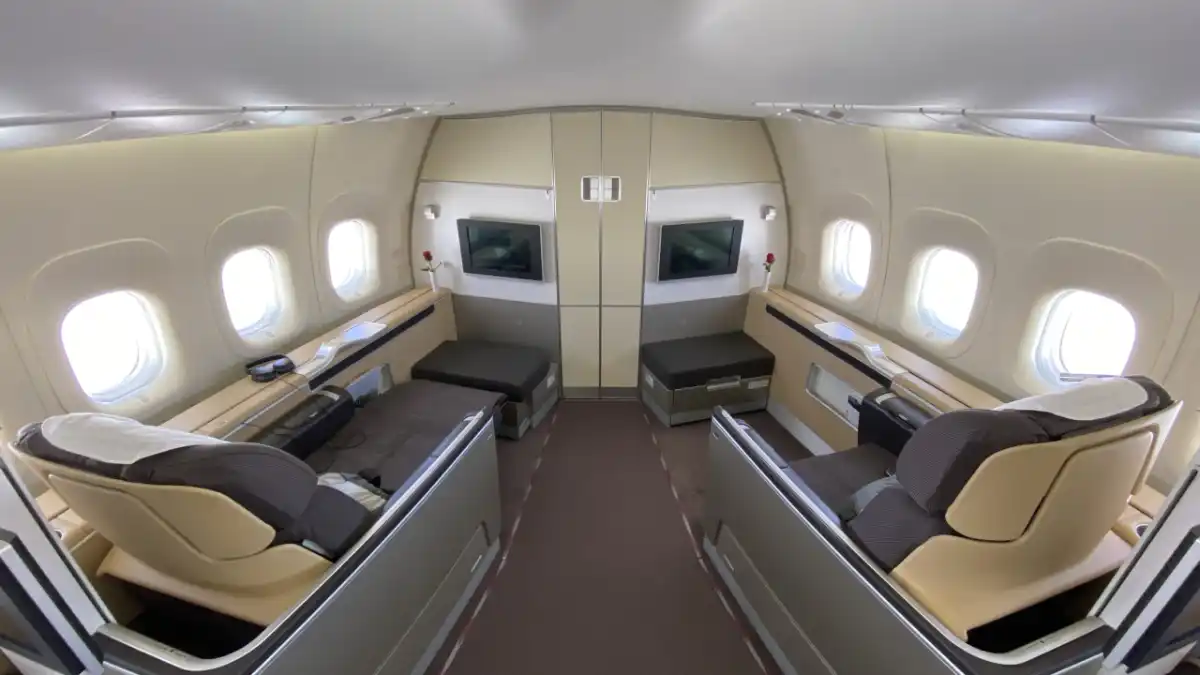
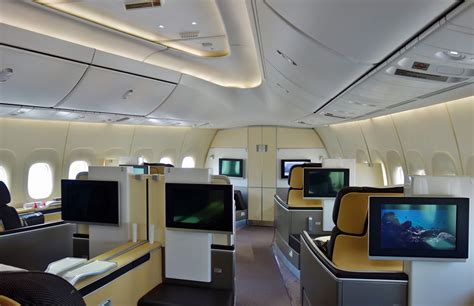
Located in the aircraft’s iconic nose section, the cabin features eight spacious seats arranged in a 1-2-1 configuration. Unlike newer enclosed suites found on some competitors, Lufthansa’s current first-class design remains relatively open.
While some travelers may view this as dated, others appreciate the spacious atmosphere and unobstructed cabin layout.
The most desirable seats are generally considered to be 2A and 2K. Positioned near the windows and separated from the central cabin activity, these seats provide exceptional privacy while preserving the unique sensation of flying in the very front of a Boeing 747.
The experience differs noticeably from virtually every other aircraft type.
Passengers seated in the nose section often describe a distinctive feeling during takeoff and landing due to their location at the extreme front of the aircraft.
For aviation enthusiasts, that alone adds a layer of exclusivity that is impossible to replicate elsewhere.
The Frankfurt First Class Terminal Experience
A significant portion of the ticket’s value begins long before boarding.
Lufthansa’s dedicated First Class Terminal in Frankfurt has achieved near-legendary status among premium travelers.
Unlike standard airport lounges, this facility functions as a completely separate terminal. First-class passengers bypass the main terminal complex and enter a private building featuring dedicated security screening, fine dining, premium bars, cigar lounges, relaxation areas, and even bathrooms equipped with full-sized bathtubs.
The environment is designed to eliminate nearly every traditional airport inconvenience.
Rather than navigating crowded terminals and busy gate areas, passengers relax in a private setting while Lufthansa staff handle virtually every aspect of the journey.
When departure time arrives, the experience becomes even more memorable.
Passengers are driven directly to their aircraft across the airport ramp in luxury vehicles, often including Porsche models. Instead of walking through jet bridges alongside hundreds of other travelers, they arrive at the aircraft in a manner more commonly associated with private aviation.
For many travelers, this ground experience is one of the strongest reasons to specifically route journeys through Frankfurt.
Dining, Service, and Sleep at 35,000 Feet
Once onboard, Lufthansa’s first-class service aims to justify its premium pricing through personalized attention and refined hospitality.
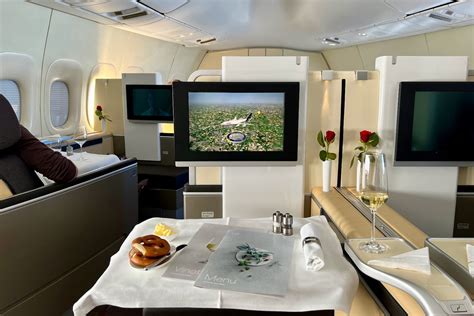
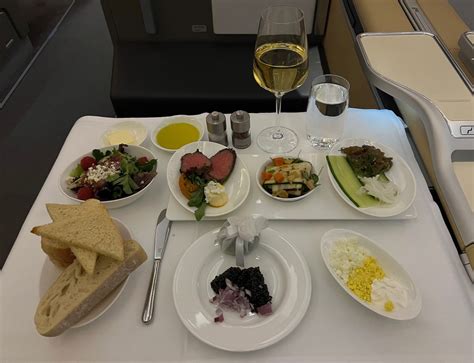
Meals are prepared around multi-course dining concepts developed in collaboration with renowned chefs. Service includes premium wines, Champagne selections, caviar offerings on many routes, and restaurant-style presentation using fine porcelain and crystal glassware.
Unlike business-class service, which must accommodate dozens of passengers simultaneously, first class operates on a significantly more intimate scale.
Crew members can devote substantial attention to each traveler, creating a level of personalization rarely found elsewhere on commercial aircraft.
The seats convert into fully flat beds enhanced by mattress toppers, premium bedding, and luxury sleep amenities. On longer flights, passengers receive pajamas and high-end amenity kits designed to improve comfort throughout the journey.
While competitors in the Gulf region and Asia have introduced increasingly elaborate enclosed suites, Lufthansa’s strengths remain rooted in service consistency, operational reliability, and a highly polished overall experience.
For many loyal customers, those qualities remain more important than the latest cabin design trends.
The Allegris Transformation Will Change Everything
Although Lufthansa’s existing first-class product remains highly regarded, major changes are already underway.
The airline has begun retrofitting its Boeing 747-8 fleet as part of the ambitious Allegris modernization program.
The initial retrofit phase focuses primarily on business-class upgrades, introducing Lufthansa’s newest seating products to portions of the fleet. However, the most significant transformation for first-class travelers will occur during the second phase.
Current plans call for the existing eight-seat first-class cabin to be replaced by only three enclosed suites.
Two of these suites will accommodate individual travelers, while the third, known as Suite Plus, will offer an ultra-premium double suite designed for couples or travelers seeking unmatched personal space.
The new suites will feature floor-to-ceiling walls, privacy doors, advanced climate controls, integrated wardrobes, and enormous entertainment displays.
These upgrades will bring Lufthansa’s first-class product into direct competition with the most advanced luxury cabins currently operating worldwide.
However, the reduction from eight seats to three may prove even more significant than the new design itself.
Why Future Lufthansa First Class Fares Could Rise Dramatically
Basic economics suggests that fewer seats generally lead to higher prices.
By reducing first-class capacity from eight passengers to only three suites, Lufthansa will dramatically limit available inventory on every Boeing 747-8 flight.
This reduction will likely impact both cash fares and frequent-flyer award availability.
Demand for Lufthansa first class already exceeds supply on many routes. When the number of available seats falls by more than 60%, obtaining a reservation will become substantially more difficult.
Industry observers widely expect pricing to rise as the Allegris suites enter service.
The improved hard product, combined with dramatically reduced capacity, creates conditions that support significantly higher fares.
Travelers considering the current first-class experience may therefore be witnessing the final years of what many regard as one of aviation’s best-value ultra-premium products.
The Future of Lufthansa’s Boeing 747-8 Fleet
Despite widespread retirement of four-engine passenger aircraft across the industry, Lufthansa remains firmly committed to the Boeing 747-8.
The airline operates nineteen examples, making it the world’s largest passenger operator of the type.
With aircraft delivered between 2012 and 2015, the fleet still possesses considerable operational life. Lufthansa has repeatedly demonstrated its confidence in the aircraft through continued investments, including the extensive Allegris retrofit program.
Nevertheless, the long-term future points toward newer twin-engine aircraft.
Additional Airbus A350 variants and future Boeing 777-9 deliveries will gradually assume a larger role within Lufthansa’s long-haul network. These aircraft offer substantially lower operating costs and improved fuel efficiency compared with the four-engine jumbo jet.
Eventually, the economics of modern aviation will likely favor twin-engine replacements.
Until that day arrives, however, Lufthansa’s Boeing 747-8 continues to provide one of the most distinctive first-class experiences available anywhere in the world.
For travelers willing to spend between $10,000 and $15,000 on a round-trip ticket, the reward is not merely transportation. It is the opportunity to experience the final chapter of luxury travel aboard the world’s last great passenger jumbo jet—a privilege that is becoming increasingly rare with every passing year.