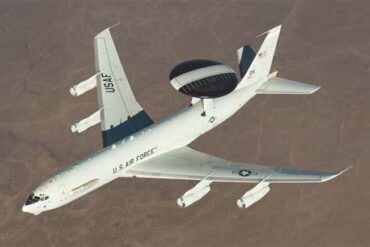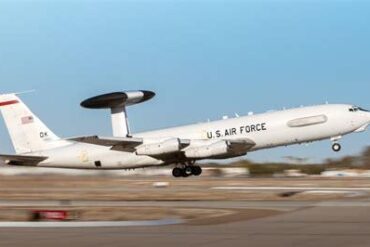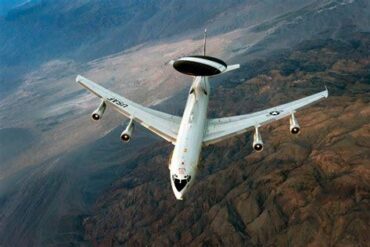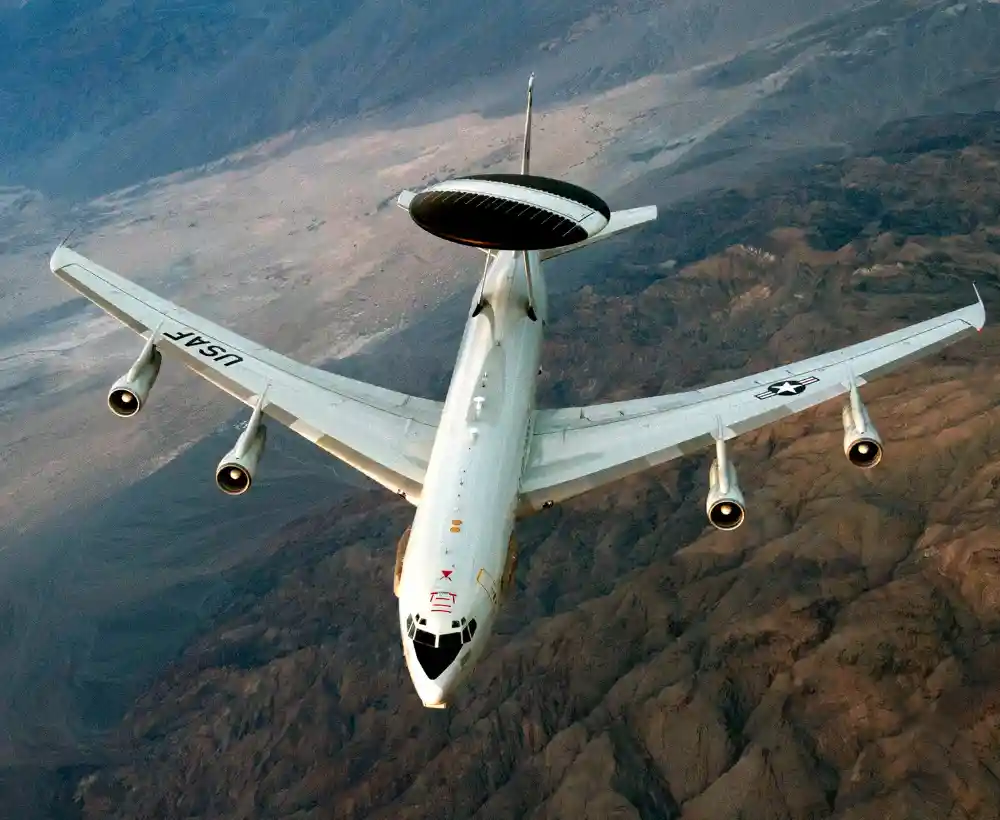
For almost five decades, the Boeing E-3 Sentry has served as one of the most recognizable airborne surveillance platforms in the United States Air Force. Built around the aging Boeing 707 airframe, the aircraft transformed how commanders could see and manage a battlespace. Its most distinctive feature, however, is not the four engines or the heavily modified fuselage. It is the enormous rotating radar dome mounted above the aircraft.
That dome, commonly called the rotodome, is both the defining feature and one of the greatest maintenance liabilities of the E-3 fleet. Measuring roughly 30 feet across and weighing about six tons, it is an extraordinary mechanical system that must rotate reliably while carrying sensitive radar equipment high above the fuselage. The radar itself is only part of the engineering challenge. Motors, gears, hydraulic systems, rotary joints, bearings, cooling equipment, electrical connections, structural mounts, and specialized support equipment all have to work together.
The problem is becoming particularly serious because the E-3 is approaching the end of its practical service life. The US Air Force once operated 31 E-3 aircraft, but only about 16 remain. These survivors are increasingly expensive to maintain, while the industrial ecosystem that once supported their construction and overhaul has largely disappeared. Replacing the radar dome is therefore not simply a matter of manufacturing another large piece of aircraft equipment. It would require recreating an industrial capability that largely vanished decades ago.
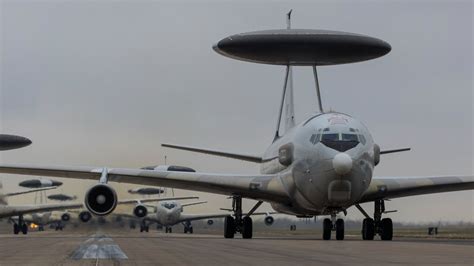
The E-3 Sentry Rotodome Is More Than a Radar Housing
The easiest way to underestimate the E-3’s rotodome is to think of it as a large container carrying a radar antenna. It is far more complicated than that. The dome forms part of a precision mechanical system that allows the radar array to rotate continuously while maintaining electrical, hydraulic, and cooling connections between the rotating equipment and the aircraft.
The original APY-1/2 radar architecture depends heavily on mechanical rotation. The entire assembly turns at approximately six revolutions per minute, providing the radar with a complete 360-degree view of the surrounding airspace. That means the system cannot simply be treated like a conventional aircraft component that is installed and forgotten. Every rotation places demands on bearings, drive mechanisms, seals, joints, wiring, and structural interfaces.
The rotating assembly also creates an unusual engineering environment. The equipment is positioned roughly 20 feet above the fuselage, creating a substantial load on the structures supporting it. The dome’s mass and height produce leverage that becomes especially important during turbulence, hard landings, and other high-load events. Even if the radar continues functioning, the supporting structure can require detailed inspection for fatigue and cracking.
This makes the rotodome an aircraft system in its own right. A failure in a relatively small component can prevent the entire aircraft from performing its primary mission. The E-3 can remain mechanically capable of flying while effectively losing its purpose as an airborne early warning aircraft.
Why Rebuilding the E-3 Radar Dome Is So Difficult
The central problem is not that modern engineers are incapable of building a 30-foot rotating structure. They clearly are. The difficulty is recreating a highly specialized product for an aircraft whose production ended long ago and whose industrial supply chain has almost completely disappeared.
Northrop Grumman supplied the E-3’s radar system, while Boeing produced the underlying 707 airframe. Both companies have moved their industrial focus toward newer aircraft programs. Modern production lines, tooling, manufacturing processes, engineering documentation, and specialist labor are optimized around aircraft that are still being produced or supported in significant numbers.
The E-3 is different. It represents a shrinking fleet with an increasingly fragmented supply chain. Many companies that once produced individual components have disappeared, merged, changed product lines, or retired the tooling necessary to reproduce parts. Even when technical drawings exist, drawings alone cannot recreate decades of manufacturing knowledge.
This is where reverse engineering becomes extraordinarily expensive. If a gear, bearing interface, seal, rotary joint, or other specialized component fails, the Air Force cannot necessarily place an order for a new production item. Engineers may have to inspect an existing part, determine its material and manufacturing specifications, reconstruct its dimensions, develop new tooling, qualify the replacement, and then manufacture a tiny quantity.
A component that once cost hundreds of dollars can therefore become a six-figure engineering exercise. The price is not determined by the raw material. It reflects the cost of rediscovering how to manufacture something that was once produced routinely.
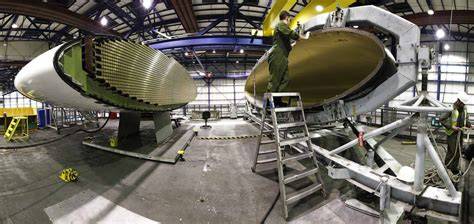
The Rotating Mechanism Is the Real Maintenance Nightmare
The radar antenna receives most of the attention, but some of the most difficult components to sustain are hidden inside the rotation mechanism. The massive turntable bearings and rotary joints are particularly important because they allow the dome to move while transferring power, signals, and other services.
Mechanical systems have an unavoidable disadvantage compared with electronically steered radar arrays: they contain moving parts that wear out. Every rotation adds another cycle to bearings, gears, motors, and joints. Over years of operation, even components designed for extremely long service lives eventually develop fatigue, wear, corrosion, or seal degradation.
The E-3’s maintenance burden is therefore cumulative. A fleet that was once large enough to justify dedicated industrial infrastructure no longer has that economic scale. The remaining aircraft must increasingly depend on parts recovered from retired airframes. This practice, known as cannibalization, can keep aircraft flying, but it is hardly a sustainable long-term strategy.
Eventually, the number of usable donor components declines. The Air Force can remove a part from one aircraft to keep another operational, but it cannot create an unlimited supply of replacements by dismantling retired jets. Every successful cannibalization effectively consumes part of the remaining inventory.
That dynamic helps explain why the E-3 has become so expensive to operate. The reported cost of keeping an E-3 airborne can approach $60,000 per flight hour, with a significant maintenance workforce devoted to systems that newer aircraft can operate with considerably less mechanical complexity.
A Six-Ton Dome Creates Structural Problems Too
The rotodome does not merely add maintenance requirements to the radar system. Its physical presence also affects the underlying aircraft structure.
A 30-foot-wide, six-ton assembly sitting above a decades-old fuselage creates substantial stresses. The supporting struts and attachment points must carry the weight during ordinary flight while also absorbing forces generated by turbulence, maneuvering, landing impacts, and aerodynamic loads.
Over time, repeated stress can produce fatigue damage. Engineers therefore have to inspect critical structures using nondestructive testing methods, including advanced imaging techniques, to identify cracks that may not be visible during ordinary inspections.
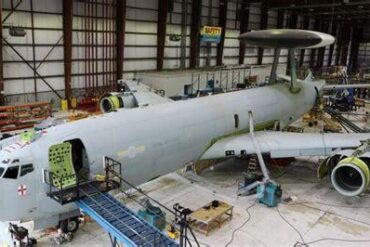
Finding a structural problem is only the beginning. If a mounting component needs replacement, the Air Force may face another supply-chain problem because the relevant part may no longer be readily available. A custom-machined replacement can require substantial engineering work, while removing or reinstalling the dome itself requires specialized lifting equipment.
This creates an uncomfortable cycle. The older the airframe becomes, the more difficult major structural work becomes; the more difficult the work becomes, the more expensive it is to keep the aircraft economically viable.
Why the E-7 Wedgetail Makes the E-3 Look Even Older
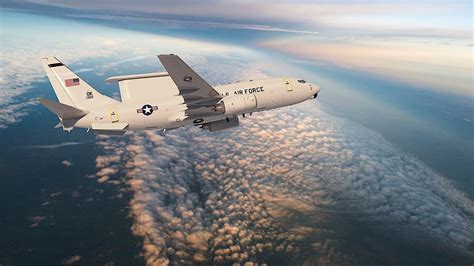
The E-3’s maintenance problems would be easier to tolerate if its radar remained technologically competitive. Unfortunately, the opposite is increasingly true.
The E-7 Wedgetail uses a Multi-role Electronically Scanned Array, or MESA, positioned in a fixed structure above the fuselage. Instead of mechanically rotating a radar antenna through 360 degrees, electronic beam steering allows the system to direct radar energy rapidly toward different areas of interest.
That difference is fundamental. A mechanically rotating radar must physically move before its antenna can return to a particular sector. An electronically scanned system can shift attention almost instantaneously.
The E-7 can therefore combine broad-area surveillance with focused attention on important targets. It can maintain surveillance across the battlespace while dedicating additional radar resources to a particular sector or contact. This capability becomes increasingly valuable when dealing with stealth aircraft, cruise missiles, electronic warfare, and highly dynamic air battles.
The E-3’s radar was revolutionary when introduced, but its mechanical architecture represents a different technological era. Modern threats move faster, hide more effectively, and exploit electromagnetic environments that were not the primary design concern when the original system was developed.
The E-2D Hawkeye Shows Another Path Forward
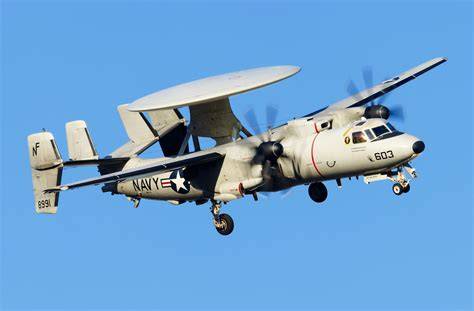
The Northrop Grumman E-2D Hawkeye provides an interesting counterexample because it still has a rotating radar dome. At first glance, that might suggest that the E-3 could simply adopt the same approach.
The reality is considerably more complicated.
The E-2D’s radar architecture is fundamentally different from the E-3’s legacy system. Its AN/APY-9 radar uses electronic scanning within the rotating antenna system, allowing the aircraft to maintain a sophisticated level of target tracking even while the dome continues to turn.
That distinction is critical. The E-2D retains mechanical rotation but reduces its dependence on mechanical scanning. The E-3, by contrast, relies much more heavily on the physical movement of the antenna itself.
The E-2D demonstrates that a rotating dome does not automatically mean obsolete radar technology. What matters is what is inside the dome and how the radar manages its electronic resources.
However, adapting modern radar technology to an E-3 would not eliminate the aircraft’s other problems. The 707-based airframe would remain old. The dome-support structure would remain old. The motors, bearings, rotary joints, wiring, cooling systems, and specialized ground equipment would remain part of the maintenance equation.
In other words, upgrading the radar would not magically transform the E-3 into a new aircraft.
Why a New E-3 Dome Could Cost More Than It Is Worth
Replacing the rotodome sounds straightforward until the complete industrial requirement is considered.
A new dome would require engineering, tooling, materials qualification, manufacturing capability, structural certification, radar integration, environmental testing, flight testing, and long-term support. Specialized heavy-lift equipment would also be required to remove the old assembly and install the new one safely.
The economics become even more difficult because the customer would be supporting a tiny and shrinking fleet. Creating an entirely new production line for perhaps a handful of replacement domes makes little commercial sense.
There is also a liability problem. Working on an aging 707 airframe while removing a massive structure mounted high above the fuselage is not comparable to servicing a modern production aircraft. Contractors would face significant engineering and insurance risks, which would inevitably increase the price.
This explains why the obstacle is better understood as an industrial-base problem rather than a simple manufacturing problem. The United States still possesses the technical knowledge to design sophisticated radar systems. What it lacks is a practical reason to recreate the exact specialized industrial ecosystem required to reproduce an obsolete E-3 rotodome.
The E-3 Sentry Has Become a Logistics Problem
The declining E-3 fleet illustrates a broader reality about military aviation. A platform does not become obsolete simply because its aircraft structure is old. It becomes obsolete when the cost and complexity of maintaining its ecosystem exceed the operational value it provides.
The E-3 has reached that uncomfortable stage.
The United States has already invested billions of dollars in upgrades, including the extensive Block 40/45 modernization effort. Those upgrades improved the aircraft’s mission systems, but they could not eliminate the fundamental limitations of an aging airframe and mechanical radar architecture.
At the same time, Boeing and Northrop Grumman have moved toward newer platforms and technologies. Modern production programs such as the 737-based E-7 benefit from active industrial ecosystems, contemporary components, and larger production bases.
The E-3 increasingly represents the opposite: a small fleet dependent on retired aircraft, custom engineering, aging infrastructure, specialized personnel, and equipment that is becoming difficult to replace.
That is why the rotodome is so significant. It is a physical symbol of the larger problem facing the Sentry.
Why the Rotodome Is Nearly Impossible to Replace
The phrase “nearly impossible” does not mean that modern aerospace engineers could never build another rotating radar dome. They could. The real issue is whether anyone could economically reproduce the specific E-3 system, certify it, integrate it, support it, and justify the investment for a shrinking fleet.
The answer is increasingly difficult to defend.
A replacement would have to recreate obsolete tooling, recover specialized manufacturing knowledge, qualify new suppliers, reproduce unique components, solve structural integration issues, and maintain specialized equipment for aircraft that the US Air Force is already preparing to retire.
The problem is therefore cumulative. The 707 airframe is old. The radar is old. The mechanical rotation system is old. The supply chain is old. The specialist workforce is shrinking. The fleet itself is shrinking.
When all of those factors converge, the cost of preserving the original architecture can exceed the cost of transitioning to a new platform.
The End of an Era for the E-3 Sentry
The E-3 Sentry remains one of the most important airborne command-and-control aircraft ever operated by the United States. Its enormous rotodome became an unmistakable symbol of Cold War-era airpower and helped commanders understand an enormous battlespace from thousands of feet above the ground.
But the same architecture that made the aircraft revolutionary has become one of its greatest weaknesses.
The six-ton rotating dome requires specialized mechanical systems, aging support structures, scarce components, and an industrial base that no longer exists at meaningful scale. Rebuilding that capability for a small fleet would be extraordinarily expensive, while modern alternatives can provide better surveillance with fewer moving parts and more advanced electronic scanning.
The E-7 offers a fixed electronically scanned solution, while the E-2D demonstrates how modern radar technology can retain a rotating form while relying heavily on electronic scanning. Neither aircraft is simply an upgraded E-3, and that is precisely the point.
The E-3’s greatest problem is no longer just that its radar is old. It is that almost everything surrounding that radar belongs to an industrial era that has already disappeared. Once the remaining rotodomes can no longer be sustained through existing parts, cannibalization, and increasingly expensive custom manufacturing, there may be no economically sensible path to reproduce them.
The Sentry’s rotating dome was once a technological advantage. Today, it is becoming a six-ton reminder of how difficult it can be to preserve yesterday’s aerospace technology in tomorrow’s battlespace.