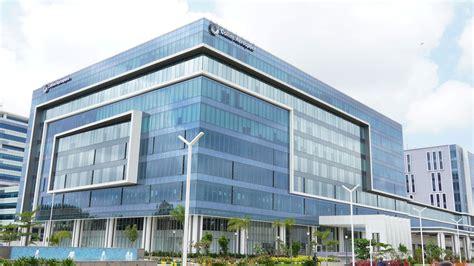
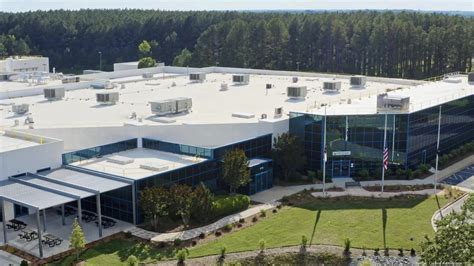
Founded in 2018 through the strategic merger of Rockwell Collins and UTC Aerospace Systems, Collins Aerospace stands today as one of the world’s premier aerospace and defense suppliers. As a key subsidiary of RTX Corporation, Collins Aerospace boasts a global footprint that spans over 300 locations and employs more than 80,000 professionals. Its revenue reached a formidable $26.2 billion in 2023, reaffirming its status as a cornerstone in both commercial and military aviation ecosystems.
With its headquarters in Charlotte, North Carolina, Collins Aerospace is not merely a parts supplier—it is an architect of flight, responsible for engineering systems that govern everything from cockpit avionics and aircraft interiors to aerostructures and power systems.
The Strategic Merger That Created an Industry Giant
The formation of Collins Aerospace was the result of one of the most consequential mergers in the aerospace sector. When United Technologies finalized its $30 billion acquisition of Rockwell Collins on November 26, 2018, it subsequently merged the acquired business with UTC Aerospace Systems. This unification was intended to consolidate the complementary capabilities of both companies—Rockwell Collins’ strengths in avionics and communications with UTC’s robust portfolio in mechanical systems and components.
However, the merger was not without controversy. Shareholders filed multiple class action lawsuits, alleging that United Technologies had misrepresented the deal’s strategic implications and financial disclosures. Despite these challenges, the newly formed entity surged ahead, reporting $26 billion in combined sales by 2019.
Subsidiary of RTX: Aligning with a Defense Titan
In 2020, United Technologies merged with Raytheon Company, forming Raytheon Technologies (RTX)—a formidable entity in aerospace and defense. Under RTX, Collins Aerospace operates as a crucial division focused on cutting-edge innovations for both commercial and military applications. This backing provides Collins with unmatched resources, research infrastructure, and strategic alignment, reinforcing its industry dominance.
Diverse and Strategic Business Units
Collins Aerospace is structured into six major business units, each serving a distinct role in the aerospace value chain:
- Aerostructures: Delivers nacelles, pylons, and advanced composites.
- Avionics: Provides cockpit systems, navigation tools, and communication networks.
- Interiors: Designs seating, lighting, and cabin management systems.
- Mechanical Systems: Supplies landing gear, actuators, and flight control systems.
- Mission Systems: Focuses on defense electronics and secure communications.
- Power & Controls: Develops electric power generation and environmental control systems.
This segmentation allows Collins Aerospace to deliver end-to-end solutions that are both scalable and deeply integrated, serving customers across the commercial aviation, business aviation, defense, and space industries.
Major Technological Milestones and Innovations
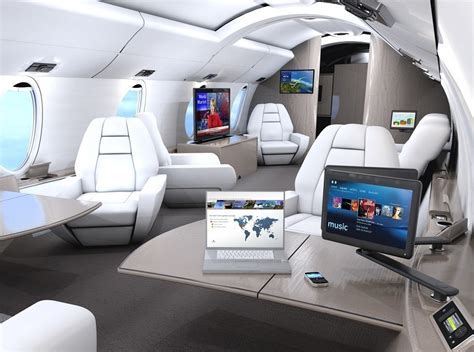
One of the most notable recent advancements is the upgraded Venue cabin management system, revealed in October 2024. This next-generation platform offers:
- Smart monitors with embedded controls
- Enhanced graphical interface
- Intuitive, simplified interaction for passengers and crew
These upgrades underscore Collins’ push toward passenger-centric innovation, aligning with market demands for better in-flight experience, seamless control, and immersive entertainment.
In another strategic move, Collins Aerospace agreed to sell its actuation and flight controls business to French aerospace group Safran for $1.8 billion in July 2023. This divestiture is seen as a way to streamline core competencies and focus resources on more transformational technologies.
Investment in Global Manufacturing and Innovation
In January 2024, Collins Aerospace announced a £16 million investment in its Kilkeel facility in Northern Ireland to develop next-generation passenger seating for wide-body and twin-aisle aircraft. This announcement—delivered by US Special Envoy Joe Kennedy III—emphasized the company’s commitment to regional job creation, advanced design, and manufacturing excellence.
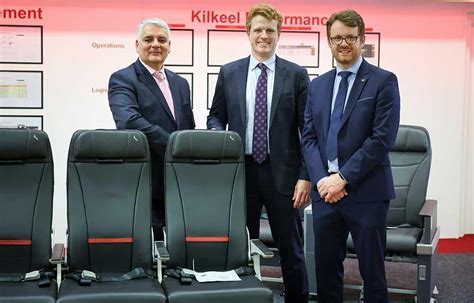
This investment not only strengthens Collins’ position in commercial aviation but also illustrates its role in global economic diplomacy, marrying technological innovation with geopolitical cooperation.
FlightAware Acquisition: Data-Driven Horizons
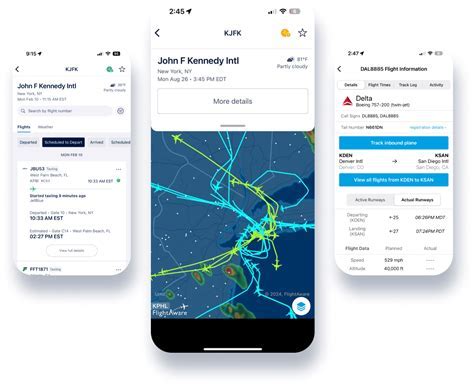
In August 2021, Collins Aerospace further expanded its capabilities by acquiring FlightAware, a global leader in flight tracking and predictive analytics. FlightAware’s platform provides:
- Real-time aircraft location data
- Predictive flight performance models
- Historical analytics for operational optimization
This acquisition enhances Collins’ Connected Aviation Solutions, enabling airlines, airports, and OEMs to optimize scheduling, reduce delays, and enhance safety. It also signals Collins’ long-term intent to lead in digital aviation services, not just hardware systems.
Ithaco Space Systems: A Legacy in Orbit
Under its legacy as part of UTC Aerospace Systems, Collins Aerospace was also the owner of Ithaco Space Systems, a prominent provider of space-grade electro-mechanical systems. Ithaco-built components have flown on over 100 international satellites, contributing to missions for NASA, ESA, JAXA, and others. Notably, Ithaco supplied reaction wheels to high-profile spacecraft including:
- Kepler Telescope
- Dawn Mission
- TIMED Satellite
- Hayabusa Probe
Although some of these missions faced technical challenges, the sheer breadth and impact of Ithaco’s contributions underscore the spaceflight credibility embedded in Collins Aerospace’s DNA.
Collins Aerospace and the Future of Aviation
As the aviation industry shifts toward sustainability, autonomy, and data-driven operations, Collins Aerospace is well-positioned to lead. The company is actively investing in:
- More electric aircraft systems (MEA)
- Lightweight composite materials
- Secure communications and cybersecurity for defense aviation
- AI-enhanced avionics
Its innovations are not constrained by today’s expectations but are driven by the possibilities of tomorrow. From urban air mobility to hypersonic flight, Collins Aerospace is at the center of the most forward-leaning conversations in aerospace.
Conclusion: A Backbone of Modern Aerospace
Through strategic acquisitions, technological leadership, and global investments, Collins Aerospace has evolved into a pivotal player in shaping modern aviation and space systems. Its capabilities span from the most visible—such as aircraft seats and cockpit displays—to the unseen yet indispensable, including environmental control systems, satellite components, and predictive flight data analytics.
As part of RTX Corporation, Collins Aerospace operates with a rare blend of legacy and innovation, setting the pace in an industry where performance, reliability, and foresight determine long-term relevance. With an expanding global footprint, growing digital acumen, and robust partnerships across civil and military sectors, Collins Aerospace is not merely participating in the future of aviation—it is engineering it.