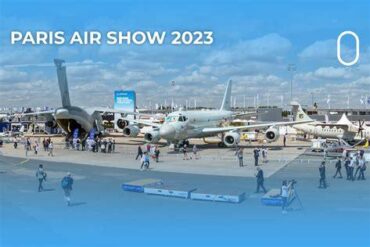
The 2025 Paris Air Show has officially lifted off, marking a historic milestone with over 2,400 exhibitors from 48 countries, solidifying its status as the largest showcase in the event’s storied history. However, beneath the gleaming fuselages and state-of-the-art technology lies an intricate tapestry of geopolitical tension, tragedies, and trade turbulence that shapes the narrative of this year’s event. As the world’s aviation elite gathers at Le Bourget, the air is thick with anticipation, but also with uncertainty. The long-standing rivalry between Airbus and Boeing reaches a fever pitch, as both industry giants vie for supremacy in a market projected to expand by 40% by 2030. Yet, this year’s show is anything but routine; it is a complex battleground where innovation meets deep-seated concerns about safety and global stability.
Record Turnout: A Showcase of Aerospace Excellence
This year’s Paris Air Show isn’t just big—it’s colossal. With 2,400 exhibitors, the event encompasses a wide array of sectors, from commercial aviation and defense to space exploration and air mobility. As companies unveil groundbreaking technologies ranging from electric aircraft to next-generation cabin solutions, all eyes are on the titans of the industry—Airbus and Boeing. Their ongoing competition not only highlights their technological advancements but also reflects a race for large-scale orders, partnerships, and regional dominance amidst a backdrop of emerging global challenges.
Airbus vs. Boeing: A Rivalry Intensified
As the air show commences, the battle between Europe’s Airbus and America’s Boeing is more than just a corporate rivalry; it is steeped in emotion and urgency. The recent crash of a Boeing 787 Dreamliner—which occurred just days before the show—has reignited scrutiny surrounding Boeing’s safety protocols and practices. While the cause of the crash remains under investigation, the timing presents a significant public relations challenge for Boeing. In contrast, Airbus finds itself in a prime position to leverage growing skepticism towards its competitor’s track record, potentially securing substantial new orders by the week’s end.
Geopolitical Shadows: Trade Turbulence and International Strife
The Paris Air Show is not merely an exhibition of aviation marvels; it is also a geopolitical flashpoint. Global tensions are palpable, with ongoing conflicts, trade sanctions, and regional unrest casting a shadow over the proceedings. Notably, the French government made headlines by shutting down booths for four Israeli defense companies, citing the display of what it termed “offensive weapons.” This decision has sparked outrage among Israeli officials, who accuse France of prioritizing its own defense industry over fair competition. The incident raises critical questions about fairness and transparency in international defense exhibitions, underscoring the complex interplay between politics and commerce in a conflict-ridden world.
The Weight of Tragedy: Safety Concerns Loom Large
In addition to geopolitical tensions, the air show is haunted by the specter of recent aviation tragedies. The Air India crash involving a Boeing 787 has reignited fears within the global aviation community, adding immense pressure on Boeing to reassure stakeholders and restore public confidence. As the investigation continues, the aviation industry must confront lingering concerns about safety and accountability. Boeing’s ongoing struggles with issues related to its 737 Max fleet and its past failures in quality control and transparency now weigh heavily on its reputation. The Paris Air Show, therefore, transforms into a trial not just of engineering prowess but of public trust.
France’s Aerospace Pride: Innovation Amidst Scrutiny
For France, hosting the Paris Air Show serves as a point of national pride, reaffirming its position as a global aerospace leader. The economic significance of the aerospace sector is undeniable, contributing substantially to the national GDP. French companies such as Dassault and Safran are making headlines with their innovative technologies, showcasing advancements that could redefine the future of aviation. However, the political controversies surrounding the event, particularly regarding the treatment of Israeli exhibitors, threaten to overshadow these technological triumphs. Furthermore, Europe is increasingly focused on sustainable aviation, with electric and hydrogen-powered aircraft, Sustainable Aviation Fuel (SAF) compatibility, and net-zero emissions pledges dominating discussions at this year’s show. Yet, these innovations come with their own set of pressures—economic, environmental, and political.
Implications for Global Travelers: Shaping the Future of Air Travel
For travelers and the broader tourism industry, the Paris Air Show holds significant implications. It is not solely a gathering of aerospace manufacturers; the outcomes of this event will directly influence airfare pricing, route expansions, and fleet upgrades that shape everyday flying experiences. Airlines present at the show are actively engaging in discussions to modernize their fleets and enhance passenger experiences. These moves will undoubtedly affect how much travelers pay for flights and the quality of services they receive. Additionally, the aviation industry’s commitment to decarbonization will play a pivotal role in determining how environmentally friendly future travel becomes. However, the challenges posed by supply chain delays, regulatory reviews, and fluctuating consumer trust levels—exacerbated by incidents like the recent crash—remain critical factors that could impact the trajectory of the industry.
Looking Ahead: A Future Full of Possibilities and Uncertainties
Despite the myriad of challenges, the 2025 Paris Air Show stands as a beacon of ambition and innovation within the aerospace industry. New partnerships, stunning technological revelations, and policy announcements will inevitably shape aviation trends for years to come. However, as the industry evolves, trust, safety, and transparency emerge as invaluable currencies. The landscape of air travel is changing, and as demand for air travel surges, pivotal questions remain: Will Boeing manage to regain global confidence? Can Airbus sustain its upward trajectory in a competitive market? And, crucially, can international trade fairs maintain their neutrality amidst escalating global tensions? The runway is open, and the world is watching closely.