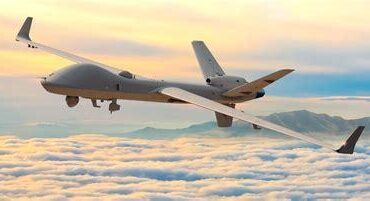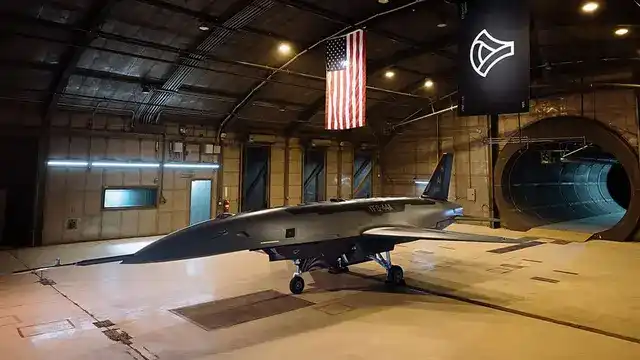
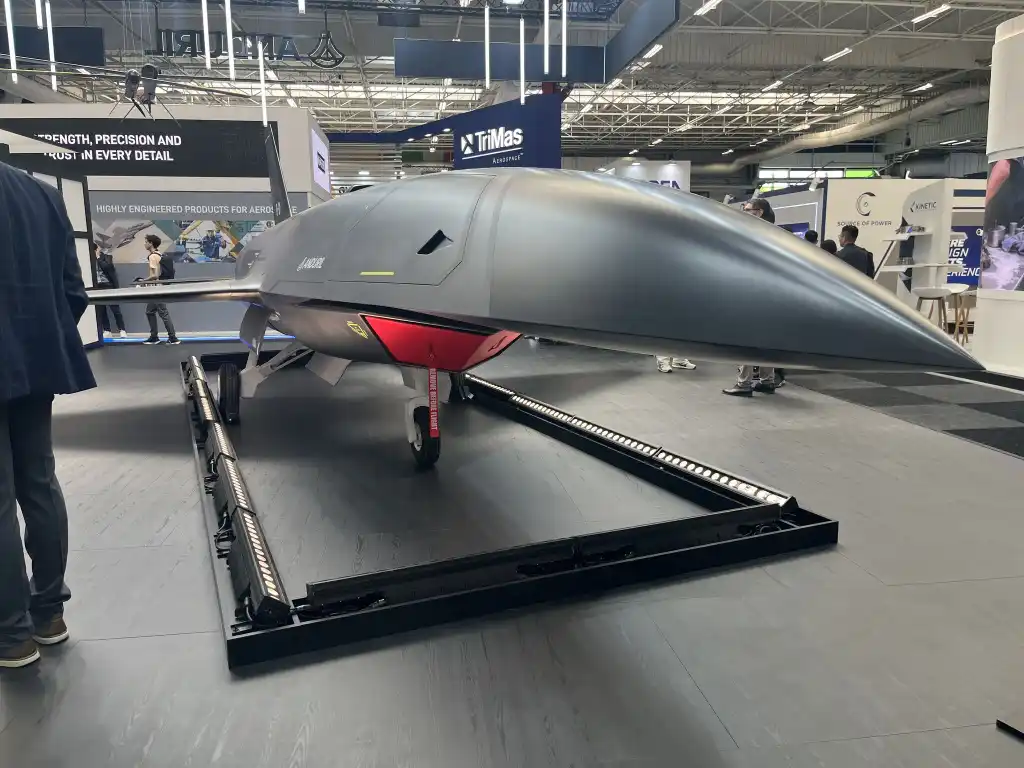
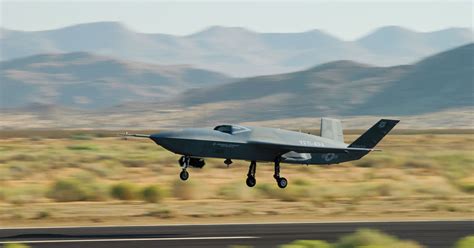
At the Paris Air Show 2025, two prominent American defense firms—Anduril Industries and General Atomics—unveiled full-scale prototypes of their autonomous combat drones developed as part of the Next-Generation Air Dominance (NGAD) program. These drones, known as YFQ-42A (General Atomics) and YFQ-44A ‘Fury’ (Anduril Industries), are designed to operate as “loyal wingmen” alongside the upcoming sixth-generation F-47 fighter jets. With these developments, the United States is taking a decisive step in redefining future air combat by embracing manned-unmanned teaming (MUM-T) technologies.
Autonomous Wingmen: The Rise of AI-Driven Combat Support
Unlike previous generations of support drones, the YFQ-42A and YFQ-44A are not mere surveillance assets. They are fully autonomous systems capable of conducting air-to-air combat, reconnaissance, and jamming missions—all without direct human control during battle. This autonomy is a central pillar of the NGAD initiative, which seeks to create a network-centric air combat force where piloted and autonomous platforms share sensor data and make decisions collaboratively.
General David Allvin, the U.S. Air Force Chief of Staff, emphasized the drones’ long-range capabilities, stating that each unit will have a combat radius exceeding 700 nautical miles—a significant leap in coverage and tactical reach. These capabilities allow the drones to penetrate deep into contested airspace, especially within the vast expanses of the Indo-Pacific theater, where geography and adversary capabilities demand extended operational range.
Strategic Relevance in the Indo-Pacific Theatre
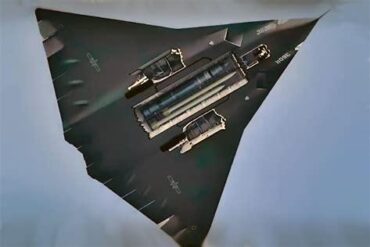
The Pacific region is emerging as the likely focal point for future air dominance scenarios, largely due to rising tensions between the U.S. and China over Taiwan. The inclusion of loyal wingmen drones into the Air Force’s toolkit is a direct response to China’s accelerated development of its own sixth-gen platforms, including the J-36 and J-50, both of which are reportedly in early flight testing phases.
Jackson Lingane, communications manager for Anduril Industries, was candid in Paris: “The [U.S.] Air Force is focused on Indo-Pacific fights. Fury’s design reflects this focus with a combat profile tailored for rapid deployment and sustained operations in extended threat envelopes.”
The U.S. sees Taiwan Strait as a critical flashpoint in the region. While the United States does not diplomatically recognize Taiwan as a sovereign nation, it provides the island with arms, training, and political backing to deter Chinese aggression. As China ramps up its stealth fighter capabilities and expands its airbase infrastructure along the coast, the U.S. is countering with greater operational agility and scalable force projection, key to deterring near-peer adversaries.
Inside the Next-Generation Air Dominance (NGAD) Framework
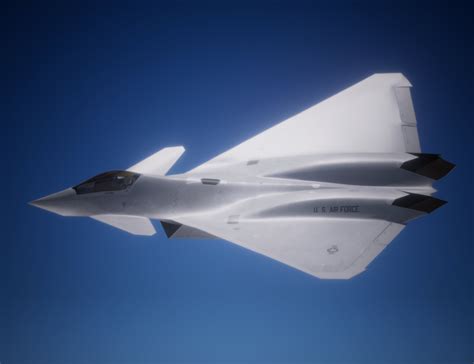
The NGAD initiative is more than just a replacement program for aging platforms like the F-22 Raptor—it represents a wholesale shift in airpower doctrine. The F-47 fighter jet, being developed by Boeing, is expected to be the crown jewel of this vision. With a combat radius of over 1,000 nautical miles, the F-47 will almost double the reach of the F-22 it replaces. However, its greatest asset might be its ability to command and control fleets of autonomous aircraft like the YFQ-42A and YFQ-44A.
These drones will fly ahead of or alongside the manned F-47, absorbing risk, relaying sensor data, and striking targets independently or under human direction. In high-threat environments, these drones will act as decoys, scouts, jammers, and even direct-strike assets—providing survivability and lethality without endangering human pilots.
Cost, Scale, and Timeline: A War Machine for the Future
One of the strongest advantages of the loyal wingman model is cost-effectiveness. Traditional fighter jets are expensive, time-consuming to produce, and limited by human endurance. The new drones will be cheaper to manufacture, easier to deploy, and expendable when necessary, offering commanders a greater volume of air power with scalable options.
According to officials at the Paris Air Show:
- A production decision for the drones is expected by 2026.
- Operational deployment is targeted for 2029.
- The U.S. Air Force plans to field up to 1,000 of these aircraft.
- Over 185 F-47s have already been ordered, with deliveries scheduled into the early 2030s.
“The Air Force has said that there will be many increments,” said Lingane, referring to the spiral development model built into the NGAD initiative. This means the drones will not remain static but will be updated continuously through software patches, hardware upgrades, and integration with new weapons and sensors. This modular philosophy mirrors the development of the F-35 program but leans even more heavily on agile defense manufacturing principles.
European Implications: NATO’s Opportunity to Integrate AI Combat Tech
While the current development is U.S.-centric, Anduril and General Atomics are also targeting European interest, highlighting how the YFQ-44A Fury and its cousin platforms can benefit NATO allies. Lingane pointed out that Fury’s architecture can be easily adapted for European defense priorities, whether that means different command interfaces, payloads, or stealth configurations.
Europe, too, is on the cusp of its own sixth-gen fighter programs, including the FCAS (Future Combat Air System) spearheaded by France, Germany, and Spain, and the Tempest program led by the UK and Italy. Integrating loyal wingmen into these platforms early could give NATO a competitive edge in joint air operations and force interoperability.
The Warfighter’s Future: Human-AI Collaboration on the Battlefield
At the core of this transformation is a deeper shift: trust in machine autonomy. These drones won’t merely follow instructions—they will analyze, decide, and act. Using AI-driven mission planning, target identification, and adaptive learning algorithms, they are designed to reduce the pilot’s cognitive burden while enhancing mission effectiveness.
The future envisioned by NGAD is not just a pilot with a few drones—it is a combat node commanding an intelligent swarm, with each asset playing a role in a synchronized, self-adjusting battle network. From stealth ingress and suppression of enemy air defenses (SEAD) to persistent ISR (intelligence, surveillance, reconnaissance), these drones will transform how wars are fought.
Conclusion: A New Chapter in Air Warfare Begins
The unveiling of the YFQ-42A and YFQ-44A at the Paris Air Show marks more than just a product reveal—it signals a doctrinal and technological leap in modern warfare. As the U.S. navigates intensifying strategic rivalry with China and rising uncertainty in the Indo-Pacific, it is no longer enough to field superior aircraft. The future lies in networks, autonomy, and flexibility.
With the NGAD program’s sixth-gen F-47 fighter and its loyal wingmen at its core, the U.S. is architecting a force designed for speed, adaptability, and dominance across multiple domains. The countdown to 2029 has begun—and with it, a new era of autonomous airpower supremacy is fast approaching.