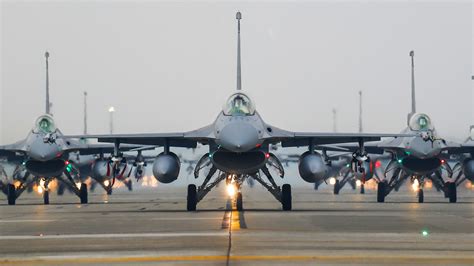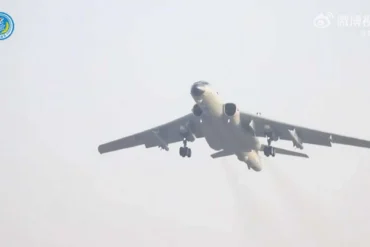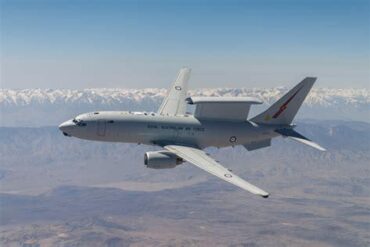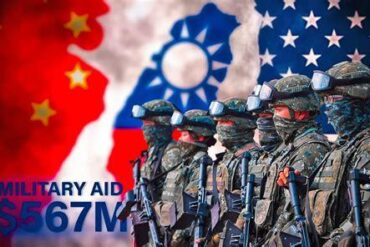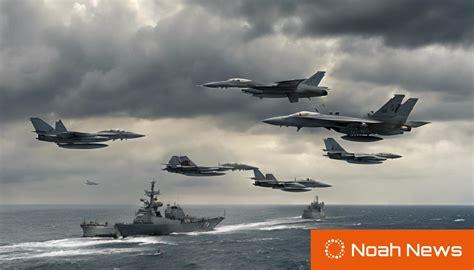
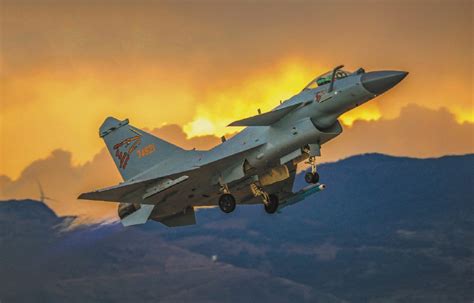
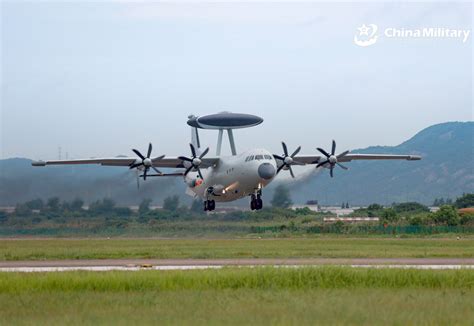
Tensions in the Taiwan Strait surged once again as China deployed a record number of military aircraft near Taiwan, marking its largest show of aerial force since October. This escalation came just days after a group of United States lawmakers held a publicized meeting with Taiwanese Defense Minister Wellington Koo in Taipei — a diplomatic gesture Beijing vehemently opposes. In the 24 hours leading to Friday morning, Taiwan’s Ministry of National Defense reported that 46 Chinese military aircraft crossed the median line of the Taiwan Strait — a notional boundary that Beijing had historically respected until recent years. These aircraft included advanced Su-30 fighter jets and KJ-500 airborne early warning and control aircraft, signaling a sophisticated and coordinated operation.
Taiwan’s defense authorities confirmed they monitored the situation and “responded accordingly,” though details of those responses were withheld. Within the same day, an additional 15 warplanes were spotted, bringing the total count to an alarming 61 aircraft in a single day, underlining the People’s Liberation Army’s (PLA) intensifying pressure campaign on Taiwan.
Beijing’s Justification and the Sovereignty Narrative
China’s Foreign Ministry responded swiftly to international concern. Spokesman Guo Jiakun defended the military maneuvers during a regular press briefing in Beijing, stating that “the Taiwan question concerns China’s sovereignty and territorial integrity.” The incursion, framed as part of “air-sea joint training” exercises, included the mobilization of naval assets, demonstrating a dual-domain tactic aimed at encircling Taiwan both from the sky and sea.
Beijing’s strategic posture continues to be anchored in its One China principle, under which it considers Taiwan an inalienable part of its territory — a stance firmly rejected by Taipei. While Taiwan operates as a sovereign democracy with its own military, currency, and government, China insists it reserves the right to use force, if necessary, to bring the island under its control. This doctrine has seen repeated enforcement through military drills, economic sanctions, and cyber campaigns.
US-Taiwan Ties Under the Microscope
The trigger for the latest escalation appears to be the high-profile visit by US lawmakers, which included discussions with Taiwan’s top defense official. Though such visits are not unprecedented, the public acknowledgment and timing of this trip were unmistakably bold, signaling a bipartisan consensus in Washington to deepen informal ties with Taipei amid broader Indo-Pacific security concerns.
This meeting, publicly disclosed and diplomatically provocative from Beijing’s perspective, reinforces growing Western solidarity with Taiwan. The United States does not formally recognize Taiwan as a country, yet it provides defense support and arms sales under the Taiwan Relations Act, making it the island’s most critical international backer.
Global Naval Presence Sparks Strategic Signaling
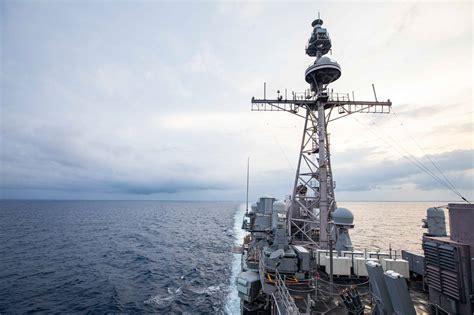
Compounding the tension in the Taiwan Strait, naval deployments from the United Kingdom and Japan through the same waters have added to Beijing’s ire. Last week, a Japanese destroyer made a rare passage through the 110-mile-wide strait, marking the third such transit in the past year. This comes on the heels of Japan observing two Chinese aircraft carriers operating simultaneously near remote Japanese islands — an unprecedented move showcasing the PLA Navy’s growing operational scope.
In response, the United Kingdom sent a naval vessel through the strait, which Beijing swiftly condemned as a “provocation.” The Chinese military released a statement saying that the transit “undermines peace and stability” in the region and that its forces would “resolutely counter all threats”. These statements, while measured, reflect the escalating wariness with which China views Western military activity near its periphery.
Taiwan’s Strategic Anxiety: A Geopolitical Crossroad
Taiwan’s leadership, under President Lai Ching-te, remains deeply concerned that China may exploit global instability to make a more aggressive move on the island. On Thursday, President Lai convened his national security team and instructed them to maintain comprehensive awareness of the geopolitical environment, especially as global attention remains divided — notably with the United States’ potential military focus on Iran.
These fears are not unfounded. Historically, moments of global distraction have provided cover for geopolitical maneuvers. With the USS Carl Vinson carrier strike group recently redirected to the Middle East, Taipei worries that a moment of Western inattention could embolden Beijing. Taiwan’s military has increased patrols, upgraded surveillance, and deepened coordination with partner nations in anticipation of possible contingencies.
China’s Pattern of Gray-Zone Warfare
The PLA’s recent maneuvers are not isolated incidents but part of a broader, more complex pattern known as gray-zone warfare — tactics that stop short of conventional war but are intended to wear down Taiwan’s military, economy, and morale over time. These include:
- Frequent aerial incursions into Taiwan’s Air Defense Identification Zone (ADIZ)
- Cyber intrusions targeting Taiwanese government agencies
- Disinformation campaigns aimed at sowing public distrust
- Economic coercion, such as import bans and regulatory barriers
Each incursion serves dual purposes: asserting Chinese dominance and testing Taiwan’s response protocols. According to defense experts, these repeated exercises are also a way for the PLA to collect intelligence on Taiwan’s air defenses and command response times, potentially preparing for a more extensive operation in the future.
Japan and the UK’s Indo-Pacific Pivot
The United Kingdom and Japan’s renewed naval activity in the Taiwan Strait is more than symbolic. Both nations are increasingly aligning themselves with the Indo-Pacific security framework, which seeks to deter aggression and preserve freedom of navigation in key maritime corridors.
The UK’s Carrier Strike Group 25 — led by the aircraft carrier HMS Queen Elizabeth — is scheduled to make port calls in Singapore, Indonesia, Japan, and South Korea, underscoring London’s commitment to projecting power in Asia. Japan, which views a potential Taiwan conflict as existential due to proximity and trade routes, is enhancing its defense posture in the Nansei Islands, which lie closest to Taiwan.
These moves are seen as a clear challenge to Beijing’s attempts to assert unilateral control over regional waterways, and they mark a shift in how Europe and Asia perceive China’s rise — less as an economic opportunity and more as a strategic competitor.
Regional Consequences: A Delicate Balance on the Edge
The convergence of military muscle-flexing, diplomatic defiance, and strategic signaling has left the Taiwan Strait teetering on a knife’s edge. The growing presence of foreign warships, combined with China’s increasing tempo of military operations, risks miscalculation or accidental conflict.
For Taiwan, this moment is both a test of resilience and an opportunity. As international support grows — albeit cautiously — Taipei must balance deterrence with diplomacy, ensuring it does not provoke further aggression while also making clear that its sovereignty is non-negotiable.
China, for its part, is calibrating its pressure campaign carefully. It seeks to deter international support for Taiwan without triggering a direct military confrontation that could involve the United States and its allies. This balancing act is precarious, and with Taiwan’s presidential administration seen by Beijing as especially defiant, the risk of escalation remains high.
Conclusion: The Flashpoint of the 21st Century
The Taiwan Strait is rapidly becoming the most volatile flashpoint in the Indo-Pacific region. What began as a routine military maneuver has evolved into a complex geopolitical standoff, drawing in global powers and testing long-standing diplomatic doctrines.
With the United States juggling multiple foreign policy theaters, and China growing more assertive in its claims and capabilities, Taiwan finds itself at the heart of a potentially epoch-defining confrontation. The next steps by any of the involved parties — whether diplomatic, economic, or military — could reshape the regional order and define the nature of great power competition for years to come.