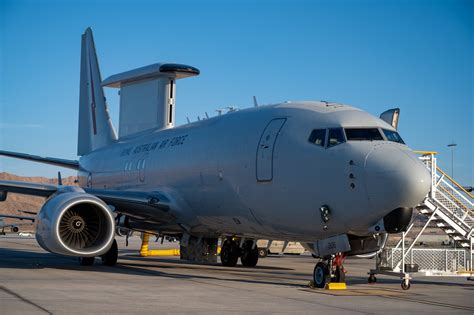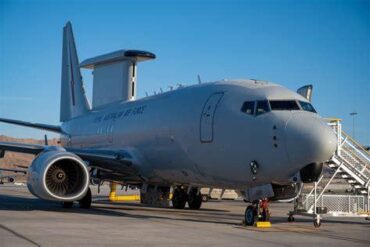
The United States Congress has decisively blocked the Pentagon’s attempt to cancel the Boeing E-7 Wedgetail program, marking a pivotal moment in the future of American airborne surveillance. The move comes in direct response to the Department of Defense’s proposal to terminate the program—despite existing contracts and operational urgency—citing cost overruns and delays. Lawmakers pushed back forcefully, restoring funding in the 2025 defense authorization process, ensuring the continuation of a platform many regard as indispensable in the face of evolving global threats.
Strategic Reversal in the Defense Budget Negotiations
The cancellation of the E-7 program would have halted a $1.2 billion investment signed with Boeing in 2023, aimed at developing this next-generation airborne early warning and control (AEW&C) aircraft. The Pentagon’s rationale centered on the growing appeal of space-based surveillance as a more cost-effective, risk-averse solution. But congressional leaders were unmoved, warning that eliminating the E-7 would leave a dangerous gap in critical command-and-control capabilities.
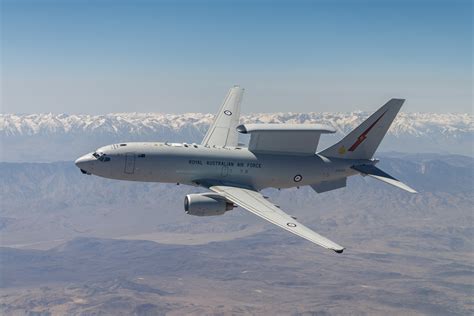
With China’s military modernization accelerating and tensions simmering across Eastern Europe and the Indo-Pacific, the need for robust airborne battle management systems has never been greater. Lawmakers argued that retiring the aging E-3 Sentry fleet without a fully operational replacement would severely impair US and allied situational awareness in contested airspaces.
Why the E-7 Wedgetail Matters More Than Ever
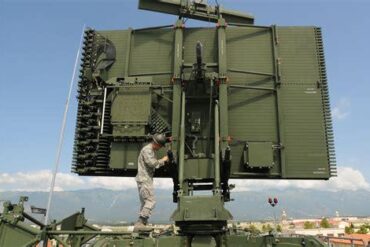
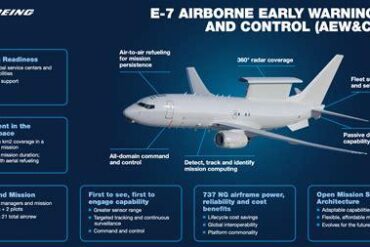
The Boeing E-7 Wedgetail is not just a replacement; it’s a strategic leap forward. Built on the Boeing 737 NG airframe, the aircraft is equipped with the Northrop Grumman Multi-role Electronically Scanned Array (MESA) radar, a top-mounted fixed panel radar system that delivers simultaneous air and maritime tracking across vast ranges. Unlike the rotating radar domes on E-3 aircraft, the MESA offers continuous 360-degree coverage with lower drag, enhancing fuel efficiency and operational endurance.
This technological upgrade enables the E-7 to perform as a multi-domain command-and-control node, seamlessly integrating battlefield data from satellites, fighter jets, ground radars, and unmanned aerial systems. Boeing has framed the platform as a bridge to future network-centric warfare, complementing newer, space-based assets rather than replacing them entirely.
From Australia to the US: A Proven Global Platform
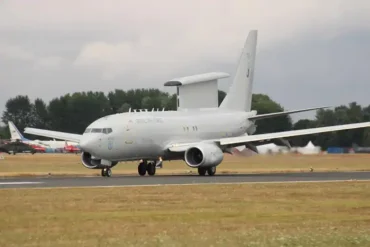
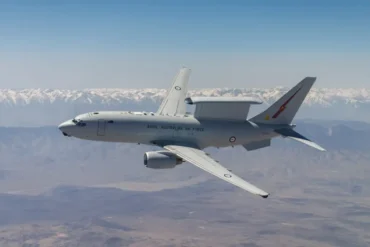
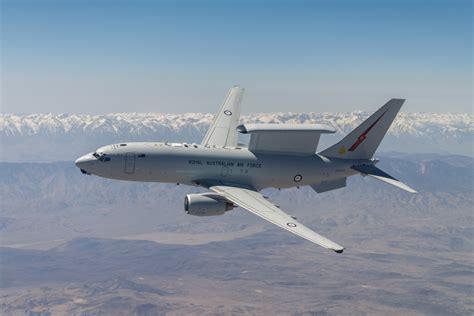
Originally developed for the Royal Australian Air Force (RAAF) in the early 2000s, the E-7 Wedgetail has proven its operational mettle in multiple joint operations. Its success led to adoption by South Korea, Turkey, and most recently, the United Kingdom, which showcased its Wedgetail fleet at the 2025 Royal International Air Tattoo (RIAT).
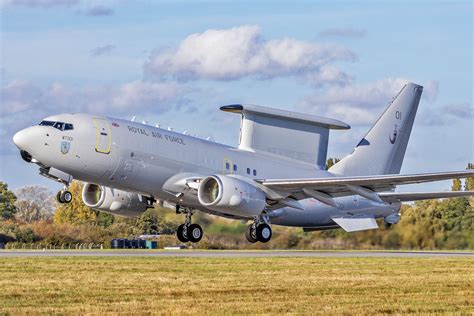
These international endorsements helped bolster the US Congress’s argument for continuation. Abandoning the E-7 would risk alienating allies and compromising interoperability in coalition missions, especially those operating within NATO and Indo-Pacific partnerships. With an existing global support infrastructure based on the Boeing 737 platform, transitioning to the E-7 ensures logistical efficiency and long-term cost savings.
Overcoming Cost Concerns and Pentagon Resistance
Despite its operational advantages, the program has struggled with ballooning costs. The per-unit price for the E-7 soared to $724 million, a significant rise from the original estimate of $588 million. The Pentagon pointed to this escalation—alongside delays—as reasons to shift focus to uncrewed and space-based alternatives. Yet, Congress and several USAF generals saw these risks as acceptable, especially when weighed against the deteriorating performance of the E-3 Sentry fleet.
Senior USAF officials issued a formal letter to Congress earlier this year, stating:
“The E-7 can perform missions different from traditional AWACS roles that will be critical to China contingency.”
This message underscored the aircraft’s role in future Indo-Pacific conflict scenarios, where the US must maintain both reach and flexibility in heavily contested environments. Unlike satellites—vulnerable to anti-space warfare tactics such as jamming, blinding, or kinetic attack—the E-7 provides a mobile, resilient platform capable of dynamic re-tasking and force coordination.
A Blow to Pentagon’s Space-Only Vision
The Department of Defense has recently championed a strategic pivot toward space-centric ISR (Intelligence, Surveillance, Reconnaissance). Advocates argue that satellites can offer constant coverage without putting aircrews in harm’s way. However, Congress was unwilling to accept a singular dependency on space-based platforms, especially given their vulnerability to anti-satellite weapons.
The E-7 Wedgetail’s survivability, adaptability, and broad integration capabilities make it an ideal complement—not a competitor—to space systems. In modern warfare, redundancy is strength, and the loss of one domain (e.g., space) should not collapse national or coalition command structures. Congress’s action sends a clear message that manned AEW&C capabilities remain indispensable.

Replacing the E-3 Sentry: A Long-Overdue Mission
Originally introduced in the 1970s, the E-3 Sentry fleet has long served as the backbone of airborne early warning missions for the United States. But over the past decade, operational availability has plummeted due to aging airframes, outdated avionics, and soaring maintenance demands. The aircraft are based on the Boeing 707—a platform that ceased production in the 1990s—creating substantial supply chain challenges.
In contrast, the E-7’s commercial 737 base offers significant advantages:
- Widespread availability of parts and expertise
- Established global maintenance network
- Lower operating costs compared to military-only platforms
By keeping the program alive, Congress aims to close the critical capability gap between the E-3’s retirement and the readiness of next-gen AEW&C solutions.
Industrial and Strategic Impacts of the Congressional Lifeline
Boeing’s E-7 program is more than a defense acquisition—it’s a signal to the American aerospace industry. The preservation of the program supports thousands of high-skill jobs at Boeing facilities and throughout its vast supplier network. Moreover, the US commitment to the E-7 sustains momentum in defense exports, with future potential for upgrades and technology sharing among allies.
The production line is currently building aircraft for the UK and Australia, and the decision to field USAF prototypes—some of which will be assembled in the UK—highlights growing industrial interdependence within NATO.
Canceling the program would have disrupted this delicate balance, potentially weakening international confidence in US defense commitments. Instead, Congress’s intervention secures continuity, credibility, and coalition coherence.
A Program Back on Track—but for How Long?
With funding restored, the Boeing E-7 Wedgetail is once again on a path to become the US Air Force’s next-generation airborne command-and-control aircraft. Yet, the broader debate over manned vs. unmanned ISR platforms continues to loom large in defense circles. The Wedgetail’s reprieve may be temporary if future administrations push harder for space-centric strategies or cost-cutting reforms.
For now, however, the Wedgetail represents a strategic compromise—one that bridges the old and the new, leveraging proven design while embracing future combat architecture. It is a symbol of Congress’s enduring commitment to military readiness, even when it means overruling the Pentagon.
As geopolitical tensions heighten and the race for informational dominance accelerates, the E-7 Wedgetail will play a pivotal role in shaping America’s battlefield vision—in the skies, across oceans, and through digital domains.