House lawmakers are intensifying efforts to ensure the U.S. Air Force and U.S. Special Operations Command (SOCOM) collaborate on developing cutting-edge, long-range surveillance drones capable of penetrating hostile airspace and providing persistent intelligence across vast distances. This move underscores growing Congressional concern over redundancies, costs, and capability gaps as both entities pursue similar unmanned technologies for the next era of aerial intelligence.
The 2026 defense spending bill, advanced by the House Appropriations Committee, proposes an additional $15 million for the Air Force to explore collaborative drone solutions that meet overlapping operational needs between the conventional Air Force and special operations forces.
Lawmakers stress that, despite some divergence in technical requirements, unified development efforts could streamline costs and fast-track the fielding of “capable and cost-effective” platforms essential for 21st-century reconnaissance missions.
The Race for Stealthy, Ultra-Long-Endurance Aerial Surveillance
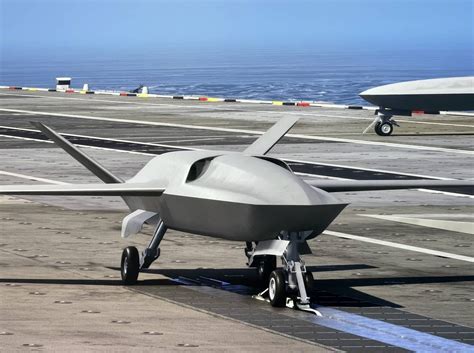
Recent months have seen the Air Force take significant steps toward next-generation unmanned capabilities, including its contract with defense manufacturer General Atomics to develop the GHOST aircraft. Designed as a stealthy, autonomous drone, GHOST aims to provide ultra-long-range reconnaissance and strike capabilities suitable for operations deep inside contested environments.
If successful, GHOST could serve as a successor to several iconic yet aging platforms that have defined U.S. aerial surveillance for decades:
- The U-2 Dragon Lady, a high-altitude spy plane operational since the 1950s, known for capturing sensitive imagery across global hotspots.
- The RQ-4 Global Hawk, a high-endurance surveillance drone initially envisioned to replace the U-2, but now facing phased retirement.
- The MQ-9 Reaper, a combat-proven hunter-killer drone instrumental in counterterrorism operations but increasingly vulnerable in sophisticated threat environments.
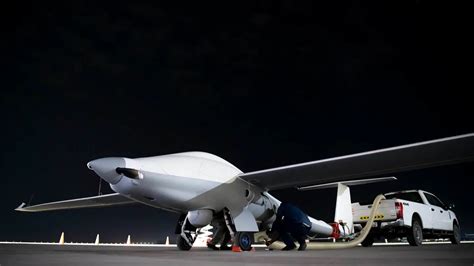
In parallel, the Air Force Research Laboratory (AFRL) is advancing its ULTRA project, short for “Unmanned Long-Endurance Tactical Reconnaissance Aircraft.” Developed in collaboration with DZYNE Technologies, ULTRA has demonstrated the ability to remain airborne for over 72 hours while carrying more than 400 pounds of surveillance payload.
The modified commercial sport glider was photographed last year at Al Dhafra Air Base in the United Arab Emirates, signaling ongoing field trials and operational assessments.
SOCOM’s Shadow Drone Programs: Quietly Filling the Gaps
While the Air Force charts its high-profile unmanned roadmap, SOCOM has quietly cultivated its own long-endurance surveillance fleet to meet the unique demands of special operations forces.
According to Lt. Cmdr. Kassie Collins, a SOCOM spokesperson, the Long-Endurance Aircraft (LEA) family of systems includes unmanned platforms such as:
- The Air Force’s MQ-9 Reaper, adapted for special operations.
- The Army’s MQ-1C Gray Eagle, a proven ISR platform.
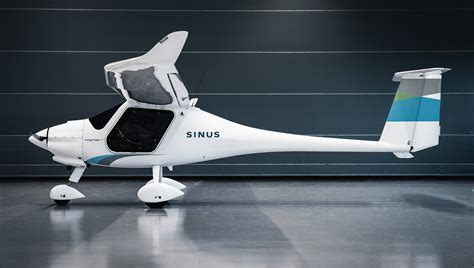
- An unmanned version of the Pipistrel Sinus, a Slovenian-powered glider repurposed for surveillance missions.
This latter system, developed by Virginia-based TSC, offers impressive endurance exceeding 40 hours and operational ceilings up to 17,000 feet, making it ideal for persistent ISR in permissive or low-threat environments.
SOCOM’s history of innovation in this space dates back to at least 2021, when reports surfaced of collaboration with the Air Force Research Lab to convert Sinus aircraft into unmanned reconnaissance platforms.
SOCOM emphasizes its preference for “relatively low-cost, long-endurance unmanned aircraft operated in austere and permissive environments,” recognizing the distinct operational profile of special operations forces conducting intelligence collection worldwide.
A Legacy of Parallel Development — and Missed Opportunities
The latest Congressional push for collaboration reflects a recurring pattern: overlapping yet siloed acquisition programs between the Air Force and SOCOM, occasionally leading to duplication of effort and suboptimal resource allocation.
One notable precedent is the armed overwatch aircraft saga. In 2020, after nearly three years of Air Force efforts to procure a light attack aircraft stalled, SOCOM initiated its independent search for a platform capable of supporting counterterror operations in lightly contested environments.
The result was the procurement of the OA-1K Skyraider II, a modified crop duster designed to provide close air support and ISR in areas lacking advanced air defenses. This aircraft illustrates SOCOM’s ability to adapt commercially available solutions for specialized military needs, often on compressed timelines.
Lawmakers at the time urged greater cooperation between the Air Force and SOCOM on light attack experimentation, suggesting some funding be reallocated to support special operations requirements.
Congressional Oversight: A Mandate for Unified Drone Development
The latest defense appropriations bill underscores a heightened Congressional mandate for transparency and alignment on unmanned, long-endurance platforms. The legislation directs Air Force Secretary Troy E. Meink and SOCOM Commander Gen. Bryan P. Fenton to deliver a comprehensive update within 90 days of the bill’s enactment.
This report must detail:
- The current state of unmanned long-endurance platform development.
- Specific program requirements for both the Air Force and SOCOM.
- An assessment of whether pursuing a common aircraft design could yield efficiency gains and improved operational capability.
While neither the Air Force nor SOCOM has officially commented on the House provision, the pressure is mounting to streamline efforts amid tightening budgets and the accelerating pace of global threats.
Strategic Imperatives: Why Long-Range Drones Are Essential
The strategic rationale for long-range, persistent surveillance drones is clear. In an era marked by near-peer competition, especially in the Indo-Pacific theater, the U.S. military faces the challenge of operating across vast distances with minimal logistical support.
Emerging unmanned systems like GHOST, ULTRA, and SOCOM’s LEA fleet are designed to:
- Penetrate heavily defended airspace using stealth and advanced autonomy.
- Loiter over high-value targets for days, providing uninterrupted ISR.
- Support dispersed operations across remote or denied areas.
- Reduce the risk to human pilots and conventional aircraft.
Such capabilities are vital for countering the growing anti-access/area denial (A2/AD) systems fielded by adversaries like China and Russia, enabling the U.S. to maintain situational awareness and decision superiority.
The Road Ahead: Bridging Operational Needs and Acquisition Realities
Achieving true synergy between the Air Force’s high-end stealth drone ambitions and SOCOM’s pragmatic, cost-conscious ISR fleet will require overcoming institutional inertia, aligning requirements, and fostering joint development frameworks.
Success could yield a new generation of unmanned aircraft that combine:
- The survivability and global reach demanded by great power competition.
- The affordability and rapid deployability favored by special operations.
- The technological sophistication to replace legacy platforms nearing obsolescence.
As defense budgets face mounting scrutiny, Congressional leaders appear determined to ensure that U.S. taxpayers — and warfighters — get maximum value from investments in unmanned systems.
Whether through collaborative programs like GHOST, adaptable platforms such as ULTRA, or continued innovation within SOCOM’s LEA initiative, the future of long-range surveillance hinges on unity of effort.
With legislative oversight intensifying, the next year will be pivotal in shaping how the Air Force and SOCOM navigate this complex but critical mission space.