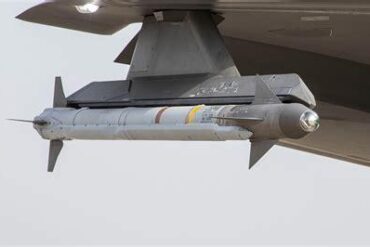
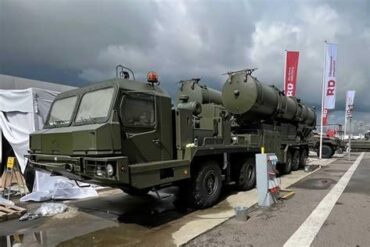
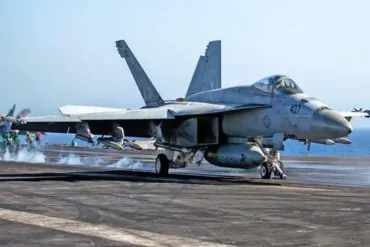
The AIM-174B is a cutting-edge, air-launched, multi-purpose missile derived from the Standard Missile-6 (SM-6), specifically designed for the U.S. Navy’s F/A-18E/F Super Hornet. This missile was developed to counter the growing threats posed by long-range air-to-air missiles (AAMs) from adversaries such as China and Russia, including the PL-17 and R-37M. The AIM-174B significantly extends the F/A-18’s engagement range, providing a crucial advantage in beyond-visual-range (BVR) combat and anti-access/area-denial (A2/AD) environments.
Development and Strategic Objectives
Filling the Air Superiority Gap
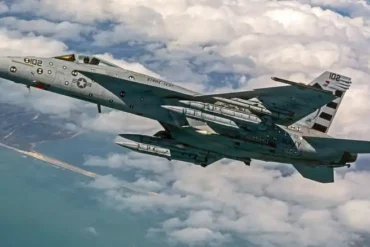
Following the retirement of the F-14 Tomcat, the F/A-18E/F Super Hornet became the primary fighter for the U.S. Navy, but it was limited by the AIM-120 AMRAAM, which has a maximum range of approximately 160 km. This created a capability gap, as enemy long-range anti-ship missiles (AShMs) such as Russia’s Kh-32 (600–1000 km range) and China’s YJ-100 posed a severe threat to U.S. carrier strike groups.
The AIM-174B bridges this gap with an effective range exceeding 400 km, allowing Super Hornets to engage high-value enemy assets such as airborne early warning and control (AEW&C) aircraft, aerial refueling tankers, and strategic bombers well before they can threaten U.S. naval forces.
Countering the A2/AD Threat
The A2/AD strategy employed by adversaries relies on layered defense networks, including surface-to-air missiles (SAMs), fighter patrols, and electronic warfare. By equipping the F/A-18E/F with a missile capable of long-range engagements, the U.S. Navy enhances its ability to disrupt enemy reconnaissance networks and create operational gaps for follow-on forces.
Additionally, the AIM-174B has been tested in the 2024 RIMPAC exercises, demonstrating its effectiveness in hitting naval targets, reinforcing its role in both air superiority and maritime strike missions.
Technical Capabilities and F/A-18 Integration
Size and Compatibility
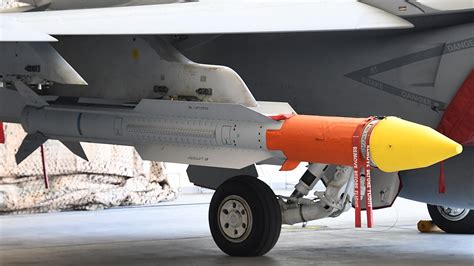
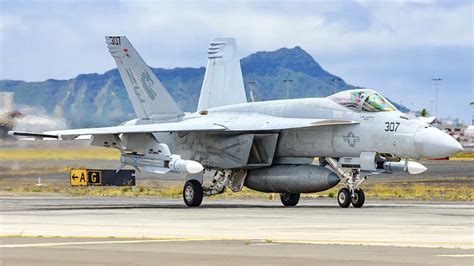
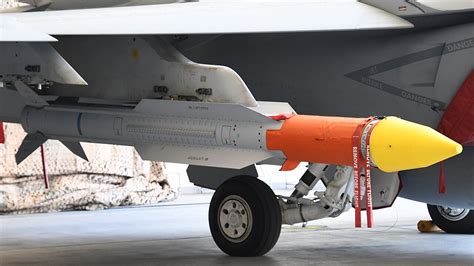
The AIM-174B is derived from the SM-6 but has been modified for air launch by removing the MK72 booster, reducing its length to 6.55 meters and maintaining a 340 mm diameter. This allows it to be carried on the F/A-18E/F’s external pylons without compromising aerodynamics.
Propulsion and Range
The missile is powered by the MK104 dual-thrust solid rocket motor, allowing it to achieve speeds of Mach 5 at terminal phase and an operational range beyond 400 km when launched from high altitude. This high-speed capability makes it highly effective against maneuverable, high-value aerial and maritime targets.
Guidance and Multi-Role Flexibility
The AIM-174B integrates multiple guidance systems:
- Active radar homing, using a seeker derived from the AIM-120C for terminal-phase precision.
- Inertial navigation system (INS) with mid-course updates via data links.
- Networked fire control, allowing integration with the Naval Integrated Fire Control-Counter Air (NIFC-CA) system for over-the-horizon targeting.
This versatility allows the AIM-174B to perform multiple roles, including:
- Air-to-air combat – Engaging enemy fighter aircraft, bombers, and support assets.
- Anti-ship strike – Proven ability to target warships, demonstrated in the 2024 live-fire test against a decommissioned amphibious assault ship.
- Missile defense – Capable of intercepting cruise and ballistic missiles, further enhancing fleet protection.
Operational Deployment and Future Plans
Testing and Deployment Timeline
The AIM-174B program has progressed rapidly:
- 2022 – Initial flight testing begins.
- 2024 – First operational deployment and live-fire exercises in the Pacific theater.
- 2025 – Ongoing system refinements to enhance performance in highly contested environments.
Platform Compatibility
Currently, the AIM-174B is primarily deployed on the F/A-18E/F Super Hornet and the EA-18G Growler. Future integration efforts aim to make the missile compatible with the F-35C, though size constraints may require external carriage, potentially affecting stealth capabilities.
Production and Cost Considerations
- 2026 – Full-scale production begins, with an initial annual output of 200 units.
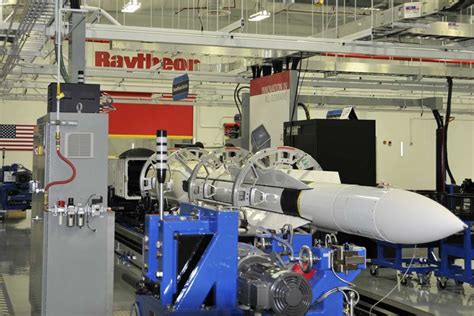
- Manufacturing shares a production line with the SM-6, reducing costs through supply chain efficiencies.
- The AIM-174B’s cost is higher than the AIM-120, but its multi-role capability justifies the investment.
Challenges and Limitations
Size and Stealth Considerations
Due to its large size, the AIM-174B cannot be internally carried by the F-35C, limiting its use to external hardpoints, which may compromise stealth.
Reliance on Networked Systems
The AIM-174B is highly dependent on NIFC-CA and real-time targeting data. If these network links are disrupted, its effectiveness could be diminished, highlighting the need for resilient battlefield communications.
High Cost and Maintenance Requirements
While the missile provides unmatched capability, its unit cost and the specialized maintenance equipment required could limit mass adoption across all fleet aircraft.
Conclusion
The AIM-174B marks a significant leap forward in airborne long-range precision engagement. By extending the F/A-18E/F’s reach, it provides the U.S. Navy with a decisive advantage in both air-to-air and air-to-surface missions. While challenges such as platform compatibility, network reliance, and cost remain, the missile is poised to become a critical component of distributed lethality and future naval warfare strategies.
FAQ
1. How does the AIM-174B compare to the AIM-120 AMRAAM?
The AIM-174B offers a more than doubled range compared to the AIM-120 AMRAAM, reaching over 400 km versus 160 km. It also features a multi-role capability, including anti-ship and missile defense roles, which the AIM-120 lacks.
2. Can the AIM-174B be used by stealth aircraft like the F-35?
The F-35C can potentially carry the AIM-174B, but only externally, which affects stealth performance. Future modifications may be required for internal carriage compatibility.
3. What is the AIM-174B’s role in modern naval warfare?
The AIM-174B is designed for long-range air superiority, fleet defense, and anti-ship missions, ensuring that the U.S. Navy maintains an edge against high-end threats from China and Russia.