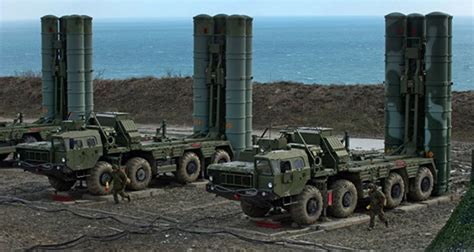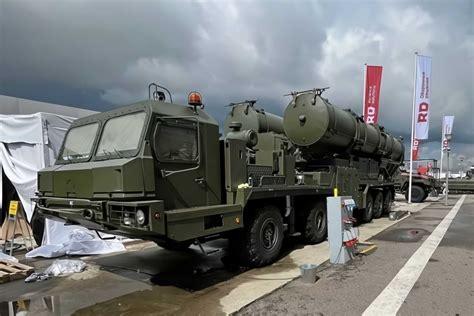
The S-500 Prometheus, officially designated as the 55R6M “Triumfator-M,” represents a monumental leap in Russia’s integrated air and missile defense capabilities. Developed by Almaz-Antey, this cutting-edge system is engineered to provide comprehensive protection against an unprecedented array of modern aerial and space threats, from ballistic missiles and hypersonic vehicles to low Earth orbit satellites. Entering operational service with the Russian Space Forces on 16 September 2021, the S-500 has swiftly become the flagship asset supplementing the older S-400 and A-235 missile defense complexes, signaling Russia’s commitment to maintaining strategic dominance in airspace and near-Earth domains.
The staggering complexity and technological sophistication of the S-500 are reflected not only in its operational parameters but also in its escalating unit costs—from an estimated $700–800 million in 2020 to a jaw-dropping $2.5 billion by 2023. This cost escalation underscores the advanced research, state-of-the-art materials, and highly integrated command systems embedded within the platform.
The system is uniquely positioned to counter emerging threats such as hypersonic glide vehicles and space-based weapons platforms, areas where traditional air defense systems fall short. This capability transforms the S-500 into a critical component of Russia’s layered missile defense shield, capable of operating in contested environments with rapid reaction times and multi-target engagement.
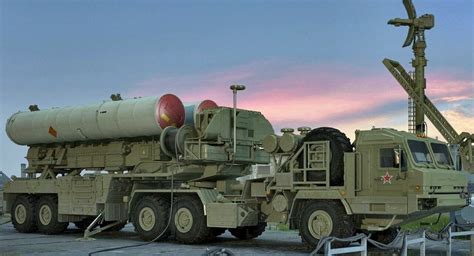
Historical Development and Deployment Timeline
The S-500’s development trajectory traces back to Russia’s ambitious GPV-2020 military modernization program, initially scheduled for production by 2014. The original plan envisioned ten battalions of S-500 systems gradually replacing the aging S-300 units while operating alongside the advanced S-400 Triumf systems. Despite initial delays caused by sanctions, labor shortages, and technological challenges, serial production finally commenced in 2021 following a critical contract award in 2019 by Rostec’s leadership. This marked a pivotal shift from prototype testing to operational fielding.
Strategic planning also included the development of a naval variant, intended for installation on the future Lider-class destroyers, expanding the S-500’s reach to maritime domains. In mid-2020, statements from senior commanders hinted at the system’s capability to target and neutralize satellites, a capability that would elevate the S-500 beyond traditional air defense and into the realm of space warfare.
The system’s deployment has been cautious yet deliberate. The initial operational unit was based in Moscow by late 2021, gradually enhancing Russia’s air defense shield around its most critical assets. By 2025, broader deployment across central Russia, including key military-industrial regions, is anticipated. Despite a challenging debut in Crimea in June 2024—where the system failed to intercept Ukrainian ATACMS missiles—the S-500 remains central to Russia’s layered defense strategy.
Groundbreaking Testing and Combat Capabilities
Testing the limits of modern missile defense, the S-500 achieved a remarkable interception at a record-breaking range of 482 kilometers in May 2018, surpassing all previous benchmarks for surface-to-air missile engagements. This milestone demonstrated the system’s potential to neutralize long-range ballistic missile threats before they could reach Russian airspace. Subsequent live-fire exercises in July 2021, conducted at the Kapustin Yar training range, showcased its advanced anti-ballistic missile (ABM) capabilities, including rapid target acquisition and multi-target simultaneous engagement.
The S-500’s reaction time is a critical aspect of its combat effectiveness, capable of detecting and engaging threats within a timeframe of under four seconds. This rapid responsiveness is essential when facing hypersonic threats traveling at speeds up to 7 kilometers per second, which traditional missile defense systems struggle to counter.
Advanced Design and Technical Specifications
At the core of the S-500’s design philosophy lies versatility and precision. The system is engineered to simultaneously engage up to ten hypersonic targets, providing robust defense against a complex attack environment. Its planned operational range for intercepting ballistic missiles reaches an astounding 600 kilometers, with an effective range of 500 kilometers against aerial targets, including stealth aircraft and cruise missiles. The system’s altitude engagement capability extends to approximately 200 kilometers, placing it at the cutting edge of near-space defensive reach.
The S-500 is not merely a missile interceptor; it is an integrated network of sophisticated radar and command modules designed to achieve maximum situational awareness and target tracking fidelity. Key components include:
- 77P6 launch vehicle, based on the BAZ-69096 10×10 heavy-duty truck, providing unparalleled mobility and rapid redeployment capabilities.
- 55K6MA and 85Zh6-2 command posts, mounted on BAZ-69092-12 6×6 vehicles, offering advanced battle management and communication links.
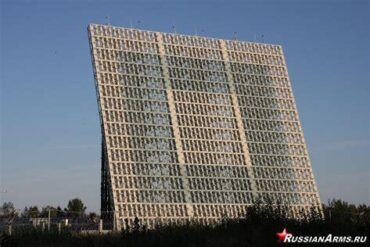
- 91N6A(M) acquisition/battle management radar, utilizing an 8×8 BAZ-6403.01 chassis, ensuring wide-area surveillance and target detection.
- 96L6-TsP acquisition radar, mounted on the 10×10 BAZ-69096 platform, optimized for long-range target acquisition.
- 76T6 multimode engagement radar, providing precise target tracking and missile guidance.
- 77T6 ABM engagement radar, specialized in anti-ballistic missile target illumination and guidance.
Missile armaments are equally sophisticated, with the primary anti-aircraft missile designated as the 40N6M, designed for long-range aerial interception, while the 77N6 and 77N6-N1 missiles are tasked with anti-ballistic and anti-satellite missions, reflecting the system’s dual role in atmospheric and near-space defense.
Strategic Role and Future Prospects
The S-500’s introduction marks a fundamental shift in Russia’s defense posture, elevating its capacity to maintain air and space dominance in the face of rapidly evolving threats. Unlike legacy systems confined to atmospheric engagements, the S-500’s ability to target hypersonic weapons and low Earth orbit satellites redefines the boundaries of integrated air defense.
This system is designed not only to protect critical military infrastructure and population centers but also to serve as a strategic deterrent against adversaries developing advanced missile technologies. The potential to neutralize space-based platforms gives Russia a significant edge in the emerging domain of space warfare.
Internationally, the S-500 is poised to become a highly sought-after export product, with India identified as the likely first foreign customer. This prospective deal underlines the system’s appeal to countries seeking cutting-edge missile defense capabilities beyond the scope of existing alternatives.
Conclusion
The S-500 Prometheus missile system stands as a monumental achievement in modern defense technology, combining unmatched range, multi-domain targeting capabilities, and rapid reaction times. Its integration into Russia’s defense architecture ensures a formidable shield against the next generation of aerial and space threats, from hypersonic missiles to satellites. Despite initial deployment challenges and operational setbacks, the S-500 embodies the future of missile defense, representing both a technological marvel and a strategic game-changer on the global stage.
As missile threats continue to evolve, the S-500’s adaptive architecture and comprehensive sensor-to-shooter network position it to remain a cornerstone of air and missile defense for decades to come.