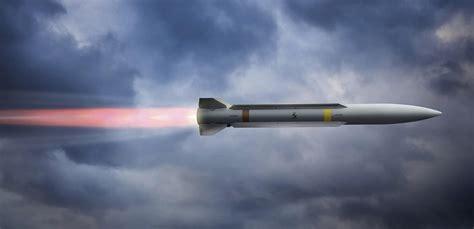
The AIM-260 Joint Advanced Tactical Missile (JATM) represents a significant leap in air-to-air missile technology, reflecting the evolving needs of modern aerial combat. Developed by Lockheed Martin in collaboration with the United States Department of Defense (DoD), this beyond-visual-range air-to-air missile (BVRAAM) aims to replace the widely used AIM-120 AMRAAM, offering superior range, speed, and lethality. The AIM-260 is designed to counter emerging threats, particularly long-range missile systems developed by strategic competitors, including China’s PL-15.

Development Background
The AIM-260 program began in 2017 as a direct response to advancements in foreign missile technology, notably the Chinese PL-15, which presented a clear challenge to American air superiority. With the potential to outmaneuver and outgun existing AMRAAM variants, the JATM was prioritized as the number one air-delivered weapon for the U.S. Air Force (USAF) and the U.S. Navy (USN). This intense focus underscores the missile’s critical role in maintaining U.S. aerial dominance.
Initial testing for the AIM-260 started as early as April 2020, with a rapid development pace reflecting the urgency of its deployment. Despite the classified nature of the program, it is known that full-scale aerial target testing has been ongoing, and the missile has yet to achieve Initial Operational Capability (IOC). According to recent reports, the House Armed Services Committee raised concerns over potential delays, but the USAF maintains that the program remains on track, with production expected to overtake AIM-120 output by 2026.
Key Features and Specifications
The AIM-260’s technical specifications highlight its advanced design, engineered for superior performance against modern threats:
- Maximum Firing Range: At least 200 km (120 mi), potentially double the range of the latest AIM-120D-3 variants.
- Warhead: High-explosive blast-fragmentation, optimized for high-speed, high-altitude engagements.
- Maximum Speed: Mach 5, providing a critical advantage in intercepting high-speed targets.
- Guidance System: Inertial guidance, two-way data link, and active radar homing, ensuring precise target tracking in contested environments.
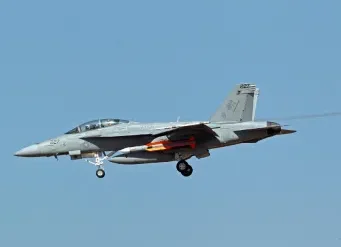
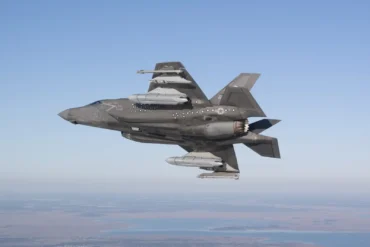
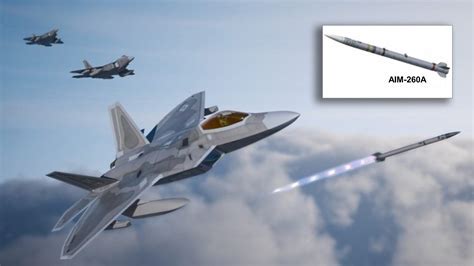
- Launch Platforms: Compatible with Lockheed Martin F-22 Raptor, Boeing F/A-18E/F Super Hornet, Lockheed Martin F-35 Lightning II, and Boeing F-15EX Eagle II.
Strategic Importance and Future Potential
The AIM-260 is not merely a missile but a cornerstone of the U.S. military’s air superiority strategy. Its development marks a pivotal shift towards more sophisticated, networked warfare, emphasizing long-range precision and rapid adaptability. Unlike its predecessor, the AIM-260 is designed with a smaller profile to ensure maximum compatibility with existing aircraft systems, including the stealthy internal bays of the F-22 and F-35. This allows these platforms to remain undetected while carrying a full complement of long-range weapons.
Furthermore, the AIM-260’s range advantage, coupled with its advanced guidance systems, makes it a critical asset in countering next-generation aerial threats, including hypersonic glide vehicles and stealth aircraft. Its integration with unmanned Collaborative Combat Aircraft (CCA) underscores its future relevance in autonomous and semi-autonomous combat scenarios, further expanding its strategic utility.
Classified Development and Operational Secrecy
The AIM-260 program is shrouded in secrecy, managed as a Special Access Program (SAP) to prevent critical technology from falling into adversarial hands. This level of confidentiality extends to the construction of custom storage vaults, such as those at Hill Air Force Base (AFB), specifically designed to house these advanced munitions. This approach reflects the missile’s strategic importance, both as a deterrent and as a critical offensive capability.
Operational Testing and Projected Deployment
Live-fire testing for the AIM-260, reportedly underway as of Summer 2023, marks a critical phase in its path to full operational deployment. Despite early concerns about delays, the program remains a top priority for both the USAF and USN, with significant budget allocations aimed at accelerating its production. This rapid development cycle, driven by escalating global tensions, highlights the urgency of deploying the JATM to frontline units.
As of May 2024, the AIM-260 remains in initial production, with full-scale deployment expected to bolster the U.S. military’s air dominance for decades to come. This advanced missile is poised to serve as the backbone of American air superiority, securing its position as a decisive factor in future air-to-air engagements.

Conclusion
The AIM-260 JATM stands as a testament to American innovation in missile technology, embodying the cutting-edge advancements required to maintain air superiority in the face of evolving global threats. As it transitions from development to full-scale production, this next-generation missile will redefine aerial combat, ensuring that U.S. pilots maintain a critical edge in the skies.