The defense sector in Europe is undergoing a seismic transformation as Anduril Industries, the California-based defense tech disruptor, and Rheinmetall AG, one of Germany’s most established military manufacturers, enter a strategic partnership to develop cutting-edge aerial drones tailored specifically for the European theater. This alliance aims to produce European variants of Anduril’s Barracuda and Fury drones, blending American innovation with continental manufacturing capabilities under the shared values of digital sovereignty, speed, and modularity.
Set against the backdrop of the Paris Air Show, one of the defense industry’s most influential stages, this announcement is more than just another bilateral cooperation—it represents a pivotal rethinking of how Europe sources, builds, and deploys high-tech weaponry in an increasingly volatile global security climate. With Russia’s war in Ukraine rewriting doctrines of modern combat, and questions looming over future U.S. military commitments to NATO, European governments are now racing to fill critical capability gaps, especially in drone warfare, an area where local industries have historically lagged.
Modular, Autonomous, and NATO-Aligned: The Vision Behind the Drones
Central to the collaboration are two highly distinct but complementary unmanned systems—the Barracuda and the Fury. Each embodies a philosophy rooted in autonomy, rapid scalability, and mission adaptability, designed to meet the evolving operational needs of NATO and its allies.
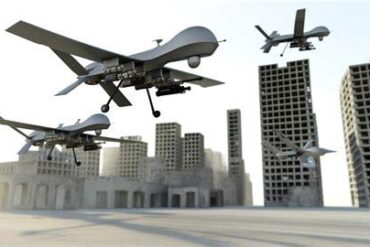
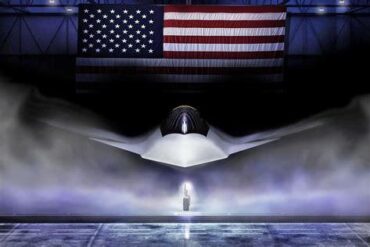
The Barracuda, described as cost-effective, quickly produced, and easily launched in swarms, is engineered to function like a cruise missile—capable of saturating airspace or penetrating enemy defenses at low cost. Its primary battlefield use includes strike missions, area denial, and kinetic disruption of enemy assets. In contrast, the Fury sits at the premium end of the drone spectrum: a stealth-capable, longer-range aircraft equipped for surveillance, reconnaissance, and precision engagement deep within contested environments.
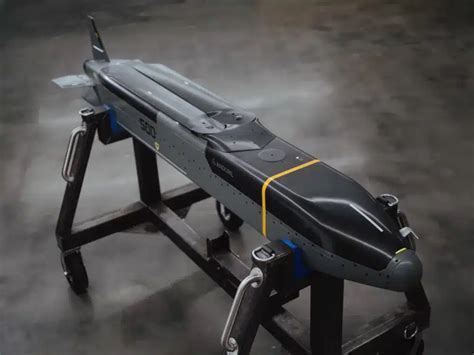
This dual-drone strategy reflects Anduril’s core design ethos—providing layered capabilities across a single operational ecosystem. The Barracuda handles volume-based saturation, while the Fury delivers precision and stealth, creating a complementary strike network capable of overwhelming advanced air defenses and adapting to the fluid nature of future conflicts.
Why Europe Needs This: From Strategic Dependencies to Industrial Sovereignty
The need for such a partnership has become increasingly urgent. Following the Russian invasion of Ukraine, European nations have pledged billions in increased defense spending, yet their industrial base remains tethered to U.S. defense primes. This isn’t just about jets and tanks anymore. The next war will be fought with machine learning algorithms, autonomous kill chains, and hypersonic delivery systems—and Europe is racing to keep pace.
However, this new transatlantic venture promises to rewrite that narrative. Rheinmetall’s integration of Anduril’s drone architecture within its European manufacturing and digital sovereignty framework ensures that while the technology originates from the U.S., its control, production, and deployment remain firmly embedded in European command structures.
As Armin Papperger, CEO of Rheinmetall, emphasized:
“We’re bringing new kinds of autonomous capabilities into service—ones that are quick to produce, modular, and aligned with NATO’s evolving requirements.”
This “sovereignty-conscious” model ensures that while Europe leverages cutting-edge American software and aerospace design, it avoids the pitfalls of complete dependence on foreign supply chains or command architecture.
Technology-First, Bureaucracy-Last: Anduril’s Disruption of the Defense Sector
What sets Anduril apart from traditional U.S. defense contractors is not just its Silicon Valley pedigree, but its operating speed. Founded by Palmer Luckey and helmed by CEO Brian Schimpf, Anduril positions itself as a lean, tech-first alternative to bureaucratic legacy firms that often struggle to move at the speed of battlefield demands.
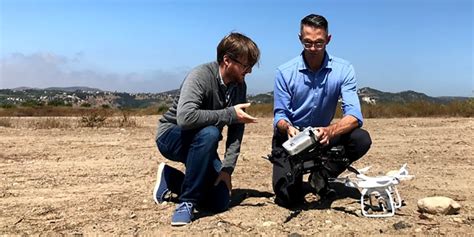
Unlike conventional military vendors who focus on long-term, multi-billion-dollar contracts, Anduril thrives on rapid prototyping, aggressive iteration, and mission relevance. The company has already demonstrated its capabilities through partnerships with the U.S. Department of Defense and the UK’s Strategic Command. Now, in collaboration with Rheinmetall, it’s exporting that disruptive mindset to a continent that desperately needs agility in procurement.
Schimpf described the initiative as:
“A different model of defense collaboration—one built on shared production, operational relevance, and mutual respect for sovereignty. Together with Rheinmetall, we’re building systems that can be produced quickly, deployed widely, and adapted as NATO missions evolve.”
From Factory Floor to Frontline: Fast-Tracking Deployment Timelines
Traditional defense systems often require years—if not decades—from concept to combat deployment. This model no longer holds water in the age of drone swarms, cyberwarfare, and dynamic electronic battlefields, where real-time adaptation is the new norm. The Anduril-Rheinmetall alliance specifically aims to shrink these timelines dramatically.
Key features that facilitate this acceleration include:
- Modular architecture: Components can be upgraded or replaced quickly without a full system overhaul.
- Digital twin simulations: Allow for virtual battlefield testing before physical production.
- Integrated AI systems: Enable drones to execute semi-autonomous missions with minimal operator intervention.
- European supply chain localization: Avoids transatlantic shipping delays and bolsters industrial resilience.
This model is not merely theoretical. Anduril has already demonstrated success with its Lattice AI operating system, which allows drones and sensors to work in coordinated clusters, adapting in real-time to changing threats.
Strategic Implications for NATO and EU Defense Policy
The implications of this partnership go beyond the hardware itself. It represents a strategic pivot for European military planning and signals a broader institutional willingness to adopt newer, faster, more adaptable platforms—an evolution necessary to maintain parity in a world of asymmetric threats.
The timing also aligns with growing anxiety in Brussels over NATO’s long-term cohesion, especially as the U.S. presidential election looms. Former President Donald Trump has repeatedly questioned America’s commitment to NATO, and with another term a possibility, Europe must act decisively to build autonomous capabilities.
Moreover, the deal may pave the way for future pan-European drone projects, perhaps even inspiring the EU to co-fund next-generation airpower programs that blend public investment with private-sector dynamism.
Beyond Drones: A Glimpse into Solid Rocket Motor Production
Interestingly, the partnership also hints at potential collaboration in an entirely different, though related, domain—solid rocket motor production. While still in the exploratory phase, this component is vital for everything from missiles and interceptors to space-bound payloads.
With global supply chains for rocket motors under strain—particularly after geopolitical tensions and rare earth mineral bottlenecks—developing localized manufacturing in Europe could prove strategically invaluable. If realized, this would significantly strengthen Europe’s vertical integration across multiple defense platforms.
A Future Defined by Agility and Autonomy
Ultimately, the Anduril-Rheinmetall partnership illustrates a new paradigm of defense industrial cooperation, one grounded in speed, flexibility, and sovereignty. Rather than succumbing to the slow grind of procurement red tape, this model aims to build platforms that evolve with the battlefield, not after it.
As drones continue to define modern conflict, from the Donbas to the Indo-Pacific, the ability to deploy cost-effective, scalable, and semi-autonomous systems will dictate not just tactical superiority but strategic deterrence. In that future, Europe can no longer afford to be a passive buyer—it must be an active builder. Through this partnership, it may finally be stepping up to the challenge.