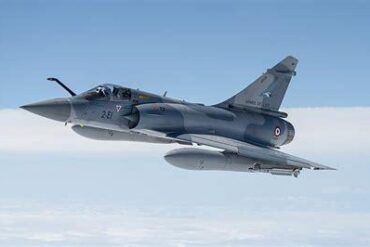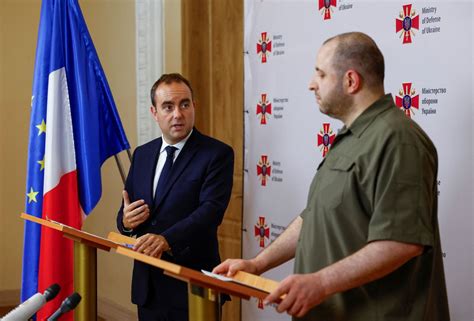
France has embarked on an unprecedented defence-industrial partnership by announcing the establishment of military drone production facilities on Ukrainian soil, combining the capabilities of a major French automotive manufacturer and a French defence SME. This strategic cooperation, unveiled by French Defence Minister Sébastien Lecornu on 6 June, marks the first time a French manufacturing venture will operate within Ukraine since the onset of Russia’s full-scale invasion.
“We are launching a completely unprecedented partnership,” Lecornu revealed during an interview with LCI television. He emphasized the sensitive nature of the corporate participants, stating, “I won’t give the name because it’s up to them to announce it,” but confirmed that the alliance aims to equip drone production lines directly in Ukraine. The significance of this move lies not only in the physical production of unmanned systems but also in deepening tactical cooperation between French and Ukrainian forces.
Strategic Innovation on the Battlefield
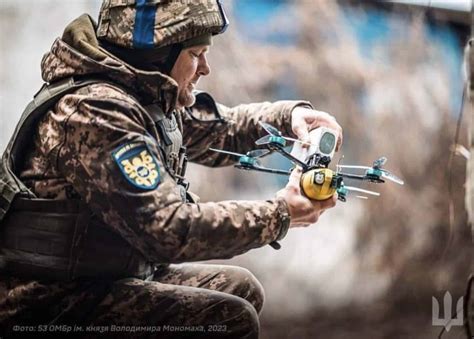
The drones produced under this joint venture will serve both Ukrainian combat needs and French military training objectives. Lecornu underscored how the real-world combat data and experience from Ukrainian operators will directly inform French military doctrine and technological development. He stated that this feedback loop allows France to maintain “permanent tactical, operational training that matches the reality” of modern warfare.
In what Lecornu termed a “win-win” arrangement, Ukraine contributes not only the battlefield environment but also a deep pool of operational drone expertise, which has emerged as a cornerstone of Ukrainian military effectiveness against Russian forces. “They are better than us in the capacity to imagine drones and especially to develop the doctrine that goes around them,” Lecornu acknowledged candidly.
This reciprocal structure allows French units to evolve their drone warfare capabilities without needing to embed their personnel in an active conflict zone. Crucially, Lecornu confirmed that no French workers would be required on the Ukrainian production line.
A New Era for Franco-Ukrainian Defence Collaboration
This joint manufacturing venture builds on earlier French efforts to bolster Ukraine’s arms production capacity, including investments in co-developed weapons systems and bilateral defence agreements. However, the decision to physically establish production inside Ukraine marks a dramatic escalation in commitment and industrial integration.
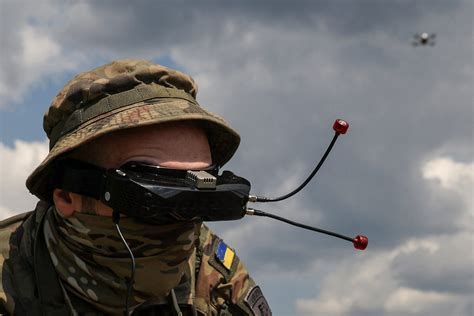
The move reflects a broader trend in European defence cooperation with Ukraine. Several EU nations have relocated drone manufacturing investments to Ukraine, making it a hub for next-generation battlefield technologies. France’s entry into this strategic ecosystem signals a growing confidence among European nations in Ukraine’s industrial resilience, even amid ongoing conflict.
Ukraine’s Drone Doctrine Reshaping Modern Warfare
According to Le Monde, Ukraine plans to deploy over 4.5 million drones in 2025, highlighting how deeply unmanned aerial systems are embedded in its defence strategy. Currently, 70% of Russian equipment destruction at the front lines is attributed to drones—a staggering statistic that underscores their asymmetric value.
This operational edge is no coincidence. Ukraine has cultivated a fast-moving, decentralized drone innovation culture, combining grassroots engineering with battlefield agility. From kamikaze drones to reconnaissance UAVs and advanced loitering munitions, Ukraine’s approach to drone warfare has not only surprised Russian commanders but also informed NATO-aligned military doctrines.
By embedding French manufacturing capacity within this innovation cycle, Paris effectively taps into the most battle-hardened drone laboratory on Earth. The potential for technology transfer, iterative design improvements, and rapid prototyping is immense.
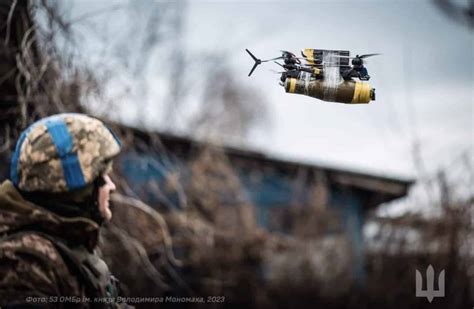
Closing the Capability Gap: France’s Motivation
While France currently operates several thousand drones, its military has historically lagged behind the United States and Israel in terms of advanced drone deployment and tactical integration. With this new venture, Paris aims to leapfrog intermediate development stages by piggybacking on Ukraine’s hard-earned battlefield lessons.
Moreover, the initiative comes at a time when European militaries are reassessing their drone readiness and scalability. France, which traditionally relied on imported or domestically limited UAV models, is now shifting toward mass production and modular warfare readiness—a transition accelerated by Ukraine’s influence.
European Momentum Behind Ukrainian Drone Manufacturing
France is far from alone in embracing Ukraine’s drone sector. In recent months, a wave of European investments has poured into Ukrainian UAV manufacturing, with geopolitical urgency and wartime innovation driving cross-border deals:
- Finland partnered with Ukraine to establish a drone factory with mass production starting in early 2025. The facility will produce UAVs for both domestic use and EU export.
- The Netherlands announced a €700 million investment dedicated to boosting Ukraine’s defence industry, with a major focus on autonomous systems and drone development.
- The UK is injecting hundreds of millions of pounds to scale up drone production capacity in Ukraine, including supply chain security enhancements.
- Norway has rechanneled military support funds directly into the production of Ukrainian-made drones, acknowledging their frontline effectiveness.
France’s decision to join this industrial wave confirms a continental pivot: rather than simply supplying Ukraine with finished military products, European powers are embedding themselves within its defence ecosystem.
The Operational Model: Civil-Military Fusion
While the specific French automotive company has not been named, Lecornu’s remarks hint at a civil-military hybrid production model. Such a model leverages the mass production efficiency and logistical expertise of the civilian automotive sector while aligning with defence-grade requirements provided by the partnering SME.
This model, which echoes Ukraine’s own fusion of grassroots civilian innovation and military procurement, may represent a new blueprint for European defence industry revitalization. The dual-use infrastructure not only accelerates manufacturing speed but also builds in supply chain flexibility—a crucial asset in a prolonged, high-intensity conflict.
In Ukraine, where agility often trumps bureaucracy, French firms are likely to experience a radically different R&D tempo. The expectation is that products will go from prototype to field test in weeks, not months, supported by real-time battlefield telemetry and operator feedback.
Political and Geopolitical Ramifications
By embedding itself so deeply in Ukraine’s defence landscape, France is also sending a clear message to both allies and adversaries. This venture is not merely economic or technological—it is a strategic posture. It demonstrates that France views Ukraine’s security as intertwined with Europe’s future defence architecture.
Such partnerships could complicate Moscow’s military calculus, potentially placing foreign manufacturing sites within range of Russian strikes. However, the decision also signals Europe’s growing strategic resilience, a refusal to allow war to paralyze defence cooperation or innovation.
Furthermore, this approach may pave the way for post-war reconstruction strategies that lean on dual-use manufacturing infrastructure, allowing facilities to pivot from military to civilian drone applications in peacetime.
Conclusion: A Pivotal Moment in European Defence Realignment
The announcement of French drone manufacturing on Ukrainian soil is more than a bilateral defence deal—it is a symbol of how modern warfare, defence industrial policy, and international solidarity are converging in Ukraine. For France, it represents a leap into the future of combat-ready, agile, and scalable military technology, catalyzed by the hard lessons and rapid evolution seen on Ukraine’s front lines.
For Ukraine, it offers not only critical tools in its existential fight against Russian aggression but also a pathway to becoming Europe’s premier defence innovation hub. As 2025 approaches with over 4.5 million drones projected for deployment, the country is redefining what it means to build and fight with 21st-century tools.
France has not only taken note—it has joined the effort, on the ground, where the future of warfare is being shaped in real time.