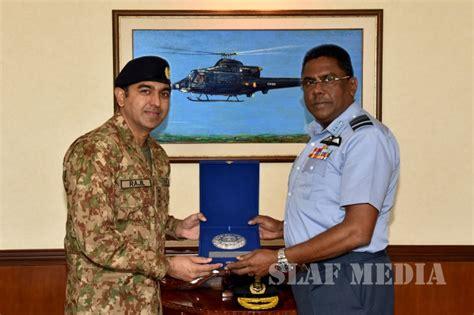
During a high-stakes seminar held in Jakarta on June 10, Captain (IN) Shiv Kumar, the Indian Defence Attaché to Indonesia, made a rare public admission regarding the loss of Indian Air Force (IAF) fighter jets to Pakistan. Speaking at an event organized by Universitas Dirgantara Marsekal Suryadarma on the evolving dynamics of air warfare, Captain Kumar’s remarks illuminated the intersection of military strategy and political oversight in India’s approach to regional air combat.
Constraints of Civilian Political Leadership in Wartime Strategy
Kumar acknowledged that Indian fighter jets were lost during the May 7, 2025 air engagement, not due to tactical or technical inferiority, but because of a politically imposed constraint. The Modi-led political leadership had instructed the IAF to avoid targeting Pakistan’s military establishments and air defenses, despite the provocations and tangible threats posed by Pakistani air assets.
This strategic handcuffing was, according to Kumar, intended to prevent the conflict from escalating into a broader war, particularly given the nuclear capabilities of both nations. It reflects a long-standing Indian doctrine of controlled military response—a calculated effort to exercise restraint while delivering strategic messaging.
The May 7 Engagement: Tactical Losses Under Strategic Restraint
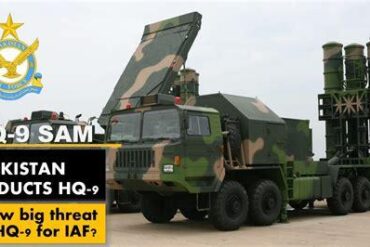
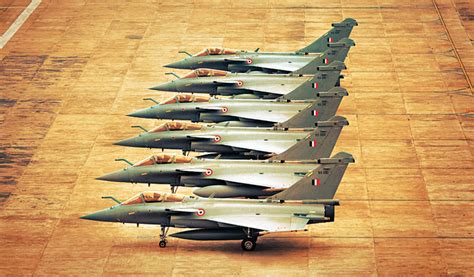
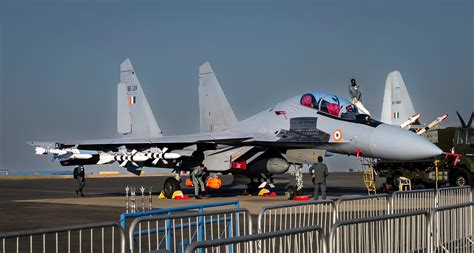
The critical moment in question took place during a mission aimed at neutralizing Pakistan-based terror infrastructure. The IAF deployed advanced fighter platforms, including Rafales and Su-30MKIs, into action. However, due to standing orders not to engage enemy air defenses or military targets, Indian jets flew under constrained mission parameters. Pakistani air defenses—free of similar restrictions—were activated aggressively.
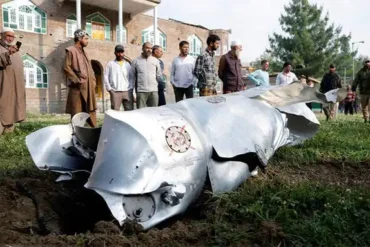
Pakistani officials later claimed that up to six Indian jets were shot down, a figure India has not officially confirmed. However, Kumar did admit to a non-zero number of losses, stating, “I do agree we did lose some aircraft,” during his 35-minute speech.
Air Superiority Undermined: How Orders Changed Outcomes
This situation raises pivotal questions about air superiority doctrine and operational freedom. In most conventional air campaigns, the first step is to degrade or destroy enemy air defenses (SEAD) to ensure operational safety for subsequent strikes. By omitting this step, the IAF effectively operated at a tactical disadvantage, unable to suppress the most lethal elements of Pakistani resistance.
In contrast, Pakistan’s Deputy Air Force Chief later revealed that once Indian munitions crossed the border, the PAF’s rules of engagement were switched from deterrence to destruction. The shift in posture explains the aggressive interception and the resulting losses for India.
Rapid Tactical Pivot: From Restraint to Retaliation
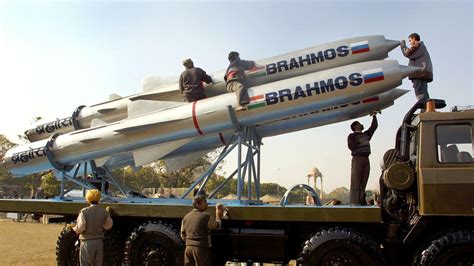
Recognizing the cost of this restrained approach, Indian military leadership swiftly recalibrated. By May 10, a new wave of strikes was launched, this time targeting military installations and air bases in Pakistan using stand-off weapons, including BrahMos cruise missiles. These were deployed from outside the effective range of Pakistan’s air defenses, allowing India to achieve its strategic objectives with minimal exposure to risk.
Captain Kumar explained, “After the loss, we changed our tactics… We first achieved suppression of enemy air defences, and then that’s why all our attacks could easily go through using BrahMos missiles.”
Political-Military Dissonance: The Cost of Strategic Restraint
The episode underlines a broader and more enduring reality in Indian military operations—the enduring subservience of armed forces to civilian control, a hallmark of the Indian democratic structure. As clarified by the Indian Embassy in Jakarta, the aim of Kumar’s statement was not to highlight a military failure, but to underscore India’s adherence to democratic norms.
Their official release noted: “The presentation conveyed that the Indian Armed Forces serve under civilian political leadership unlike some other countries in our neighbourhood. It was also explained that the objective of Operation Sindoor was to target terrorist infrastructure and the Indian response was non-escalatory.”
Yet, the nuances of such civilian oversight carry operational costs. While strategic restraint may earn India diplomatic capital on the global stage, its implementation during live conflict scenarios often results in tactical disadvantage.
Operation Sindoor: Balancing Deterrence and Diplomacy
The broader campaign, now dubbed Operation Sindoor, was initiated in response to credible intelligence regarding terrorist activities originating from deep inside Pakistan. Indian officials insisted that the operation’s objective was limited—to eliminate non-state actors and terror hubs, not to provoke war.
Nonetheless, once munitions began striking targets on Pakistani soil, Islamabad’s strategic posture shifted sharply. Their military not only retaliated with full force but also exploited India’s self-imposed limitations to neutralize Indian assets mid-operation.
Captain Kumar’s acknowledgment that “we did lose some aircraft” puts a critical lens on this balancing act. It raises the question: Can strategic restraint coexist with the necessity of tactical decisiveness?
Leadership Response and Strategic Communication
General Anil Chauhan, India’s Chief of Defence Staff, later clarified in an interview with Bloomberg: “What is important is that—not the jet being down, but why they were being down.” This subtle but profound statement reflects a strategic narrative framing, emphasizing that the losses were not due to operational incompetence but to strategic compliance with political directives.
This also points toward an emerging doctrine in Indian strategic thinking: coercive diplomacy backed by limited force. India’s use of BrahMos missiles post-May 7 demonstrated technological superiority and retaliatory capability, while still attempting to avoid the trigger for all-out war.
Diplomatic Fallout and Narrative Management
The Indian Embassy’s damage control in Jakarta further highlighted the sensitivity of military disclosures in international settings. By declaring Kumar’s remarks “quoted out of context,” they attempted to blunt the growing narrative that India’s military was compromised by its political leadership. This underscores the importance of narrative control not only on the battlefield but in the realm of diplomacy and international perception.
At a time when strategic messaging is as potent as missile strikes, even a seminar remark can trigger ripples in regional security calculus.
Lessons in Strategic Flexibility
The May 2025 air confrontation reveals more than just losses or tactical shifts. It paints a portrait of modern Indian military doctrine—one that is navigating the razor’s edge between escalation control and force projection.
India’s initial restraint, born from a desire to maintain international legitimacy, came at the cost of immediate tactical losses. However, the rapid shift in strategy and the subsequent precision strikes using stand-off munitions showcase a military apparatus capable of adapting to evolving threat environments.
In the end, the incident serves as a case study in civil-military dynamics, operational recalibration, and strategic resilience.
Conclusion: The Thin Line Between Caution and Consequence
Captain Shiv Kumar’s forthrightness, whether diplomatically inconvenient or not, shed light on a crucial truth in the fog of war: that wars are not just fought with missiles and jets, but with orders, doctrines, and political will. The Indian Air Force’s loss of aircraft on May 7, 2025, was not merely a result of superior enemy firepower—it was the price of adhering to a strategic philosophy that prioritizes restraint over retaliation.
As India continues to refine its air warfare doctrines in response to threats from both state and non-state actors, the May 2025 air engagement will remain a pivotal moment in the study of modern South Asian air power dynamics. It will also stand as a testament to the perils and prudence of politically constrained warfare.