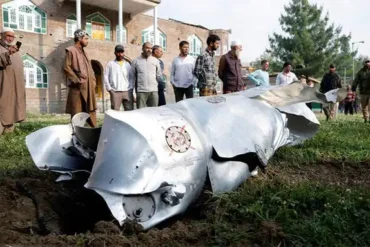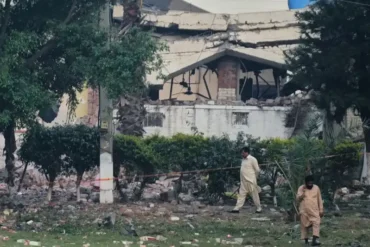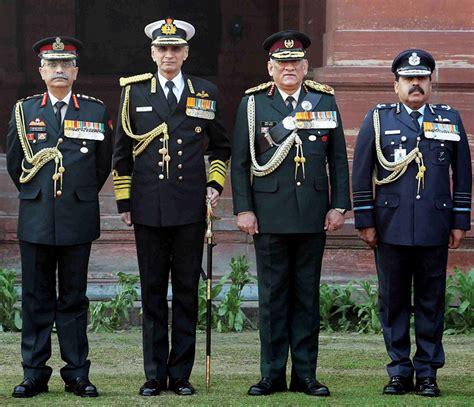
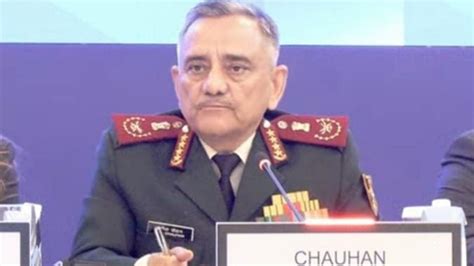
In a candid and unprecedented revelation, India’s Chief of Defence Staff (CDS), General Anil Chauhan, has confirmed that the Indian Air Force suffered aircraft losses during the early phases of a high-intensity aerial conflict with Pakistan earlier this month. His remarks, made at the Shangri-La Dialogue security summit in Singapore, mark the first official acknowledgment of India’s initial setbacks — and a dramatic pivot in strategy that followed.
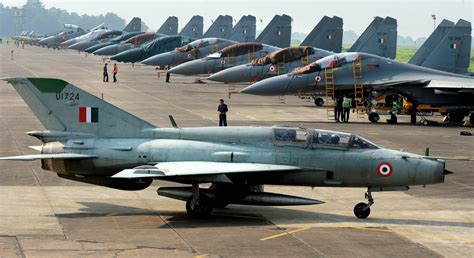
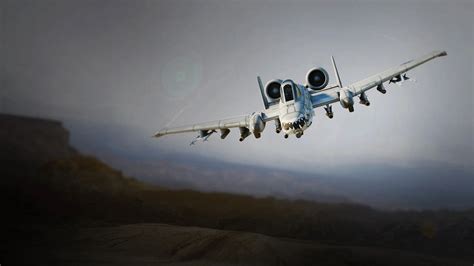
General Chauhan refrained from disclosing the exact number or types of aircraft lost, but emphasized that the focus quickly shifted from initial damage control to a bold counter-offensive strategy. He stated that the Indian Air Force recalibrated its tactics swiftly, striking deep into Pakistani airspace on the 7th, 8th, and 10th of the month. These precision strikes, he said, were conducted with “impunity,” systematically penetrating Pakistani air defenses and targeting air bases with near-meter accuracy.
A Tactical Shift After Early Losses
The conflict, which flared up around April 22, escalated quickly into a high-stakes aerial duel between two nuclear-armed neighbours. Pakistan claimed to have downed several Indian jets during the initial exchanges — a claim now partially validated by General Chauhan’s admission. He noted, however, that the priority was understanding why those losses occurred and responding with overwhelming force and clarity.
According to Chauhan, India launched retaliatory strikes in massive formations, deploying “all types of aircraft with all types of ordnances” on the 10th. This demonstrated not just India’s technical aerial superiority, but also its doctrinal shift towards decisive, high-risk engagements in hostile airspace.
Precision Strikes and Strategic Restraint
What makes this aerial campaign particularly noteworthy is its dual nature: aggressive execution balanced with strategic restraint. Although some of the airstrikes were near Pakistan’s nuclear facilities, the targets were strictly military, ensuring that no nuclear sites were directly engaged. This balance underscores India’s evolving doctrine of controlled escalation — one that embraces assertiveness while avoiding red lines that could trigger nuclear miscalculation.
Chauhan confirmed that some of the strikes achieved impact accuracy down to the meter, a testament to India’s advancements in targeting technology and combat readiness. “Most of the strikes were delivered with pinpoint accuracy,” he said, adding that the selected mean points of impact were consistently achieved across the campaign.
Pakistan’s Denials and Partial Admissions
While India has now admitted aircraft losses and detailed its retaliatory operations, Pakistan has stuck to a more cautious narrative. Islamabad denies losing any aircraft but admits that its air bases suffered hits — though it claims the damage was minimal. This divergence in accounts reflects the highly politicized nature of military disclosures in the subcontinent, where official statements are often shaped as much by strategic posturing as by facts on the ground.
Air Marshal A K Bharti, India’s Director General of Air Operations, earlier stated that “losses are a part of combat”, and noted that India had also downed Pakistani jets in the skirmish. Yet the fog of war — and the careful information management on both sides — has left the true balance sheet of damage somewhat opaque.
The Shadow of the Nuclear Threshold
One of the most pressing concerns during any India-Pakistan military flare-up is the risk of nuclear escalation. However, both General Chauhan and Pakistan’s Chairman of the Joint Chiefs of Staff, General Sahir Shamshad Mirza, appear to have ruled out any immediate danger of the nuclear threshold being crossed.
“There’s a lot of space before that nuclear threshold is crossed, a lot of signalling before that,” Chauhan remarked. “Nothing like that happened.” He asserted that conventional operations can exist within a wide band of escalation without tipping into nuclear territory — a belief increasingly evident in India’s strategic playbook.
Chauhan added that military professionals on both sides showed a high degree of rationality. “The most rational people are people in uniform when conflict takes place,” he said. “During this operation, I found both sides displaying a lot of rationality in their thoughts as well as actions.”
The China Factor: An Absence of Interference
Another dimension to the conflict that drew speculation was the potential role of China, Pakistan’s close strategic ally. However, General Chauhan firmly dismissed any indication that Beijing intervened or altered its posture during the escalation.
He noted that during the active phase of operations — starting April 22 — there was no unusual movement or activity along India’s northern borders with China, either operationally or tactically. “Things were generally all right,” he said.
When asked whether China may have provided real-time intelligence or satellite imagery to Pakistan, Chauhan acknowledged that such imagery is commercially available, and could have been sourced from multiple countries — not just China. His remarks suggest India remains vigilant, but unshaken, by the potential of indirect Chinese involvement.
The New Normal: Deterrence Through Precision and Preparedness
One of the most revealing insights from General Chauhan’s interview is his view that India’s willingness to conduct deep, precision strikes inside Pakistan marks a shift in regional military norms. “There’s a lot of space for conventional operations which has been created, and this will be the new norm,” he said.
This change implies that India may no longer be satisfied with reactive or symbolic gestures in response to cross-border provocations. Instead, the armed forces appear ready to launch calibrated but impactful operations, sending a message of deterrence rooted in action rather than rhetoric.
The Indian government has also made it clear that any future terror attacks emanating from Pakistani soil would provoke immediate and decisive responses. “That has its own dynamics as far as the armed forces are concerned. It will require us to be prepared 24×7,” Chauhan warned.
Operation Sindoor: A Turning Point in South Asian Military Doctrine
Though not officially named by the Indian military, reports have begun to refer to the campaign as Operation Sindoor — symbolizing a red line or ceremonial strike, both culturally and militarily. If that name holds, Operation Sindoor could become a watershed moment in India’s evolving approach to cross-border threats.
Unlike the surgical strikes of 2016 or the Balakot airstrike of 2019, this operation unfolded over several days, involved a broad spectrum of aircraft, and featured deep penetrations into Pakistani airspace. This reflects a new readiness for prolonged engagement and complex operations, rather than one-off demonstrations of strength.
India’s emphasis on precision, scale, and strategic control during this round of hostilities may signal a new chapter in subcontinental military relations — one in which India seeks to dominate not just through deterrence, but through demonstrated capability.
Conclusion: A Deliberate Display of Power and Poise
India’s handling of this latest confrontation with Pakistan — from acknowledging early setbacks to executing high-impact retaliatory strikes — reveals a matured and more assertive military posture. While maintaining rational restraint, India also showed it could deliver decisive military responses deep inside enemy territory, altering the strategic calculus in the region.
As both sides step back from the brink, the lessons of this conflict are unlikely to fade quickly. For India, it has validated a doctrine of high-precision, high-risk operations backed by real-time adaptation. For Pakistan, it may serve as a sobering reminder of the escalatory dangers inherent in asymmetric provocations. And for the broader international community, it underscores the urgent need for robust crisis management mechanisms in South Asia — where two nuclear powers are learning to live with conflict, just short of catastrophe.