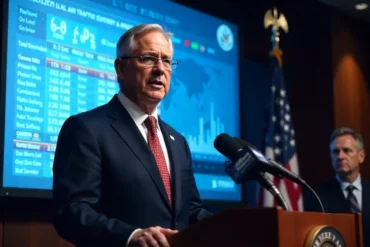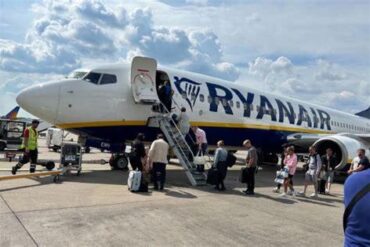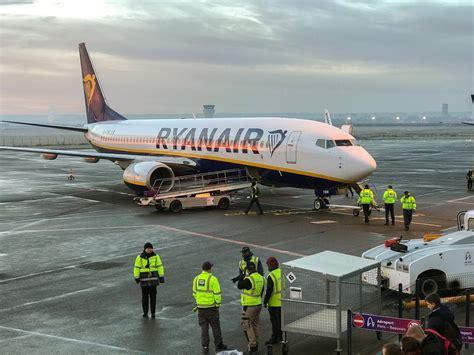
Ryanair CEO Michael O’Leary has launched a blistering attack on European Commission President Ursula von der Leyen, calling for her resignation over what he describes as the EU’s “inaction” in the face of crippling French air traffic control (ATC) strikes that have grounded hundreds of flights across the continent.
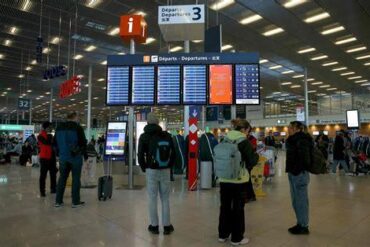
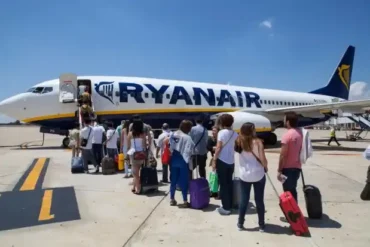
The disruption, which began on Thursday and is expected to conclude later today, has already forced over 1,500 flight cancellations, affecting more than 300,000 passengers. Ryanair alone has cancelled more than 400 flights, while competitor easyJet confirmed 274 cancellations. With the European summer travel season just beginning, the financial and logistical fallout is expected to intensify if no swift resolution is found.
A Crisis of Leadership and European Airspace Integrity
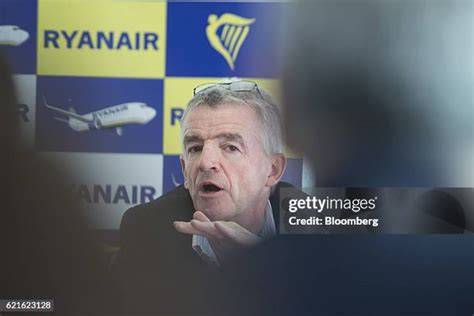
In a high-profile interview with Sky News Business Live, Michael O’Leary accused the European Commission of abdicating its responsibility to maintain the integrity of the single European aviation market. He sharply criticized von der Leyen for what he described as her failure to act decisively in the face of repeat ATC strikes in France, which have disproportionately impacted international overflights.
“We continue to call on Ursula von der Leyen – why are you not protecting these overflights? Why is the single market for air travel being disrupted by a tiny number of French air traffic controllers?” O’Leary said. “All we get is a shrug of the shoulders and ‘there’s nothing we can do.'”
He went further, asserting, “We are calling on Ursula von der Leyen… if you’re not willing to protect or fix overflights, then quit and let somebody more effective do the job.”
French Strikes: The Epicenter of European Air Chaos
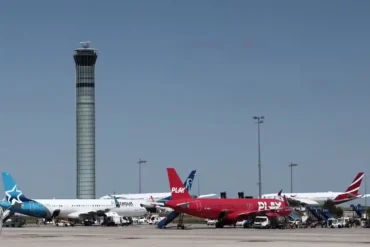
The latest ATC strike in France, initiated over disputes concerning staffing levels and equipment standards, has once again exposed a systemic vulnerability in European aviation. The Direction Générale de l’Aviation Civile (DGAC) ordered the cancellation of 40% of scheduled flights at the three major Paris airports — Charles de Gaulle, Orly, and Beauvais — well in advance of the walkout.
French ATC unions maintain that their grievances center on insufficient staffing and outdated radar and communication infrastructure. However, O’Leary dismissed these claims outright. “The idea that these are safety-related issues is nonsense,” he said. “Air traffic controllers are entitled to strike, but they are not entitled to close the skies over France.”
Disproportionate Impact on Overflights and EU-Wide Flights
A particularly contentious issue is the preference given to French domestic flights during strikes. Under French strike protocols, limited service is often maintained for domestic routes, while overflights and international carriers bear the brunt of cancellations. O’Leary pointed to Italy and Greece as examples of countries that have enacted minimum service legislation to prevent such widespread chaos, and he urged Brussels to adopt similar laws EU-wide.
“We’ve seen how countries like Italy and Greece maintain minimum services during industrial action. Why can’t France do the same? The answer is simple – a lack of political will at the EU level to enforce market integrity,” said O’Leary.
The Ryanair boss insists that competition law gives the Commission the legal basis to act. “There is a clear competition issue here. The rights of consumers and airlines in the broader single market are being systematically undermined by a national strike affecting international traffic.”
EU Commission: Silence in the Eye of the Storm
Despite O’Leary’s repeated calls for intervention, the European Commission has so far maintained a cautious stance, avoiding direct engagement with the matter. Spokespersons have consistently framed the strikes as a national issue, governed by labor laws and collective bargaining rights within individual member states.
However, as the economic and logistical toll mounts, pressure is intensifying on von der Leyen to address what critics call the “airspace hostage crisis”. With the European travel sector already battered by years of pandemic-related losses, the latest wave of industrial unrest adds fuel to an already volatile market.
Travellers and Airlines Caught in the Crossfire
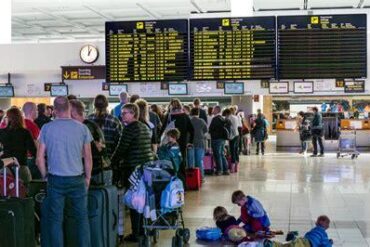
For passengers, the consequences have been immediate and deeply frustrating. Cancellations, missed connections, and long hours stranded in terminals have left many scrambling to salvage their holiday plans.
Under EU regulation EC 261/2004, passengers are entitled to either a refund or an alternative flight if their flight is cancelled. Moreover, if the outbound leg of a round-trip booking is cancelled, the full ticket price can be reclaimed. Yet, consumer rights advocacy groups argue that these protections offer cold comfort when flights are being axed en masse and airlines are stretched to breaking point.
Many aircraft and flight crews are now out of position, causing cascading delays that ripple across multiple airports and countries. The resulting backlog threatens to intensify as millions of Europeans prepare to travel during the busy July-August peak season.
French Government Officials Break Ranks
The tension surrounding the strikes has even seeped into French political discourse. Philippe Tabarot, the French transport minister, has openly condemned the actions of the ATC unions. Speaking to CNews, he remarked, “The idea is to disturb as many people as possible.”
Such internal criticism reflects a growing unease in Paris over the optics and economic costs of repeated strikes. While the right to strike remains protected under French law, there are increasing calls from within the government for stricter rules governing essential services like aviation, particularly when they have cross-border implications.

Airlines for Europe Joins the Chorus of Frustration
The lobbying group Airlines for Europe (A4E), which represents the continent’s largest carriers including Ryanair, Lufthansa, and Air France, has echoed O’Leary’s criticism. A4E estimates that at least 1,500 flights have been cancelled due to the current wave of strikes and has called for the EU to take urgent action to protect European skies.
In a statement, A4E said: “The current model allows one country’s internal dispute to effectively shut down a continent-wide transportation system. This is not only economically damaging but also undermines the credibility of the EU as a single market.”
A4E has proposed several reforms, including:
- Mandatory minimum service agreements for essential routes and overflights.
- Enhanced cross-border coordination of airspace management.
- Digital modernization of air traffic infrastructure to allow for more flexible routing.
What Comes Next: Calls for Reform and Accountability
With no end in sight to labor tensions in France’s aviation sector, stakeholders across the continent are demanding structural reforms. O’Leary’s bold ultimatum may be provocative, but it has resonated widely within the airline industry and among travelers, who increasingly view the EU’s passive stance as unacceptable.
Whether von der Leyen responds remains to be seen. But the mounting pressure could force the Commission to reassess its hands-off approach. As summer traffic intensifies and disruptions mount, political inaction risks morphing into political liability.
For now, European skies remain turbulent — not due to weather, but due to avoidable policy inertia. If the EU continues to look away, the question may not be whether von der Leyen should quit, but how much more damage can be done before someone finally takes control of the European airspace crisis.