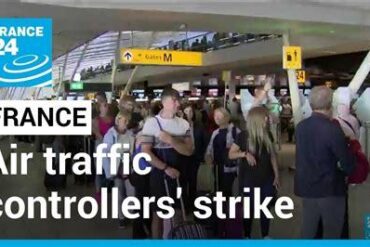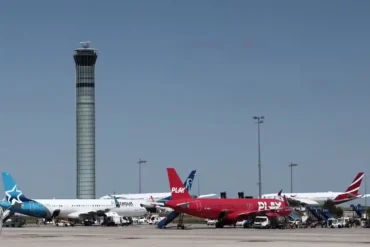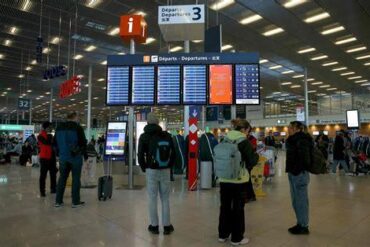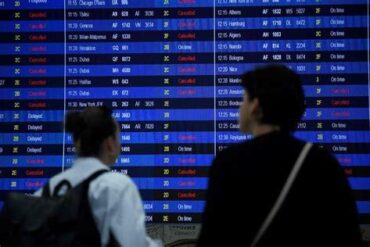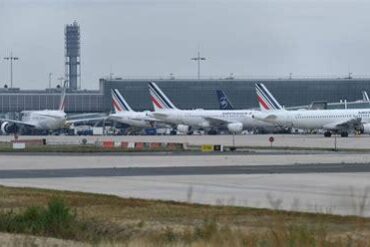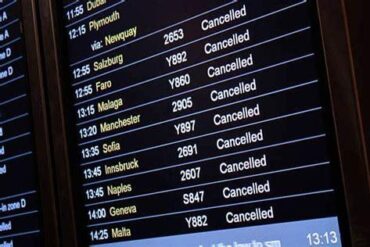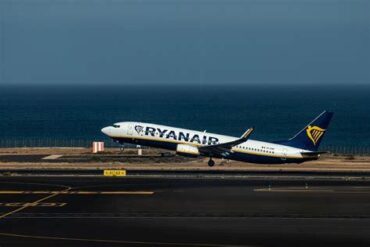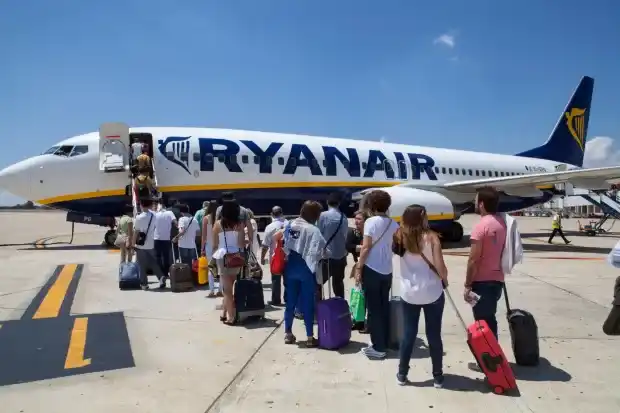
Holidaymakers across France, the UK, Greece, Ireland, and Brussels faced a fresh wave of travel disruption as over 400 Ryanair flights were cancelled due to a massive two-day air traffic control strike in France. The industrial action, led by French air traffic controllers on July 3rd and 4th, 2025, left thousands stranded, with ripple effects felt throughout Europe.
By the end of the strike’s first day, the airline industry had recorded over 1,500 cancelled flights, impacting an estimated 300,000 passengers, as reported by industry association Airlines For Europe. The strike resulted in Ryanair alone cancelling over 400 of its scheduled services, with 70,000 Ryanair passengers directly affected, adding fuel to an already mounting public and industry backlash.
French Air Traffic Controllers Walk Out: Root of the Disruption
At the core of the crisis were longstanding grievances voiced by French air traffic controllers, who cited chronic understaffing, obsolete infrastructure, and a toxic management culture within the Direction Générale de l’Aviation Civile (DGAC). Their coordinated walkout targeted air hubs like Paris Beauvais, Nice, and Biarritz, affecting both incoming and outgoing traffic, and creating bottlenecks in French airspace that rippled outward into European flight routes.
The French civil aviation authority (DGAC) responded by requesting airlines to cut 40% of their scheduled flights at major Paris airports on July 4th. While flights that only passed over France without stopping were technically not part of the cancellation order, the lack of staff made it impossible to manage these overflights efficiently, resulting in widespread indirect cancellations.
Ryanair’s Response: Blame Directed at Brussels
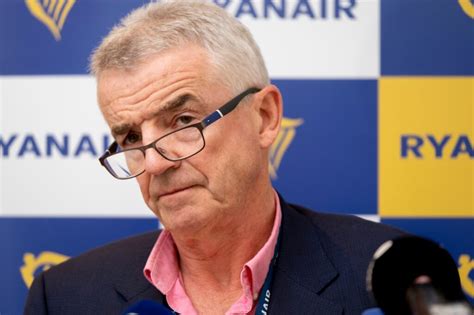
Michael O’Leary, the outspoken CEO of Ryanair, quickly emerged as a central figure in the mounting controversy. Lashing out at the European Commission, O’Leary accused President Ursula von der Leyen of failing to implement reforms to the EU’s air traffic management systems. He specifically called for her resignation, arguing that her administration’s inaction had left European air passengers at the mercy of national-level disruptions.
In a press briefing, O’Leary revealed that 350 of the 400 cancelled Ryanair flights were overflights, meaning they were not landing in or departing from France but simply passing through its airspace. “It is unacceptable that French unions can repeatedly close European skies while von der Leyen hides in Brussels, doing nothing,” O’Leary said, referencing a 2024 report by Mario Draghi, which had labeled air traffic control reform as an EU-wide priority.
Passenger Impact: Widespread Confusion and Frustration
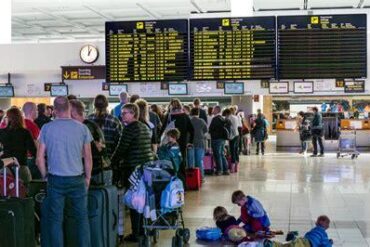
The immediate fallout of the cancellations was felt most painfully by holidaymakers—many of whom had booked summer travel to and from Mediterranean destinations like Greece, Spain, and southern France. Passengers found themselves stranded at airports in Dublin, London Stansted, Brussels Charleroi, and Athens, with little clarity about rebooking options.
“I had been planning my holiday to Nice for six months, and now it’s all gone,” said Deirdre McKenna, a traveler from Cork. “We were informed just hours before departure. The app showed ‘cancelled’—no call, no email. And we’re now out €500 in accommodation.”
Aer Lingus, another airline impacted by the strike, confirmed cancellations of some services to Paris and Nice from Dublin Airport. However, in a bid to mitigate the disruption, Aer Lingus deployed larger aircraft on routes still operational and offered live updates through its app and website. Meanwhile, passengers on Ryanair routes were forced to navigate a surge in customer support queries, with many complaining of delayed refunds, lack of alternate flights, and a general absence of proactive communication.
The Domino Effect: How French Strikes Cripple European Aviation
The events of early July serve as a stark reminder of how deeply interconnected European aviation has become, and how vulnerable it is to localized strikes. While labor disputes are commonplace across the EU, the unique geographic and logistical positioning of France makes it a central corridor for intra-European flights. A strike in France doesn’t merely halt national services—it creates a continent-wide bottleneck.
Flight paths from the UK to Italy or Greece, and from Spain to Ireland, often rely on French airspace. So when French controllers walk out, the knock-on effect is immediate and widespread. European carriers, from low-cost operators like Ryanair to legacy airlines, are forced into a corner—cancel or delay.
EU Policy Vacuum: O’Leary’s Call for ATC Reform
O’Leary’s critique of the European Commission taps into a deeper frustration within the aviation industry. Despite repeated calls for reform, the Single European Sky initiative—first introduced in the early 2000s to harmonize air traffic management—remains largely unimplemented. The Ryanair CEO argued that had the EU mandated overflight protection, a significant number of the July 3–4 cancellations could have been avoided.
He pointed to simple reforms that could yield large benefits:
- Mandating full staffing during early morning departures, the most critical operational window
- Protecting overflights during localized industrial actions
- Accelerating digital upgrades for European ATC infrastructure
According to Ryanair, such measures would reduce the impact of ATC strikes by as much as 90%. O’Leary also emphasized the need for a pan-European air traffic body, capable of overriding national disruptions to keep key air corridors functional.
Brussels’ Silence: The Missing Political Will
The European Commission has so far not issued any official response to Ryanair’s demands. Critics argue that Brussels has taken a reactive rather than proactive approach to aviation disruptions, content to let individual states manage crises until political pressure mounts. This lack of centralized authority in air traffic matters is increasingly viewed as antiquated, especially given the continent’s high volume of intra-EU travel.
With millions of Europeans now relying on air travel not just for leisure but for work, education, and family reunions, the absence of a cohesive ATC strategy leaves the entire system open to repeated collapse.
What Happens Next: Implications for Summer 2025 Travel
As the dust settles on the July disruption, travelers are left wondering if more turbulence lies ahead. With no concrete reforms in sight and France’s unions showing no signs of backing down, the possibility of further strikes looms large. Airlines are now bracing for potential August unrest, especially during peak holiday travel.
Some industry analysts believe the July events may finally push the EU into action. Travel lobbies, tourism boards, and airline consortiums are expected to ramp up pressure on the Commission, demanding urgent policy shifts before the crisis deepens.
For now, passengers are advised to:
- Monitor airline apps and official websites for updates
- Avoid tight connections through France and neighboring countries
- Book flexible tickets with refund and rebooking guarantees
- Consider alternate airports or train options when planning travel across Europe
Conclusion: A System at Breaking Point
The Ryanair cancellations of July 2025 have exposed the fragility of Europe’s aviation network. What began as a national labor dispute quickly escalated into a full-blown continental crisis, highlighting the urgent need for pan-European air traffic reforms. As airlines, travelers, and regulators grapple with the fallout, the call for structural change is becoming impossible to ignore. Whether the European Commission will rise to the occasion remains to be seen. But for now, hundreds of thousands of passengers are paying the price for political inaction and systemic dysfunction.