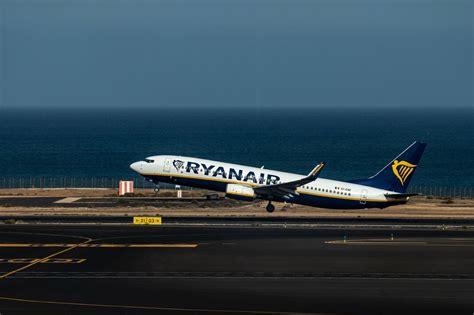
Ryanair has refused to apologize after departing Lanzarote without 89 ticketed passengers, arguing that airport border control failures — not airline policy — caused the disruption. The incident, involving flight FR4756 from Lanzarote (ACE) to Bristol (BRS) on February 25, 2026, has reignited debate over airline punctuality, post-Brexit border congestion, and passenger responsibility in an increasingly strained European aviation system.
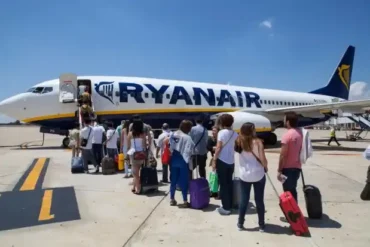
The Boeing 737-800 was scheduled to leave at 3:15 pm local time but ultimately departed at 4:28 pm, already more than an hour behind schedule. Nearly 180 passengers were booked on the service. However, as passport control lines stretched into hours due to bottlenecks in the airport’s non-Schengen processing area, only 90 passengers reached the boarding gate before closure. The remaining 89 were left behind.
According to reports, the airline removed checked baggage belonging to those who failed to board — a security requirement under international aviation rules — delaying the aircraft further before its eventual departure. Ryanair maintains that any passenger present at the gate before closure was boarded, and that those delayed in passport queues did not meet that threshold.
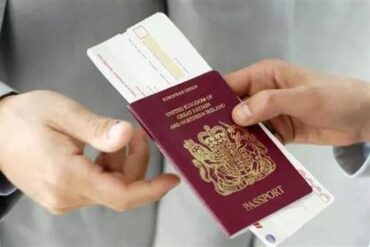
Passport Control Gridlock at Lanzarote Airport
Lanzarote Airport is the third-busiest gateway in the Canary Islands, processing more than seven million passengers annually. The airport’s traffic profile is heavily skewed toward UK leisure travel, with carriers such as Ryanair, easyJet, Jet2, and TUI operating high-frequency services.
Since the United Kingdom’s exit from the European Union, British travelers are processed through non-Schengen passport lanes, adding additional scrutiny and time to departure procedures. During peak afternoon banks — particularly when multiple UK-bound flights are scheduled within narrow departure windows — the airport’s border control facilities have struggled to absorb surges in demand.
In one widely cited episode last year, 17 non-EU flights reportedly converged within a short time span, overwhelming immigration desks and triggering cascading delays. The structural issue is not runway capacity, nor aircraft availability. It is the human bottleneck at passport control — a chokepoint that airlines cannot directly manage but must operationally endure.
Ryanair’s Operational Philosophy: On-Time Above All
Ryanair’s business model is engineered around tight aircraft utilization and rapid turnarounds. The airline typically targets a 25-minute turnaround window, minimizing ground time to maximize daily flight sectors per aircraft. Each delay compounds across the network, potentially affecting crews nearing maximum legal duty hours, slot restrictions at destination airports, and aircraft rotations scheduled for later sectors.
From a strictly operational standpoint, waiting indefinitely for delayed passengers introduces systemic risk. A single extended hold can disrupt multiple downstream flights, inconveniencing hundreds more travelers across the network. Airlines operate within regulated slot systems at many European airports, meaning departure times are not infinitely flexible.
Legally, carriers are entitled to close boarding once the final call is announced. Passengers are contractually required to present at the gate by a specified time, regardless of the reason for delay. In this case, Ryanair asserts that the gate closure followed standard procedure and that all passengers who arrived in time were accommodated.
That legal position, however, does not necessarily translate into reputational comfort.
The Passenger Experience: Stranded Amid Systemic Failure
For the 89 affected travelers, the experience likely felt less procedural and more personal. Long passport queues are not within a passenger’s control, particularly when airport authorities fail to scale staffing for peak demand. Travelers who had already cleared check-in and security were effectively immobilized by a border system they could neither bypass nor accelerate.
It remains unclear how long those denied boarding were left in Lanzarote or whether overnight accommodation was required. Under EU261 passenger rights legislation, compensation typically applies to cancellations and long delays attributable to the airline, not to missed flights caused by airport infrastructure or immigration processing delays. That distinction is critical.
In recent months, Ryanair has adopted a more rigid digital boarding system, eliminating paper boarding passes and pushing travelers toward app-based check-in. The airline has simultaneously intensified enforcement against unruly passenger behavior, even pursuing civil damages in high-profile cases. The Lanzarote episode fits into a broader corporate pattern: procedural consistency over emotional concession.
A Structural Tension in Post-Brexit Aviation
The incident exposes a deeper structural tension in European aviation. Airlines optimize for punctuality and cost efficiency. Airports operate within infrastructure constraints. Border agencies function according to sovereign security mandates. When those systems misalign, passengers absorb the friction.
Brexit introduced a procedural layer that many leisure airports were not originally designed to handle at scale. Each UK passport now requires stamping and manual verification. Multiply that by hundreds of passengers per flight, across multiple simultaneous departures, and a throughput ceiling becomes inevitable unless staffing and physical facilities expand proportionally.
Ryanair’s refusal to apologize signals a strategic choice. The airline appears unwilling to accept responsibility for failures it attributes to airport and border authorities. Whether that stance protects operational integrity or erodes customer loyalty will depend on how frequently such incidents recur — and how visible they become in public discourse.
For now, flight FR4756 has become a case study in modern aviation’s delicate choreography: aircraft ready, crews compliant, runway clear — yet progress halted by a queue of passports. In commercial aviation, precision is everything. When one link falters, the entire chain tightens, and someone is left standing at the gate.