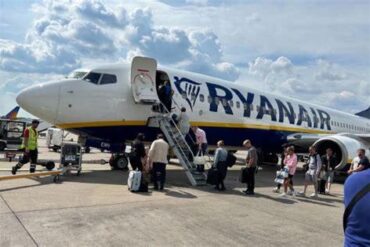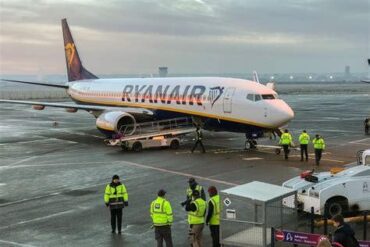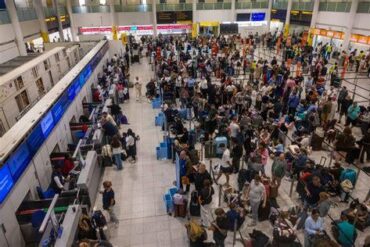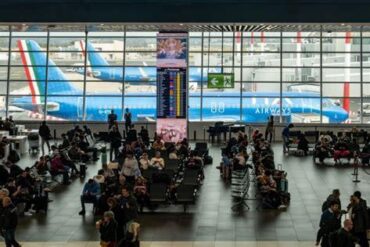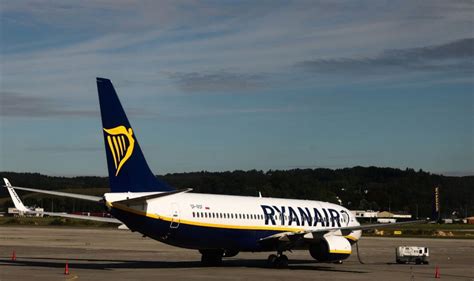
Ryanair, Europe’s largest low-cost airline, has launched an extraordinary broadside against European Commission President Ursula von der Leyen, calling for her resignation over what it describes as a catastrophic failure to reform the continent’s fragmented air traffic control (ATC) system. The demand comes in the wake of a crippling French ATC strike from July 3 to 4, 2025, which forced the cancellation of over 400 flights across Europe, including 170 operated by Ryanair.
The scale of the disruption has once again exposed long-standing vulnerabilities in the EU’s aviation infrastructure and laid bare the limitations of the Commission’s authority in unifying and modernizing European airspace. At the heart of Ryanair’s fury lies the EU’s inability to shield overflights—flights that cross but do not land in strike-affected countries—from avoidable disruption.
The French Strike That Sparked a Firestorm
The most recent ATC strike in France was part of ongoing labor negotiations concerning chronic staffing shortages and structural inefficiencies. While strikes are a legally protected right across Europe, the seasonal regularity of French ATC walkouts—especially during the peak summer travel window—has turned a labor grievance into a transcontinental aviation crisis.
For passengers, the fallout was swift and severe. More than 70,000 travelers were affected, with many left stranded without adequate compensation or rebooking options. The disproportionate impact on non-French routes—especially those involving the UK, Spain, and Italy—amplified tensions, as most Ryanair cancellations involved overflights that merely passed through French airspace.
Michael O’Leary, Ryanair’s combative CEO, has long warned about the “stranglehold” held by certain national ATC unions over European skies. In a blistering statement, O’Leary accused von der Leyen of “abdicating her responsibility” to protect the rights of travelers and the operational integrity of EU airspace.
Ryanair’s Policy Proposals: A Blueprint for EU ATC Reform
Ryanair’s demands are not limited to rhetoric. The carrier has outlined a concrete reform package aimed at minimizing ATC-induced disruption:
- Mandatory full staffing for morning departures: The first wave of departures, often before 8 a.m., accounts for a critical segment of European and transcontinental travel. Insufficient staffing during these hours leads to cascading delays across the day.
- Protection of overflights during national strikes: Ryanair argues that flights merely crossing a nation’s airspace should not be subjected to labor disruptions that are local in nature. The airline is lobbying for an EU directive that mandates the uninterrupted passage of overflights.
These reforms, if adopted, would revolutionize the way Europe handles its skies. Ryanair further advocates for a Single European Sky (SES) initiative—a unified, pan-European ATC system that would eliminate the current patchwork of national controllers and protocols.

European Commission’s Position: Deflection or Deadlock?
The European Commission has acknowledged the inherent limitations in addressing ATC reform, as ATC services remain under the jurisdiction of individual member states. Ursula von der Leyen, though personally silent on the Ryanair attack, has been criticized for failing to prioritize aviation infrastructure reform within her administration’s transport agenda.
Transport spokesperson Anna-Kaisa Itkonen pointed out that the Commission’s role is largely advisory, which has only fueled industry frustration. Critics argue that if the EU can impose centralized regulations on emissions, safety, and consumer rights, then it must also find legal pathways to ensure the continuity of air traffic across member states.
The issue of fragmentation is not new. The 2024 Draghi Report, which called for enhanced EU competitiveness, specifically highlighted the inefficiency of Europe’s airspace as a barrier to economic agility. Yet, little progress has been made in the year since its publication.
European Aviation at a Crossroads
Ryanair’s call for von der Leyen’s resignation may be bold, but it taps into a growing undercurrent of disillusionment with the EU’s transport leadership. The timing is especially poignant: global aviation is experiencing a strong post-pandemic rebound, and Europe risks falling behind due to institutional inertia and nationalized airspace politics.
With summer demand surging and geopolitical tensions threatening fuel stability, European aviation cannot afford repeated self-inflicted wounds. The inability to ensure uninterrupted skies is not only a logistical failure—it’s a reputational one. Every cancelled flight erodes consumer trust in the European Single Market and its promise of seamless mobility.
Passengers Caught in the Crossfire
No stakeholder bears the brunt of this dysfunction more than the passenger. Vacationers, business travelers, and connecting flyers were subjected to last-minute cancellations, lengthy delays, and compensation confusion. Many missed weddings, funerals, critical meetings, or once-in-a-lifetime trips.
For Ryanair, this meant scrambling to re-accommodate tens of thousands of passengers with minimal warning. Hotel costs, aircraft repositioning, crew overtime, and customer support overload are expenses airlines absorb every strike season. Ryanair contends that EU institutions, not just airlines, must shoulder the responsibility of ensuring the basic predictability of air travel.
A Case for Urgency: The Summer Travel Nightmare Looms
The July ATC strike may not be the last of this travel season. Industry insiders warn that further labor actions are likely unless systemic reforms are fast-tracked. For an airline like Ryanair, which operates over 3,000 flights daily in peak months, even a single day of disruption can cost millions.
O’Leary’s demand for von der Leyen’s resignation was likely calculated as a pressure tactic, designed to catalyze action by embarrassing the Commission into responsiveness. Whether it succeeds remains to be seen. What is clear is that the EU’s aviation governance model is nearing crisis point.
The Political Fallout: National Interests vs Continental Integration
The ATC issue is emblematic of a wider challenge facing the EU: balancing national sovereignty with the need for continental coordination. While transport ministers often pledge allegiance to the idea of a Single European Sky, actual implementation is repeatedly delayed due to national pride, union influence, and legal complexity.
The irony is painful. The EU has championed the free movement of goods and people, yet its most fundamental infrastructure—its skies—remains subject to arbitrary interruption by individual states. If a train strike in Belgium didn’t halt freight across all of Germany, why should an ATC strike in Paris cancel flights from Madrid to Milan?
Ryanair’s protest underscores this cognitive dissonance. It positions itself not merely as a corporate victim but as a defender of EU citizens’ freedom to travel. In doing so, it forces policymakers to answer an uncomfortable question: Is European integration real, or is it selectively applied?
What Comes Next?
The ball is now in the Commission’s court. Whether Ursula von der Leyen survives the political fallout is uncertain, but her administration’s legacy in the aviation space now hangs in the balance. For passengers and airlines alike, the status quo is no longer acceptable.
As Ryanair continues to campaign for meaningful ATC reform, pressure is mounting across the airline industry. Other carriers may soon join the chorus, and national governments could find themselves caught between domestic labor unrest and supranational expectations.
The EU faces a stark choice: modernize and unify its air traffic infrastructure, or risk watching its aviation sector buckle under the weight of avoidable chaos. In the words of Michael O’Leary, “Europe’s skies belong to its citizens—not to the unions or bureaucrats who ground them.”
The time to act is now.