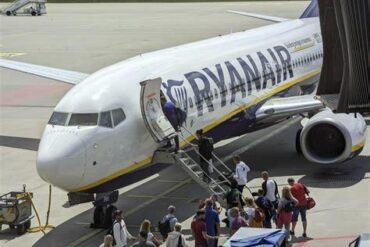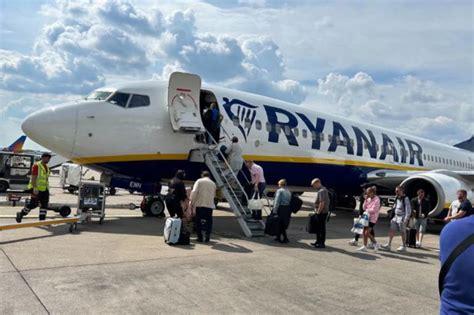
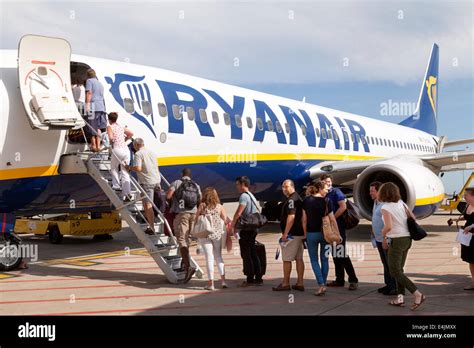
Ryanair, Europe’s largest low-cost airline, has issued a pointed and urgent appeal to the Portuguese government to resolve what it deems a rapidly escalating operational crisis at three of Portugal’s most critical airports—Faro, Lisbon, and Porto. Mounting delays, exasperated travelers, and hundreds of missed flights have culminated in a growing outcry as staff shortages in border control operations threaten to derail the country’s peak travel season.
Over a period of just two weeks—from May 26 to June 9, 2025—Ryanair recorded nearly 270 passengers missing flights due to extensive wait times at Portuguese airport checkpoints. With queues stretching up to two and a half hours, particularly during morning departures, the airline has labeled the delays as “completely unacceptable” and a looming threat to travel continuity across the region.
Border Control Staffing Shortages Trigger Operational Gridlock
The core of the issue, Ryanair states, lies in the understaffed border control sections managed by ANA Aeroportos de Portugal, a subsidiary of Vinci Airports. The situation has already begun to disrupt travel schedules not just within Portugal but across Europe, as Portugal serves as a major transit hub for Ryanair’s extensive route network.
Neal McMahon, Ryanair’s Chief Operating Officer, has taken direct aim at both airport authorities and the Portuguese government, accusing them of failing to scale operations to meet summer traffic demands. With families, elderly travelers, and passengers with connecting flights being hit hardest, McMahon warned that if left unaddressed, the current chaos could snowball into a broader European travel crisis.
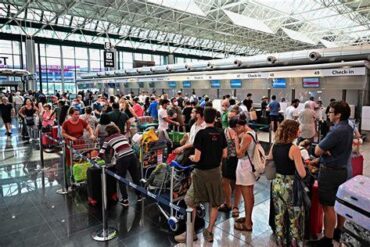
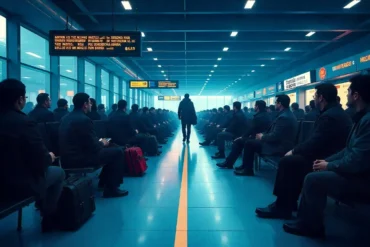
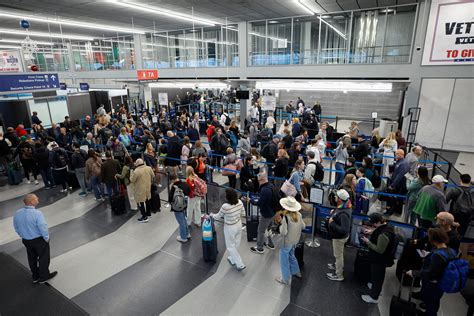
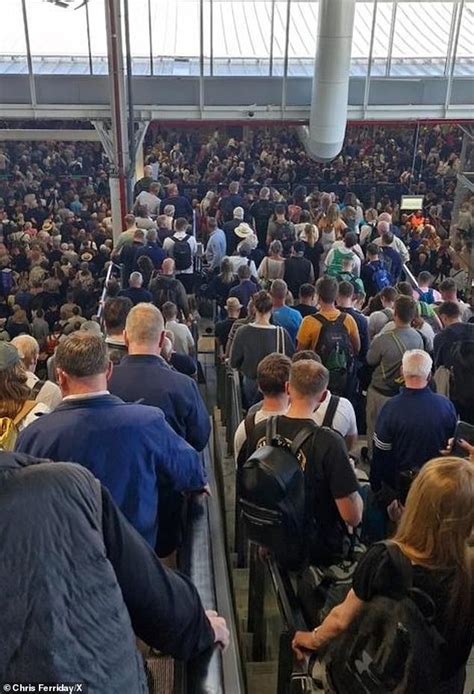
The delays have been particularly dire during early morning departures when multiple outbound flights cluster together. Long lines snake through airport terminals at Faro, Lisbon, and Porto, straining both physical infrastructure and passengers’ patience. Travelers have been left disoriented by a lack of clear communication, further exacerbating frustrations at the point of departure.
British Travelers Bear the Brunt of Brexit-Era Border Frictions
Complicating matters further is the post-Brexit reality for British nationals, many of whom continue to be funneled into manual passport control lanes. Although Portugal recently began deploying e-gates for UK citizens as part of a pilot program under a broader EU-UK travel agreement, legal hurdles and limited infrastructure have slowed full implementation.
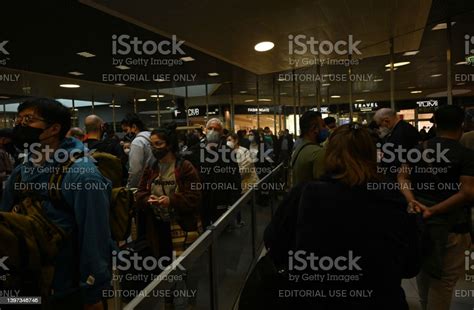
As a result, UK tourists arriving at Faro and Lisbon—some of the most popular destinations for British holidaymakers—have endured grueling delays, sometimes missing their onward travel altogether. What was meant to streamline travel post-Brexit has, ironically, added friction. According to Ryanair, the unfinished rollout of biometric entry systems has only compounded the challenges created by the lack of manpower.
A Critical Test for Portuguese Infrastructure Minister Miguel Pinto Luz
Portugal’s Minister of Infrastructure, Miguel Pinto Luz, has attempted to downplay the severity of the crisis, stating earlier this month that the government would solve the staffing issues within two weeks. However, with that deadline now expired and no improvement in sight, Ryanair has openly challenged the credibility of the government’s promises.
This crisis comes at a precarious time for Portugal, which is betting on a record-setting summer for tourism. Airport staffing woes not only threaten the economic boost expected from international travel but also tarnish Portugal’s reputation as a smooth, tourist-friendly destination.
Moreover, ANA Aeroportos’ lack of transparency and silence on the issue has further stoked criticism. Despite multiple calls for a public response, the operator has yet to offer an explanation or detailed plan of action to ease congestion at its key terminals.
Knock-On Effects Across Europe’s Air Network
The implications of the crisis extend far beyond Portuguese airspace. Ryanair has flagged that flight delays and missed connections originating in Faro, Lisbon, and Porto are disrupting schedules across Europe, triggering a domino effect. With Ryanair’s vast European network depending on punctual turnarounds, delays in Portugal ripple out to destinations in France, Spain, Germany, and Italy, among others.
For Ryanair, operational efficiency is not just a logistical preference—it’s a business model. Low-cost airlines rely on high aircraft utilization rates and quick ground times to stay profitable. Any disruption to this model, especially one rooted in factors outside the airline’s control, can prove financially damaging and reputationally harmful.
Travelers Left in Limbo: Legal Ambiguity and Passenger Rights
As thousands of passengers face delays and missed connections, the legal landscape surrounding their rights remains murky. EU Regulation 261/2004, which governs compensation for flight delays, cancellations, and denied boarding, does allow for financial redress. However, the regulation stipulates that airlines are not obligated to compensate when disruptions result from “extraordinary circumstances” beyond their control—such as government-run border control staffing shortages.
Ivaylo Danailov, CEO of SkyRefund, notes that precedent exists for passengers to receive compensation if it can be proven that the airline failed to take appropriate measures, like adjusting departure times, rerouting, or alerting passengers earlier. Yet, the burden of proof lies with the passenger, and each case can become a lengthy battle in court.
Legal ambiguity is not just an inconvenience—it’s a growing liability for airlines. With travelers increasingly aware of their rights and compensation platforms such as SkyRefund and AirHelp facilitating claims, Ryanair could find itself caught between governmental shortcomings and legal fallout.
Escalating Economic Consequences for Portugal
Beyond logistical challenges and traveler inconvenience, the staffing crisis is beginning to threaten Portugal’s broader tourism economy. Airports are often the first point of contact for tourists. Negative experiences—missed flights, long queues, poor communication—can shape perceptions that discourage return visits and erode destination appeal.
Portugal’s tourism board has yet to comment publicly on the impact of airport delays, but hoteliers and tourism operators across the Algarve, Porto, and Lisbon metropolitan areas have started to voice their concerns. With hotels near Faro International Airport already reporting increased last-minute cancellations, the real-world financial toll of the crisis is becoming more visible.
Vinci Airports and ANA Aeroportos: Silent Stakeholders in a Growing Crisis
Despite their central role in managing the affected airports, Vinci Airports and its Portuguese subsidiary, ANA Aeroportos, have remained conspicuously absent from public dialogue. Their silence stands in stark contrast to Ryanair’s increasingly vocal complaints. As the primary concession holder responsible for infrastructure and staffing oversight, Vinci’s lack of a public action plan raises troubling questions about governance and crisis management.
The situation at Lisbon Humberto Delgado Airport is particularly critical. As Portugal’s busiest airport, its failures represent a choke point for national and international connectivity. Without a coordinated response from Vinci and government stakeholders, operational volatility is likely to persist—and worsen.
Ryanair’s Final Warning: Fix It Now or Face Summer Mayhem
With the July and August travel surge imminent, Ryanair is turning up the pressure. The airline has made clear that unless immediate action is taken, it may be forced to reassess its operational commitments in Portugal, a move that would reverberate throughout the country’s economy. Ryanair flights bring millions of tourists and euros into the country annually; the prospect of reduced service levels is not a threat the Portuguese government can afford to ignore.
McMahon’s message is blunt: “Unless border staffing issues are resolved swiftly and comprehensively, Portugal risks sabotaging its own tourism-driven recovery.” With every day of inaction, passenger confidence declines, legal exposure increases, and reputational damage accumulates.
Conclusion: A Crucial Moment for Portugal’s Aviation Ecosystem
Portugal stands at a crossroads. It can either move decisively to bolster its airport staffing, regain traveler trust, and restore smooth operations—or it can allow this crisis to deepen, risking long-term damage to its aviation and tourism sectors. Ryanair’s appeal is not just a corporate demand—it is a bellwether warning for a national infrastructure system already showing signs of strain.
As Europe’s skies grow busier and passengers return in full force, airports must evolve from logistical chokepoints to streamlined gateways. For Faro, Lisbon, and Porto, that evolution starts with urgency, investment, and leadership—before the summer sun casts its harshest glare on Portugal’s faltering airport system.