The future of commercial aviation may not be decided by a revolutionary new fuselage shape or a dramatic leap in propulsion technology. Instead, the next major breakthrough could come from something that has existed since the earliest days of flight: the wing. Airbus is now using an A321neo test aircraft to explore one of the most important questions facing the next generation of single-aisle aircraft: how can airlines gain the efficiency benefits of a much larger wing while still fitting into the airport infrastructure built for today’s narrowbody jets?
Airbus A321neo Wing Test Program Targets The Future Of Single-Aisle Aircraft
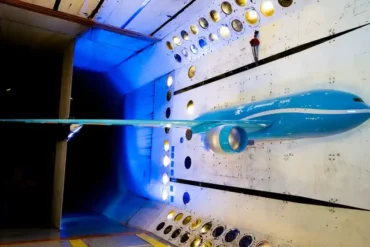
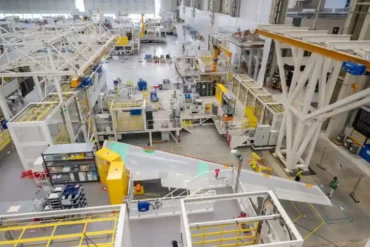
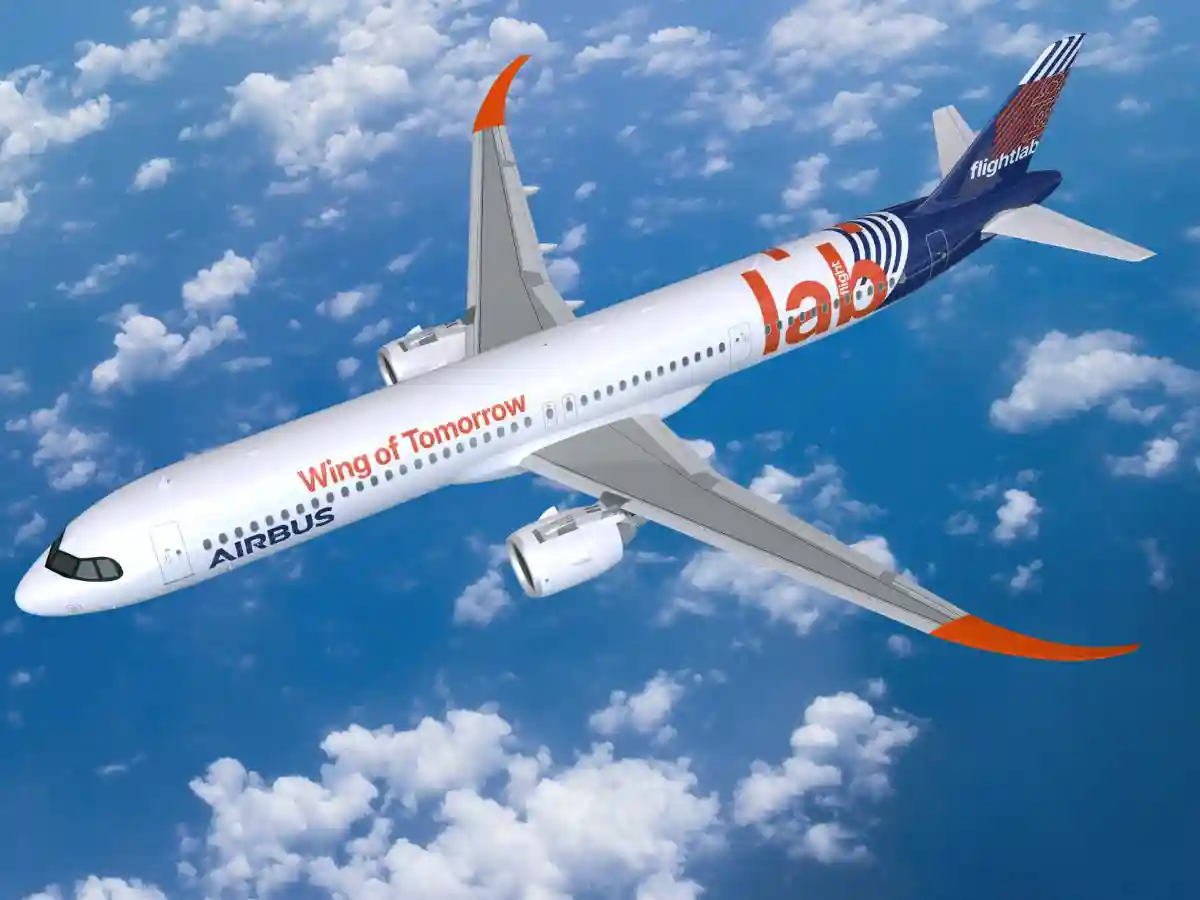
Airbus has begun a major flight-test campaign that could shape the design philosophy of its future narrowbody aircraft expected to enter service around 2038. The program focuses on installing oversized wing extensions onto an Airbus A321neo test aircraft, allowing engineers to evaluate how a longer, higher-aspect-ratio wing performs in real flight conditions.
The experiment is part of Airbus’ broader Wing of Tomorrow technology program, one of the company’s largest research efforts aimed at improving aircraft efficiency. While the aircraft used for testing remains an A321neo, the goal is not to create a production variant of today’s popular narrowbody. Instead, Airbus is gathering critical data for the aircraft that will eventually replace the A320neo family.
The central challenge is simple to describe but extremely difficult to solve. Longer wings generate significant aerodynamic advantages, reducing drag and improving fuel efficiency. However, airports around the world have been designed around strict aircraft size categories. A larger wingspan could force airlines to modify gates, taxiways, and airport operations, creating enormous costs.
Airbus’ solution is to investigate folding wing technology for future single-aisle aircraft. By allowing the wing to become wider during flight while remaining compact on the ground, the company hopes to remove one of aviation’s oldest design compromises.
Why Airbus Needs A New Narrowbody Wing Design
The A321neo has become the most successful aircraft in Airbus’ commercial lineup, especially as airlines search for efficient aircraft capable of flying longer routes with fewer seats than traditional widebody jets. Carriers including Delta Air Lines, IndiGo, and Wizz Air have made the aircraft a central part of their future fleet strategies.
The aircraft’s success has created both an opportunity and a challenge for Airbus. The A321neo remains highly competitive, but eventually the company must introduce a new generation aircraft capable of delivering another major efficiency improvement.
The wing represents one of the largest remaining opportunities for improvement. Modern engines have already achieved substantial gains in fuel efficiency, lightweight materials have transformed aircraft structures, and digital flight systems have matured significantly. However, aerodynamic improvements through advanced wing designs still offer enormous potential.
A longer wing with a higher aspect ratio creates a more efficient lift-to-drag relationship. This reduces the amount of energy required to maintain flight, particularly during cruise, where aircraft spend most of their operating time.
Nature demonstrates the same principle. Birds designed for long-distance flight often have long, narrow wings because they allow efficient soaring with minimal energy consumption. Aircraft engineers have applied the same aerodynamic concept for decades, but commercial aviation has always been limited by airport compatibility.
The Airport Constraint Behind Folding Wing Technology
The biggest obstacle facing larger narrowbody wings is not aerodynamic engineering. It is infrastructure.
Most single-aisle aircraft operate within the ICAO Code C airport category, which generally limits wingspans to approximately 36 meters (118 feet). Airports worldwide have built millions of dollars worth of infrastructure around this standard.
The current A321neo with sharklets already approaches this limit, with a wingspan of approximately 35.8 meters. Simply adding several meters to each wing would push the aircraft into a larger category, potentially requiring different gates and parking positions.
That is why folding wings have become such an attractive solution.
The concept has already been demonstrated by Boeing on the 777X, which uses folding wingtips to allow its enormous wingspan to fit existing airport facilities. However, applying the technology to a narrowbody aircraft presents a much greater engineering challenge.
A widebody aircraft has a larger wing structure with more space for mechanisms and reinforcement. A single-aisle aircraft wing is thinner, lighter, and designed around strict weight limits. Adding a folding system could introduce additional complexity and mass that reduces or eliminates the efficiency benefits.
Airbus’ A321neo test program is therefore designed to answer an important question: can the aerodynamic advantages of a larger wing outweigh the structural challenges?
Airbus Tests A 4.5-Meter Wing Extension Concept
The experimental aircraft will feature wing extensions measuring approximately 4.5 meters, or about 15 feet, per side. These extensions represent the potential future configuration of a folding wingtip design.
However, the current test aircraft will not actually demonstrate a fully operational folding mechanism. Instead, the extensions will remain fixed in their extended position during flight testing.
This approach allows Airbus engineers to focus on the most important aerodynamic and structural questions before investing in a complete production solution.
Sensors installed throughout the wing extensions will collect detailed information about:
- Structural loads during different flight conditions
- Wing flexibility and movement
- Flutter behavior
- Aircraft handling characteristics
- Aerodynamic performance
The data will be compared with Airbus’ advanced digital simulation models. If the physical aircraft behaves as predicted, the company will gain confidence that a larger folding wing design can become part of its future narrowbody strategy.
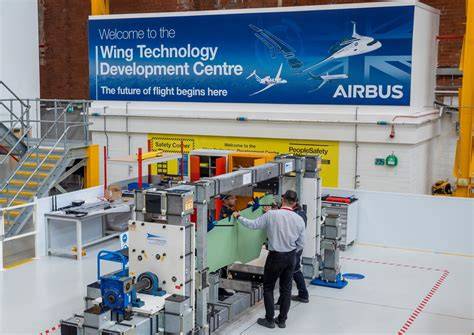
The wing extensions are being developed at Airbus’ Wing Technology Development Centre in the United Kingdom, while flight testing will take place from Toulouse, France, where Airbus operates its experimental aircraft fleet.
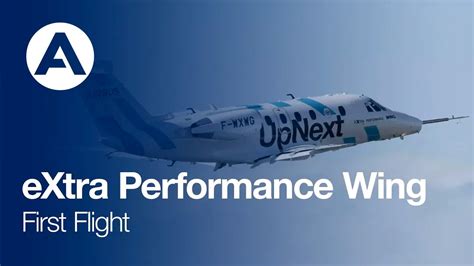
Airbus UpNext eXtra Performance Wing Explores A More Radical Future
While the A321neo wing extension program represents a relatively conservative approach, Airbus is also exploring a much more ambitious concept through its eXtra Performance Wing (EPW) demonstrator.
The EPW project focuses on active wing technology, where the aircraft wing could dynamically change its shape during flight. Instead of using a fixed aerodynamic design optimized for one phase of flight, future aircraft could adjust their wings depending on whether they are climbing, cruising, or landing.
The two programs represent different paths toward the same objective: improving aircraft efficiency.
The A321neo test program investigates whether a larger conventional wing can be adapted to modern airport environments. The EPW explores whether future aircraft can go beyond traditional wing designs entirely.
Airbus is effectively running two parallel technology strategies. One offers a lower-risk pathway that could enter service sooner. The other could deliver greater efficiency but requires significantly more engineering development and certification work.
The Business Case Behind Airbus’ Next Narrowbody Aircraft
The commercial importance of these technologies explains why Airbus is investing heavily years before launching a replacement aircraft.
The A321neo family has already transformed the narrowbody market. The A321XLR, with its approximately 4,700-nautical-mile range, has allowed airlines to operate long-distance routes that previously required larger aircraft.
A more efficient future wing could push this concept even further. Airlines could potentially operate more transatlantic and long-range routes using single-aisle aircraft while reducing operating costs.
For Airbus, improving the A320 family’s successor is not simply about creating a better airplane. The single-aisle market represents the largest segment of global commercial aviation, generating enormous revenue for manufacturers.
A successful next-generation narrowbody aircraft could influence airline fleets for decades.
Airbus CEO Guillaume Faury has indicated that the company is targeting a new single-aisle aircraft launch around 2030, with entry into service around 2038. The current A321neo wing testing provides the technological foundation needed before that major decision.
What The Airbus A321neo Wing Test Means For Airlines And Passengers
For airlines currently operating A321neo aircraft, the immediate impact will be minimal. The test program will not change current aircraft performance, airport operations, or passenger experience.
The benefits will appear much later if Airbus successfully introduces the technology into a future production aircraft.
For passengers, the biggest difference may not be visible inside the cabin. Instead, it could appear through expanded route networks, lower operating costs, and improved environmental performance.
A more efficient aircraft could allow airlines to connect smaller cities with international destinations, increase long-range narrowbody operations, and reduce fuel consumption.
The passenger cabin may remain familiar, but the aircraft carrying those passengers could become significantly more capable.
Boeing Faces Pressure From Airbus’ Next-Generation Aircraft Strategy
The development of Airbus’ next narrowbody aircraft will have major consequences for Boeing.
The single-aisle aircraft market is dominated by the competition between the Airbus A320 family and Boeing 737 family. Any technological advantage in efficiency, range, or operating economics could influence airline purchasing decisions for decades.
If Airbus successfully validates a high-efficiency folding wing design, Boeing may need to accelerate its own future aircraft development plans.
The advantage of moving first in a new aircraft generation is significant. Manufacturers that introduce successful new technology can establish strong relationships with airlines and secure thousands of future orders.
The A321neo wing program is therefore not only an engineering experiment. It is part of a much larger commercial competition.
The Future Of Narrowbody Aircraft Will Depend On The Wing
The next generation of commercial aircraft may not look dramatically different from today’s jets. The fuselage shape may remain familiar, passenger cabins may evolve gradually, and engines may improve step by step.
But beneath the surface, the biggest transformation could happen in the wings.
Airbus’ A321neo test program represents a critical step toward solving one of aviation’s most difficult problems: creating a more efficient aircraft without forcing airports to rebuild around it.
Success will depend on several factors. The extended wing must deliver measurable efficiency improvements, structural performance must match predictions, and future folding mechanisms must operate reliably within existing airport limits.
If Airbus succeeds, the aircraft replacing the A320neo family could combine the efficiency of a larger aircraft wing with the flexibility of today’s narrowbody fleet.
The future of commercial aviation may ultimately be decided not by how much aircraft grow, but by how intelligently their wings adapt.