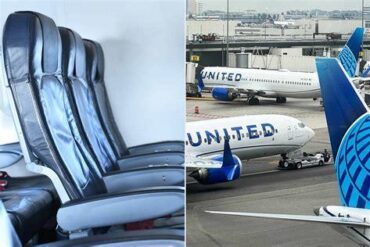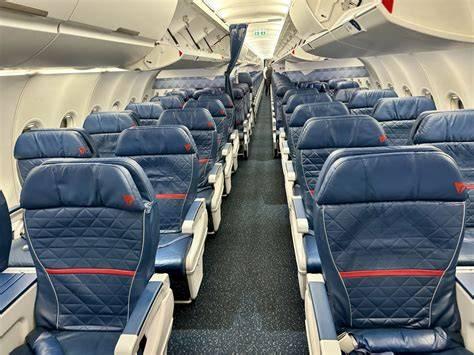
A federal judge has cleared the way for a proposed class action lawsuit against Delta Air Lines alleging that the carrier charged passengers extra to reserve “window seats” on aircraft where those seats sit against a solid cabin wall with no window at all.
Judge Ramon Reyes Jr. Rejects Delta’s Preemption Defense
On Wednesday, November 4, US District Judge Ramon E. Reyes Jr. of the Eastern District of New York ruled that the passengers’ breach of contract claims are not preempted by federal law, dismantling one of Delta’s central arguments for dismissing the case. Delta, represented by the law firm King & Spalding, had urged the court to throw out the suit on several grounds. Its defense rested heavily on the airline’s Contract of Carriage, which the carrier says makes no promise to provide passengers with a window. Delta also pointed to contract language stating that seat assignments “are not guaranteed and form no part of this contract,” and argued that any claims built on seat map labels, tickets or marketing materials fall outside the contract and are therefore preempted by the Airline Deregulation Act (ADA). Judge Reyes rejected that reasoning, keeping the litigation alive.
Passengers Paid Extra for Seats Against a Blank Cabin Wall
The plaintiffs, represented by New York law firm Greenbaum Olbrantz, counter that Delta’s use of the word “window” amounts to a commitment to provide an actual window, particularly when the airline charges an additional fee for the privilege of sitting there. “They sold customers window seats and ended up seating them next to a wall,” said plaintiffs’ lawyer Carter Greenbaum when the suit was first filed. The lawsuit alleges that Delta sells certain seats on its Boeing 737, Boeing 757 and Airbus A321 aircraft as window seats without disclosing that some of them are positioned beside blank cabin panels rather than glass.
Nicholas Meyer’s Atlanta Connection and Seat 23F
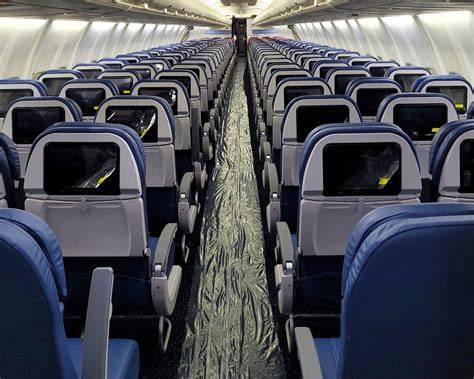
The case was originally filed on August 19, 2025, as Meyer v. Delta Air Lines, with Brooklyn resident Nicholas Meyer leading the lawsuit. According to the original complaint, Meyer paid extra for window seats on a trip from LaGuardia Airport (LGA) to John Wayne Airport (SNA) in Orange County, connecting through Delta’s hub at Hartsfield-Jackson Atlanta International Airport (ATL). When he boarded a Boeing 757-200 for the second leg of his journey, he discovered that seat 23F sat next to a blank cabin wall rather than a window. He spent the roughly four-and-a-half-hour flight without the view he had paid for.
Air Conditioning Ducts Behind the Panels
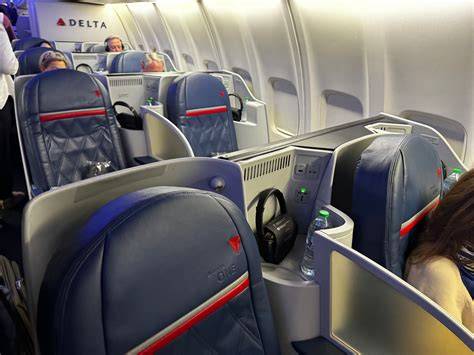
The lawsuit states that some seats on Delta’s 737s, 757s and A321s have no window because air conditioning ducts and other equipment run behind the sidewall panels, a layout quirk that was never made clear during booking. The plaintiffs say they would not have paid for these seats had Delta disclosed their lack of windows, and they argue the airline could easily fix the problem by updating its booking system. The complaint notes that Delta already flags other seat limitations during the selection process, such as restricted recline or a lack of under-seat storage, yet fails to identify seats without windows.
Why Delta’s Seat Map Lags Behind Rival Carriers
Delta’s approach contrasts with rivals American Airlines and Alaska Airlines, which clearly inform customers during seat selection when a “window seat” has no window. Southwest Airlines, which introduced assigned seating on January 27, 2026, has also added a warning to its seat selection page. More than one million Delta passengers may have paid for these windowless seats, exposing the carrier to millions of dollars in damages along with demands to change how it identifies and advertises seats that have no window.
United Airlines Faces Its Own Windowless Seat Lawsuit
Delta is not alone in court. United Airlines must also face a similar lawsuit after losing its own bid to have the case dismissed in July. United had claimed that the term “window” describes a seat’s position next to the cabin wall rather than promising passengers an actual view, and it argued that federal law barred the plaintiffs’ claims. US District Judge James Donato rejected both arguments, stating that United’s ticketing terms “plausibly establish that United expressly agreed to provide a seat with a window.” That July ruling mirrors the reasoning now applied to Delta, suggesting courts are increasingly unwilling to let carriers hide behind contract fine print when they sell a view they cannot deliver.
What the Delta Window Seat Ruling Means for Flyers
For passengers, the decision signals that paying a premium for a window seat may carry enforceable expectations. For Delta and its peers, it raises uncomfortable questions about seat map transparency and the fees airlines collect for amenities that exist only in marketing language. Neither lawsuit has been resolved on its merits, but both now proceed past the dismissal stage, and the airlines will eventually have to answer for every seat labeled “window” that greets travelers with nothing but a smooth, unbroken wall.