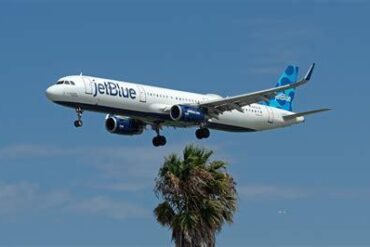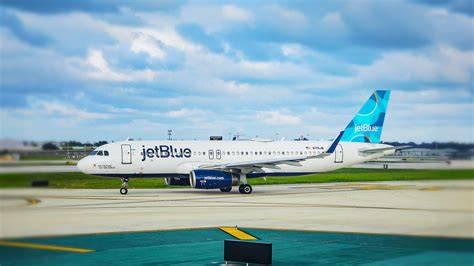
JetBlue’s busiest Airbus A320 route in 2026 is not the transcontinental bridge between New York and Los Angeles that many observers would guess. According to Cirium data, the top city pair is Orlando–San Juan, a leisure-heavy corridor that recorded 3,562 flights in both directions. The ranking is more striking for a second reason: all 11 of JetBlue’s busiest A320 routes touch Florida, and seven of them connect the Sunshine State to a New York-area airport. A carrier that built its identity on New York and Boston is now, by departure volume, a Florida airline with a Puerto Rico habit.
That pattern invites an obvious question. Is JetBlue deliberately deepening its Florida operation, or is it simply absorbing the space left behind when Spirit Airlines collapsed? The answer sits somewhere between the two, and it depends on how the network is measured: flights, seats, seat-miles, and aircraft type each tell a slightly different story about where the A320 actually earns its keep.
Orlando–San Juan Is the Blueprint for JetBlue’s High-Frequency Leisure Strategy
Orlando–San Juan leads the ranking because it combines frequency with meaningful distance. JetBlue flew 1,782 departures from Orlando International (MCO) to Luis Muñoz Marín (SJU), offering 286,596 seats, and another 1,780 in the opposite direction with 286,380 seats. Together that generates 572,976 seats across 3,562 flights, on an average sector of 1,189 miles (1,914 km). The near-identical totals in each direction matter: balanced demand in both directions is the signature of a route supported by residents, visiting friends and relatives, and steady leisure traffic rather than a one-way seasonal surge.
On a capacity basis the route is even more dominant. Multiply the seats by the distance flown and Orlando–San Juan produces roughly 681.3 million available seat miles (ASMs), or about 1.1 billion available seat kilometers. No other A320 city pair in the dataset comes close. The route also links two of the five cities JetBlue named as leading markets in its January 2026 announcement, which explains why it can sustain frequency without leaning on corporate travel. Yet its lead over second place is only 212 flights, roughly 6% — a margin thin enough that a single schedule adjustment could change the order of the top two.
Fort Lauderdale Is JetBlue’s Fastest-Growing Florida Hub
Fort Lauderdale’s prominence is part history and part opportunism. JetBlue’s first revenue flight in February 2000 linked New York-JFK with Fort Lauderdale, and more than 25 years later Fort Lauderdale–LaGuardia remains one of the airline’s busiest A320 corridors, with 3,350 combined flights and 542,688 seats across 1,076 miles (1,732 km). Fort Lauderdale–San Juan follows closely with 3,280 flights and 531,288 seats over 1,046 miles (1,683 km), giving the airport two top-three routes on entirely different traffic profiles.
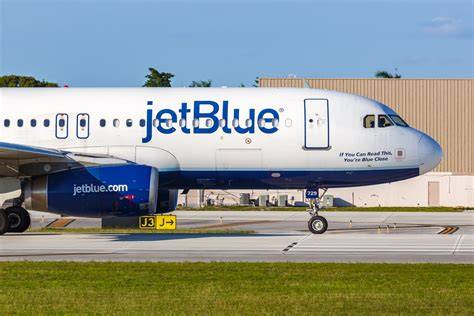
The catalyst behind the surge is Spirit Airlines’ restructuring and collapse. JetBlue moved quickly to fill the gap, targeting roughly 150 daily departures from Fort Lauderdale by year-end 2026. Its July announcement put summer departures near 130, more than 75% above 2025 levels, while adding service to Baltimore, Charlotte, Cleveland, Nashville, Detroit, Houston, Chicago, and Ponce. According to Cirium schedule data cited by Simple Flying, Fort Lauderdale is now JetBlue’s busiest airport by scheduled departures, ahead of JFK and Boston, with roughly 21,500 winter departures against nearly 13,700 a year earlier.
The ambition extends beyond point-to-point flying. JetBlue has discussed building as many as 370 connecting itineraries through Fort Lauderdale, turning the airport from a leisure gateway into a genuine connecting complex. Because the dataset is a fixed snapshot, recently launched services may be under-represented, so the current ranking should be read as a moment in a fast-moving expansion rather than its final shape.
Orlando’s Reach Shows How Deep the Florida Network Has Become
Orlando’s footprint is broader than its leading route suggests. Across the six city pairs in the 11-route group that cross Orlando, the airport accounts for 14,507 flights, while Fort Lauderdale accounts for 10,981 across four pairs and West Palm Beach contributes 2,156 through its Westchester service. Orlando therefore represents about 52% of all flights in the group.
The table below captures the five largest A320 city pairs at the heart of that concentration.
| City pair | Combined flights | Combined seats | Average distance |
|---|---|---|---|
| Orlando–San Juan | 3,562 | 572,976 | 1,189 mi (1,914 km) |
| Fort Lauderdale–LaGuardia | 3,350 | 542,688 | 1,076 mi (1,732 km) |
| Fort Lauderdale–San Juan | 3,280 | 531,288 | 1,046 mi (1,683 km) |
| Orlando–JFK | 2,304 | 371,808 | 944 mi (1,519 km) |
| Orlando–LaGuardia | 2,257 | 358,722 | 950 mi (1,529 km) |
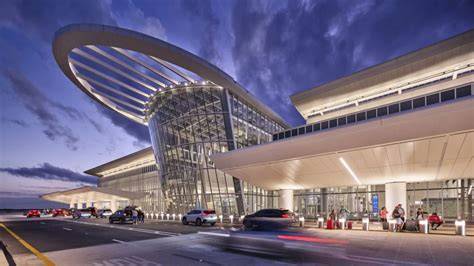
The New York side of the equation is shifting as well. JFK’s New Terminal One has slipped to early 2027, while Terminal 6 is expected to host JetBlue, and the airline now spreads service across four New York-area airports: JFK, LaGuardia, Newark, and Westchester. That coverage gives JetBlue unmatched presence in the region, but it also creates overlapping capacity that a flight count alone cannot reveal.
Seat-Miles Expose Why Raw Flight Totals Mislead
A flight count treats every departure identically, whether it covers 944 miles or 1,237 miles. ASMs correct for that by multiplying seats by distance, and the reordering they produce is instructive. Orlando–San Juan stays first at approximately 681.3 million ASMs, but Fort Lauderdale–LaGuardia jumps to 583.9 million and Fort Lauderdale–San Juan to about 555.7 million.
The more revealing change happens deeper in the ranking. Fort Lauderdale–Boston recorded 2,151 flights over an average of 1,237 miles (1,991 km), producing roughly 430.7 million ASMs. Orlando–Boston operated more flights, 2,222, but its shorter 1,121-mile (1,804-km) sector generated only about 398.9 million ASMs. Fort Lauderdale–Boston therefore contributes more capacity despite fewer departures, which is exactly the kind of distinction that separates a frequency ranking from a commercial one.
JetBlue’s third-quarter 2026 results reinforce why capacity and profitability must be read side by side. The airline reported an 18.4% increase in revenue per available seat mile (RASM) while average fuel hit $3.91 per gallon, 57% higher year over year. Its release also confirmed that BlueFirst, the new domestic first-class product, would launch on Boston–Fort Lauderdale on December 8 — a premium proposition placed deliberately on one of the network’s longest A320 sectors.
A320 Cabin Configurations Reveal a Two-Tier Florida Strategy
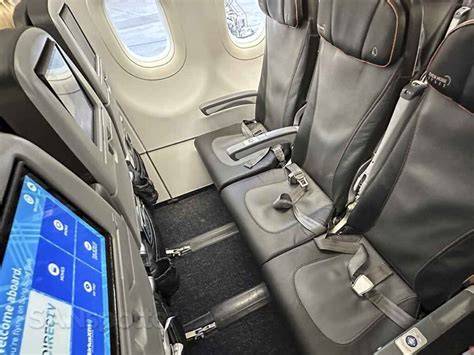
JetBlue flies two published A320 layouts: the Classic configuration with 150 seats and the Restyled version with 162. The dataset cannot identify individual aircraft, but average seats per departure offer an indirect signal. Fort Lauderdale–LaGuardia, Fort Lauderdale–San Juan, Fort Lauderdale–Newark, and Westchester–West Palm Beach all average close to 162 seats, pointing toward the higher-density Restyled fleet.
Orlando–LaGuardia looks different at 158.9 seats per flight, an average consistent with roughly one departure in four using the 150-seat Classic if those are the only two layouts in service. That remains an inference rather than a confirmed assignment, since aircraft swaps and schedule edits distort route averages over time. The 12-seat gap still compounds dramatically at scale: flying the 162-seat aircraft on all 3,562 Orlando–San Juan departures instead of the 150-seat version represents as many as 42,744 additional seats. Those seats only improve the economics if they sell at fares that cover fuel, labor, and airport costs — a live test on a route where JetBlue continues to market 32 inches (81 centimeters) of economy pitch.
Fleet Transition Will Decide Whether Florida Stays JetBlue’s Engine
Fort Lauderdale should exceed 150 daily departures this winter, and the schedule is diversifying quickly. New services include Barranquilla and Cali in Colombia, plus Indianapolis and Columbus, alongside routes launched earlier in the year. A Mint-equipped San Diego service was scheduled for November 19, while Caracas remained without a confirmed start date. Not every addition will be flown by an A320: Mint requires the A321, so premium growth from Fort Lauderdale naturally pushes some capacity toward the larger aircraft.
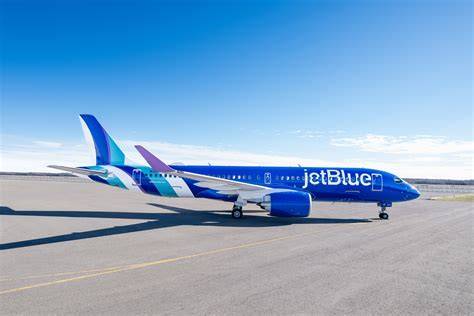
Meanwhile, JetBlue’s fleet plan lists seven A220 deliveries in 2027, nine in 2028, 10 in 2029, and two in 2030. The smaller A220 gives the airline a capacity option for thinner markets where an A320 is too much aircraft, potentially freeing A320s and A321s for stronger corridors. With the A320 accounting for 129 of JetBlue’s 298 aircraft as of September 30, 2026, that transition will reshape the route map well before the end of the decade.
The financial backdrop makes every schedule decision consequential. The supplied analysis cites Air Data News for a third-quarter loss of $257 million and a fall in cash from $1.95 billion at the end of 2025 to $1.26 billion in September, against a target of sustained profitability in 2027. Yet Fort Lauderdale’s RASM increased nearly 15% in the third quarter despite capacity growth above 65% — a result that suggests the expansion is adding profitable traffic rather than simply diluting the network.
Whether that discipline holds will determine the next edition of this ranking. If JetBlue keeps pouring capacity into established Florida routes, the network becomes even more concentrated around Orlando and Fort Lauderdale. If A220 deliveries allow it to open thinner markets while reserving larger aircraft for dense corridors, the pattern could diversify. For now, the data tells a clear story: Florida is not just one of JetBlue’s markets in 2026 — it is the center of gravity around which the A320 schedule is being rebuilt.