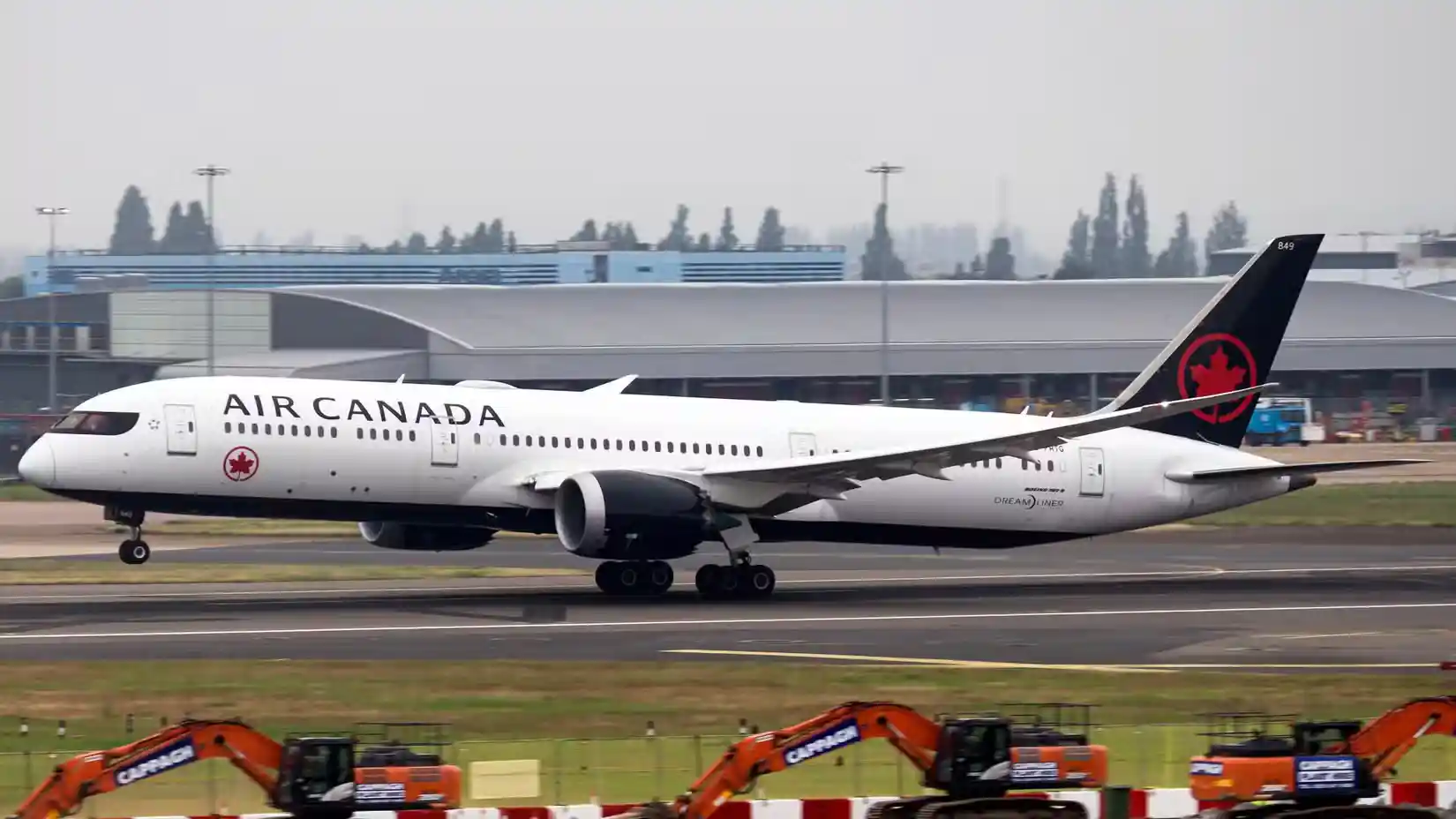
Air Canada’s global network in 2025 showcases the Boeing 787 Dreamliner as one of the airline’s most vital assets, delivering long-range efficiency, premium cabin comfort, and the flexibility needed to serve both dense transcontinental corridors and demanding intercontinental markets. The 787-8 and 787-9 together form the backbone of Air Canada’s modern widebody fleet, enabling the flag carrier to open new long-haul connections, reinforce high-yield international sectors, and strengthen premium traffic flows through Toronto, Vancouver, and Montréal. The following detailed analysis explores the airline’s most frequent Dreamliner routes in 2025, the strategic logic behind these deployments, and how the aircraft shapes Air Canada’s competitive presence across North America, Europe, and Asia–Pacific.
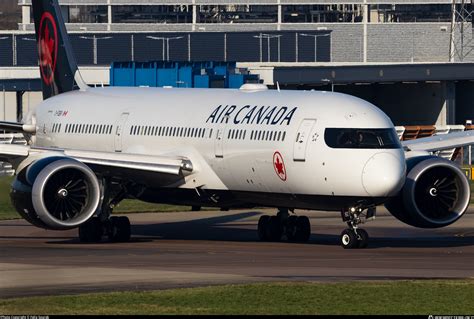
Air Canada enters 2025 with more than 200 aircraft in operation, supported by over 100 additional jets on order as part of a multi-year modernization and growth strategy. Within this large and increasingly diverse fleet, the Dreamliner family stands out as the most central widebody platform. The carrier operates 40 units of the type, including eight Boeing 787-8s and 32 787-9s, with 787-10s scheduled for delivery beginning in 2026. The aircraft offers ranges up to 7,565 nautical miles depending on variant, creating rare versatility for a carrier managing both domestic trunk-line demand and high-density transpacific markets.
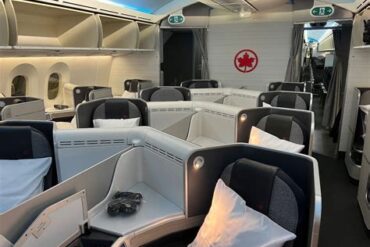
In addition to raw performance, the Dreamliner brings a premium-heavy cabin layout that aligns with the airline’s strategy to prioritize high-value international travelers. Executive Pods, lie-flat beds, upgraded catering, and a refined Premium Economy section make the aircraft competitive on long-haul routes where service differentiation drives yields. This blend of comfort, range, and operating efficiency explains why the type is deeply embedded in Air Canada’s highest-frequency long-distance markets.
A Deep Look at Air Canada’s 2025 Domestic Powerhouse: Vancouver–Toronto
Among all Dreamliner-served routes, the most frequent city pair in 2025 is the highly traveled transcontinental corridor between Vancouver (YVR) and Toronto Pearson (YYZ). With 805 flights scheduled in each direction, the route operates between two and three times per day on the 787 alone, alongside an expansive narrowbody schedule. Each year this produces about 239,000 seats, more than any other 787 market.
The popularity of this route is due to a combination of direct local demand and heavy connecting traffic. Vancouver serves as Air Canada’s primary Pacific gateway, offering nonstop links to Seoul, Hong Kong, Tokyo, Sydney, and other major Asian cities. Toronto, meanwhile, functions as the global hub, funneling traffic into Europe, South America, the United States, and destinations across Canada. The 787 allows Air Canada to match peak-period demand with a high-capacity widebody while ensuring a premium cabin product that appeals to corporate travelers and international transfer passengers.
All major Canadian competitors—including WestJet, Flair, and Porter—also operate on the corridor, yet the Dreamliner allows Air Canada to differentiate its product and capture a higher yield segment of the market.
Vancouver to Hong Kong: The Busiest International 787-9 Route
The most frequent long-haul international Dreamliner route in 2025 is the daily service linking Vancouver to Hong Kong (HKG). At 6,393 miles, this transpacific mission highlights the strengths of the 787-9, which is optimized for long-range efficiency while offering significant cargo capacity—an important factor on this market with historically strong freight demand.
Air Canada’s daily service produces more than 108,000 annual seats, while generating approximately 695 million available seat miles. Flight time averages 14 hours and 30 minutes westbound, and just over 11 hours eastbound due to prevailing winds. Competition on the route is growing, with Cathay Pacific and Hong Kong Airlines each maintaining nonstop service. The route also competes indirectly with Cathay’s Hong Kong–Toronto service, but Vancouver’s strategic location and Air Canada’s robust Asia-Pacific network give the airline a strong positional advantage.
The Vancouver–Hong Kong route also exemplifies how Air Canada uses the Dreamliner to maintain a heavy premium cabin footprint in markets with deep cultural ties, strong VFR (visiting-friends-and-relatives) demand, and fast-expanding business travel flows.
Montréal to London Heathrow: Air Canada’s Highest-Frequency 787 European Route
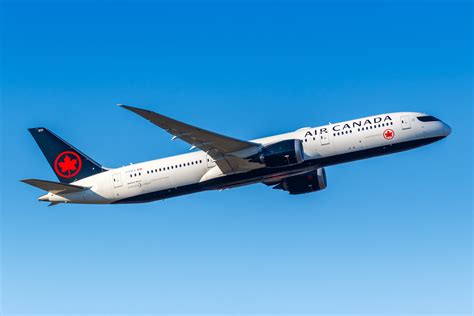
Europe remains a crucial region for Air Canada’s Dreamliner operations, with London Heathrow acting as the busiest single European market. In 2025, the Montréal–Heathrow route sees 360 scheduled flights, operating almost daily throughout the year. This connection reinforces Montréal’s role as Air Canada’s primary Francophone hub and a leading transatlantic gateway.
The link covers 3,251 miles and generates more than 348 million available seat miles for the year. Direct competition from British Airways and indirect overlap from Air Transat’s Montréal–Gatwick service underscore the vital role of the 787 in reinforcing capacity and maintaining a premium product offering in Canada’s most influential European market.
Air Canada’s presence at Heathrow is further supported by the Maple Leaf Lounge in Terminal 2, giving connecting passengers a consistent alliance-aligned premium service environment.
Vancouver–Seoul Incheon: Another High-Priority Transpacific Market
Alongside Hong Kong, Air Canada’s Vancouver–Seoul (ICN) operation is among the airline’s most important 787-9 routes. In 2025, it will operate 358 times, providing roughly six to seven flights per week throughout the year. The route spans 5,109 miles and generates more than 545 million available seat miles, demonstrating its centrality in Air Canada’s Asia strategy.
Air Canada competes directly with Korean Air and T’Way Air, and the addition of Korean LCC capacity makes premium differentiation even more important. The Dreamliner’s strong business cabin allows the airline to maintain a competitive edge in a market defined by a mix of business travel, strong diaspora traffic, and cargo demand.
Toronto to São Paulo: Air Canada’s Key South American Dreamliner Route
The airline’s most significant South American market served by the Boeing 787 in 2025 is the Toronto–São Paulo (GRU) corridor. With 354 annual flights, the route illustrates the Dreamliner’s essential role in connecting Canada’s business capital with Brazil’s largest financial hub. The 5,074-mile service produces more than 105,000 annual seats, representing a major long-haul commitment.
Air Canada is the sole operator linking Toronto and São Paulo nonstop, although the market is becoming increasingly competitive with Air Transat preparing to launch a Rio de Janeiro service. Still, the Toronto–São Paulo route remains a strategically indispensable link—one made viable year-round due to the fuel efficiency and optimized cabin economics of the 787-9.
Ottawa–Vancouver: A High-Frequency Domestic Long-Haul Route
Beyond the Toronto–Vancouver powerhouse, several other domestic routes rely heavily on the Dreamliner. The most notable is Ottawa–Vancouver, which sees 343 annual flights in 2025. Covering 2,214 miles, the route has a flight time of approximately five hours and 30 minutes—long enough to justify the comfort and premium experience of the 787-9.
This long domestic corridor supports travelers heading to British Columbia as well as international passengers connecting through YVR. With more than 102,000 annual seats, it fortifies Ottawa’s limited long-haul portfolio and ensures that Canada’s capital maintains strong links to the western gateway.
Additional Dreamliner Markets Strengthening the Network
Beyond the headline routes, Air Canada deploys the 787 on several other strategically important services throughout 2025. Vancouver–Shanghai (Pudong) sees 337 flights, benefiting from the Dreamliner’s long-range capabilities and vital cargo capacity. Toronto–Dubai records 330 flights, reinforcing the carrier’s Middle East presence and supporting Star Alliance connectivity via Emirates’ rival hub.
Toronto–Seoul (326 flights) highlights the depth of Air Canada’s commitment to Korea beyond its Vancouver-based operations. Vancouver–Brisbane totals 311 flights, creating an essential long-haul bridge into Australia. Even shorter transcontinental sectors like Toronto–Montréal (308 flights) occasionally receive Dreamliner service during peak periods, using the aircraft’s large cabin to absorb seasonal travel surges.
These additional routes show how Air Canada uses the Dreamliner not only for ultra-long-haul purposes but also as a flexible capacity tool across the network. The airline balances premium demand, cargo requirements, seasonal trends, and hub-to-hub traffic flows—maximizing the aircraft’s operational and commercial value.
How the Dreamliner Shapes Air Canada’s Strategic Position in 2025
The Boeing 787 plays an irreplaceable role across Air Canada’s global strategy, and its deployment patterns in 2025 reveal several major themes. First, the aircraft strengthens the carrier’s dual-hub long-haul network, with Toronto handling premium global flows and Vancouver anchoring Pacific operations. Montréal continues to reinforce Air Canada’s transatlantic strength, particularly into Western Europe.
Second, the Dreamliner enables Air Canada to remain competitive in several heavily contested markets. From Hong Kong and Seoul to London and Dubai, the 787 ensures the airline can maintain year-round service levels with a modern, passenger-preferred widebody. It also supports Air Canada’s cargo ambitions, particularly in the Asia-Pacific region.
Finally, the aircraft allows the airline to test, develop, and grow long-distance markets that would be difficult to operate profitably with larger aircraft like the Boeing 777. This flexibility is especially valuable as global travel rebounds, hybrid work reshapes demand patterns, and premium leisure travel continues to rise.
The Dreamliner’s Continued Importance for Air Canada
The 787 Dreamliner remains one of the airline’s most essential tools for international expansion, premium service delivery, and long-range network resilience. With 14 new 787-10s arriving from 2026 onward, Air Canada is poised to increase capacity, deepen transpacific offerings, and reinforce strategic corridors such as Toronto–London, Vancouver–Shanghai, and Montréal–Rome.
In 2025, the Dreamliner’s impact is undeniable. From the dense Toronto–Vancouver shuttle to the ultralong Vancouver–Hong Kong sector, the aircraft touches nearly every continent in the network. Its combination of performance, efficiency, and cabin quality positions it as a cornerstone of Air Canada’s global future, supporting both today’s busiest routes and tomorrow’s emerging markets.
As aviation demand evolves and international networks continue to re-stabilize, the Boeing 787 will remain the backbone of Air Canada’s ability to connect passengers across vast distances with consistency, comfort, and reliability.