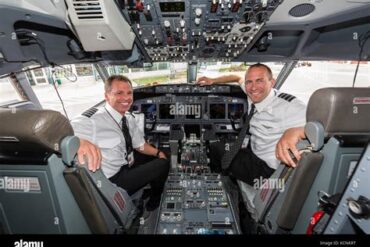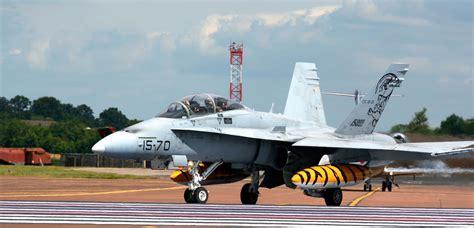
For military fighter pilots, the cockpit is only part of the equation. Behind every F-35A, F-35B, Eurofighter Typhoon, or other frontline fighter jet is a highly trained officer whose compensation reflects years of education, specialist training, operational responsibility, and the enormous cost of keeping an experienced pilot in uniform. Across NATO, however, those compensation systems vary dramatically, making a straightforward salary ranking surprisingly difficult.
A fighter pilot’s headline salary rarely tells the complete story. Rank, years of service, specialist qualifications, pilot allowances, retention incentives, bonuses, and other benefits can all change what an officer ultimately receives. Taxes and pension arrangements can make the differences even greater, but they are excluded here to keep the comparison focused on broadly comparable military pay.
To create a more useful comparison, the ranking uses Captain or the closest NATO equivalent, generally OF-2, as the benchmark. This provides a common reference point across different national military structures. The figures are expressed in US dollars, meaning exchange-rate movements can influence the ranking even when a country’s domestic military pay has not changed.
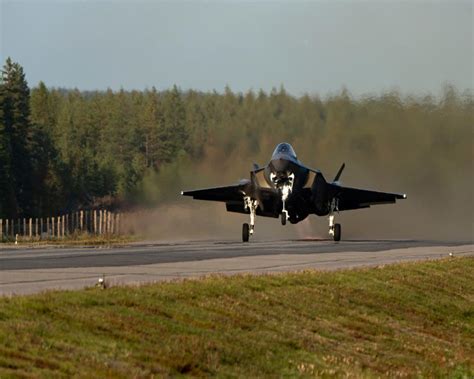
There is another important qualification. The figures below emphasize base or regular pay, but several countries have pilot-specific supplements that substantially increase actual compensation. That makes the difference between a published salary and a fighter pilot’s practical earnings particularly important. A Danish pilot, for example, can receive a major pilot function allowance, while a US Air Force pilot may qualify for substantial retention bonuses.
The six air forces also represent very different military systems. The United States operates an enormous global aviation force, while Denmark maintains a much smaller fighter community. Canada and Norway operate sophisticated F-35 fleets despite their relatively small populations, and the Netherlands has transitioned completely from the F-16 to the F-35A. These differences provide useful context for understanding why pilot compensation is not simply a reflection of air force size.
6. Royal Norwegian Air Force: Approximately $70,000 to $99,000
The Royal Norwegian Air Force occupies sixth place, although its position comes with more uncertainty than several of the other entries. Norway does not publish a simple, pilot-specific 2026 salary table that makes direct comparisons easy. Instead, compensation depends on rank, experience, qualifications, position, and the applicable military pay arrangements.
A Norwegian fighter pilot holding the equivalent of the Captain rank, or Kaptein, can have basic compensation beginning at roughly $70,000 per year, depending on circumstances. When additional elements of regular military compensation are considered, a more experienced officer could reasonably fall within an approximate $84,000 to $99,000 range.
That distinction matters because Norway is a high-income country where military compensation must compete with attractive civilian career opportunities. A fighter pilot has invested years in training and acquires highly specialized skills, making retention an important issue even when the published basic salary does not appear exceptional compared with civilian professional incomes.
Norway’s position is also notable because of its transformation into one of Europe’s leading F-35 operators. The country completed its program of record with 52 F-35As and became the first nation to fully transition from the F-16 to the F-35. That transition means Norwegian pilots now operate one of the world’s most advanced combat aircraft while carrying a significant operational burden for a relatively small air force.
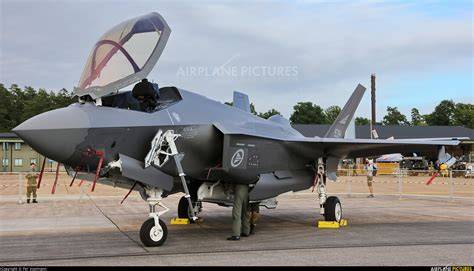
The Norwegian case demonstrates why a simple salary table can be misleading. The most visible number may represent only one component of a broader compensation package, and the actual value of military employment can vary considerably according to seniority and individual circumstances.
5. Royal Danish Air Force: Approximately $64,800 to $102,500
Denmark presents one of the clearest examples of how pilot-specific allowances can transform military compensation. A Danish Air Force Captain, or kaptajn, at OF-2 with around six years of service would generally fall into a defined pay group connected to the country’s academic salary structure.
On basic pay alone, the figure is approximately $64,800 annually, assuming an exchange rate of around DKK 6.4 to the US dollar. That number, however, understates what a qualified military pilot can actually receive because Denmark provides a significant pilot function allowance.
Once the pilot-specific compensation is incorporated, the figure rises to approximately $102,500 per year. This creates one of the largest gaps in the ranking between ordinary officer pay and compensation more closely associated with the specialized demands of military aviation.
Denmark also agreed to further improvements for officers during the 2026 collective bargaining process, including an enhanced captain officer allowance. Consequently, the financial picture for Danish pilots is not static and may continue to evolve as military pay arrangements change.
The Danish Air Force is small but technologically advanced. It has ordered 27 F-35As, with plans to increase the fleet to 43 aircraft, and has retired its legacy F-16AM fleet. Some Danish F-35s remain in the United States for training purposes, while the country continues building the personnel structure required to operate its next-generation fighter fleet.
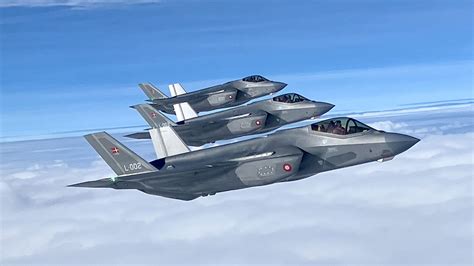
The size of Denmark’s fighter force makes the pilot population especially interesting. If roughly 1.5 pilots are assumed for every fighter aircraft, the current operational community could be only around several dozen fighter pilots. In such a small specialist workforce, retaining experienced pilots becomes particularly valuable, helping explain why pilot-specific compensation can be considerably higher than ordinary officer pay.
4. Royal Air Force: Approximately $82,997 to $108,500
The Royal Air Force combines relatively strong basic officer pay with a substantial aircrew professional supplement. Its rank structure differs from that of the US Air Force, but a Royal Air Force Flight Lieutenant, OF-2, broadly corresponds to an American Captain for this comparison.
RAF information places the entry rate for officers at approximately £35,900, while promotion to Flight Lieutenant raises pay significantly. At the relevant OF-2 level, the base figure is approximately £61,474, or $82,997 annually using the referenced conversion.
The picture changes when the RAF’s Professional Supplement (Aircrew) is included. For an OF-2, that supplement is approximately £19,394, or around $26,000 per year. Consequently, a more comprehensive figure reaches roughly $108,500 annually.
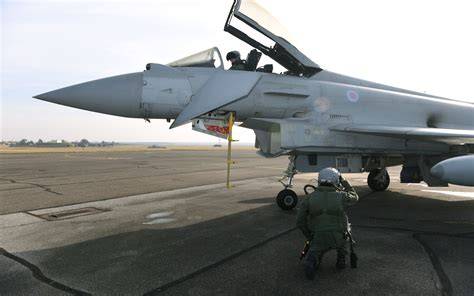
This is an important distinction because fighter pilots do not simply receive ordinary officer salaries. Their training is exceptionally expensive, their qualifications are highly specialized, and their operational responsibilities can involve combat deployments, demanding flying schedules, and continual proficiency requirements.
The RAF also maintains one of NATO’s larger pools of trained military pilots outside the United States. Estimates place its pilot population at roughly 1,400 to 1,600 personnel. Its frontline fighter fleet includes Eurofighter Typhoons and F-35B Lightning IIs, giving British pilots experience across both conventional and short-takeoff-and-vertical-landing combat aviation.
3. Royal Netherlands Air Force: Approximately $85,500
The Royal Netherlands Air Force offers one of the clearest examples of a country where published government salary information makes a relatively straightforward comparison possible. Dutch military salary tables place an Air Force Captain, or kapitein, on the same basic officer scale used for comparable Army officers.
At approximately the sixth pay step, the monthly salary is €5,265.90, producing annual basic pay of roughly €63,191. Converted into US dollars, that represents approximately $73,000 in basic salary.
However, Dutch compensation separately identifies a holiday allowance and year-end allowance. When those components are included, the figure rises to approximately €73,300, or $85,500 annually. Other allowances and bonuses may increase total compensation further, but the ranking uses the approximately $85,500 figure as the relevant benchmark.
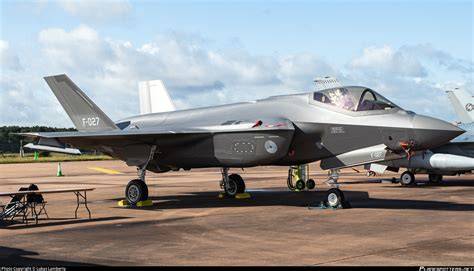
The Netherlands is also significant from an operational perspective. It has completed the transition from the F-16 to the F-35A and has ordered 58 F-35As, with the final aircraft being incorporated into the fleet. This makes Dutch fighter pilots part of one of Europe’s most extensive fifth-generation combat aircraft transitions.
The Dutch Air Force sits between the very large Western European air forces and much smaller NATO aviation organizations. It has an estimated 300 to 400 trained pilots, giving it enough scale to sustain a substantial fighter capability while remaining considerably smaller than the British or American aviation communities.
2. Royal Canadian Air Force: Approximately $93,215
The Royal Canadian Air Force comes extremely close to the US Air Force in this comparison. A Canadian Air Force Captain with approximately six years of service receives about CAD 10,825 per month under the military pay structure, equivalent to roughly $93,215 annually using the referenced exchange rate.
That figure is particularly significant because Canada’s pilot compensation is differentiated from ordinary Captain pay. Using the standard officer salary rather than the pilot-specific scale would therefore substantially understate what Canadian military pilots earn.
Canada’s system also uses a series of pay increments, with the referenced pilot scale extending through 20 increments. That structure allows compensation to rise as officers accumulate service and experience, which is especially important for retaining pilots after they have completed years of expensive military flight training.
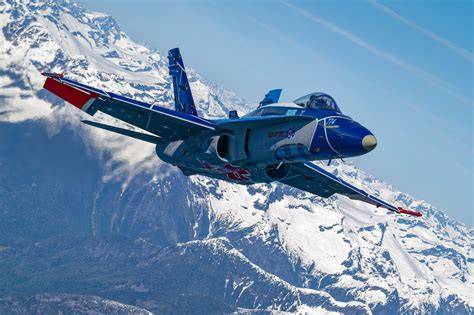
At the six-year point, Canadian pilot pay is remarkably close to the equivalent US figure. Currency fluctuations can move the two countries above or below one another, while allowances, pensions, bonuses, and taxes can produce much larger differences in actual disposable income.
Canada’s fighter force is also undergoing a major modernization as it prepares for the introduction of the F-35A. The transition will eventually give Canadian pilots access to a fifth-generation fighter while maintaining Canada’s longstanding role in North American aerospace defense and NATO operations.
1. United States Air Force: Approximately $92,844
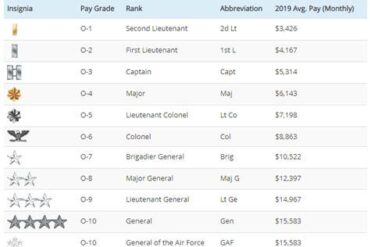
The United States Air Force takes the top position, although the Canadian figure is close enough that exchange rates and the exact definition of compensation can change the order. For a US Air Force Captain, O-3, with six years of service, the referenced 2026 pay figure is $7,737 per month, equivalent to approximately $92,844 in annual base pay.
USAF O-3 pilots typically have several years of military experience because officers generally spend around two to four years at O-2 before promotion. Depending on years of service, an Air Force Captain’s base pay can broadly range from the mid-$80,000s to more than $100,000 annually.
The major difference appears when incentives are added. Depending on their circumstances and the needs of particular aviation communities, US Air Force pilots can receive substantial retention bonuses, with some eligible pilots potentially receiving as much as $50,000 in additional incentives.
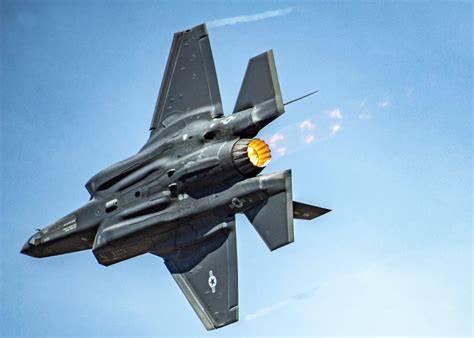
That means a US pilot’s total compensation can move dramatically beyond the headline base salary. It also illustrates the central problem with ranking military pilot pay across NATO: countries do not all classify supplements and incentives in the same way.
The United States nevertheless has an enormous advantage in aviation scale. The USAF has an estimated 12,500 to 14,000 pilots, dwarfing the pilot communities of the other five air forces combined. It operates a huge variety of fighter aircraft, bombers, tankers, transports, intelligence platforms, and special-mission aircraft around the world.
What the NATO Fighter Pilot Pay Ranking Really Shows
The six-country ranking reveals that fighter pilot compensation is about far more than base salary. The United States and Canada sit close together in the basic-pay comparison, while Denmark demonstrates how a pilot-specific allowance can push compensation substantially higher than ordinary officer pay. Britain follows a similar principle through its professional aircrew supplement.
Norway’s position is harder to quantify because publicly available salary information is less standardized, while the Netherlands provides unusually clear government salary figures. Currency conversions further complicate the picture because a change in the dollar’s value can move a country up or down the ranking without any corresponding change in domestic military pay.
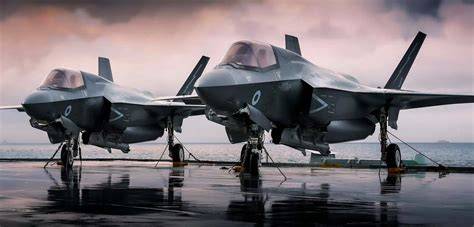
There is also a broader strategic issue. Experienced fighter pilots are expensive to train and difficult to replace. Modern aircraft such as the F-35 require extensive simulator time, tactical training, weapons qualifications, and continuing education. Losing a trained pilot to a civilian airline or another employer can therefore cost a military far more than the officer’s annual salary.
That is why pilot supplements and retention bonuses are so important. They are not merely rewards for flying sophisticated aircraft; they are mechanisms designed to preserve an investment in highly specialized human capital.
For that reason, the headline numbers should be treated as a benchmark rather than a definitive measure of take-home income. A US Air Force Captain receiving a substantial retention bonus, a Danish pilot benefiting from a major aviation allowance, or a British officer receiving an aircrew supplement could all have materially different total compensation from the basic figures suggest.
One final comparison is useful. Switzerland would rank above these NATO countries if it were included, but Switzerland is not a NATO member and therefore falls outside the scope of this ranking. Keeping the comparison limited to NATO members preserves the central purpose of the list: showing how six major allied air forces compensate the officers responsible for operating some of the world’s most advanced fighter jets.
The broader lesson is clear. The highest-paid NATO fighter pilot is not necessarily the pilot with the highest published base salary. Rank, experience, aviation supplements, retention incentives, exchange rates, and national pay structures all matter. In 2026, the United States remains at or near the top, Canada is remarkably close, and several European air forces offer compensation packages that become far more competitive once pilot-specific allowances are included.