The Second World War marked the most intense and transformative era in aviation history. What began as relatively modest aerial engagements quickly evolved into a relentless technological arms race, where speed, firepower, maneuverability, and endurance determined not just aerial superiority—but the fate of nations. Fighter aircraft became the sharp edge of military strategy, tasked with everything from escorting bombers to dominating dogfights and striking ground targets with surgical precision.
Unlike the jet age that followed, WWII fighters represented the absolute pinnacle of piston-engine engineering. Every rivet, every wing curve, and every engine configuration reflected urgency, innovation, and survival. Engineers pushed boundaries at breakneck speed, often designing, testing, and deploying aircraft in a matter of months. Pilots, meanwhile, turned these machines into legends—engaging in deadly duels high above battlefields that stretched from Europe to the Pacific.
This ranking explores the ten most iconic and effective WWII fighter aircraft, judged by their combat performance, innovation, production impact, and historical significance. These were not just machines—they were symbols of resilience, ingenuity, and dominance in the skies.
10. Mitsubishi A6M Zero — The Early War Predator
At the outbreak of war in the Pacific, few aircraft struck fear into Allied pilots like the Mitsubishi A6M Zero. Lightweight, agile, and deadly, it dominated early engagements with astonishing ease.
The Zero’s brilliance lay in its extreme maneuverability and climb rate. Powered by a relatively modest engine, it compensated with a stripped-down design that eliminated armor and self-sealing fuel tanks. The result was an aircraft capable of outturning nearly anything it faced in 1941 and 1942. American pilots quickly learned that engaging in traditional dogfights with the Zero was often fatal.
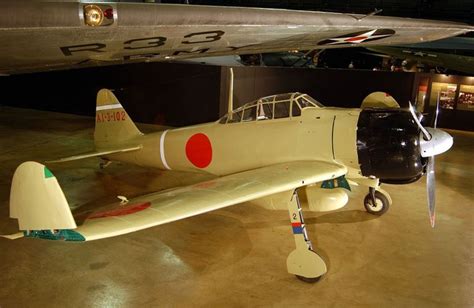
However, this brilliance came with a fatal flaw. Its lack of protection made it highly vulnerable once its weaknesses were understood. When Allied forces recovered a crashed Zero and studied its design, they developed counter-tactics—most notably high-speed dives that exploited engine limitations. Once the element of surprise was gone, the Zero’s dominance faded.
Still, in the early years of the war, it was nothing short of devastatingly effective, shaping the course of Pacific air combat.
9. Focke-Wulf Fw 190 — Germany’s Brutal Multirole Fighter
If the Zero was elegance, the Focke-Wulf Fw 190 was raw power. Entering service in 1940, it quickly became one of Germany’s most formidable aircraft.
Unlike many of its contemporaries, the Fw 190 used a radial engine, giving it exceptional durability and performance at lower altitudes. Its speed—reaching over 400 mph—combined with heavy armament made it a terrifying opponent for early Allied fighters.
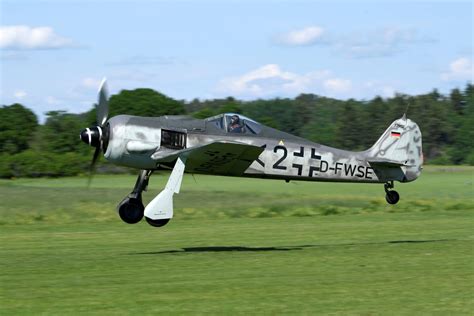
What truly set the Fw 190 apart was its versatility. It excelled not only in dogfights but also in ground-attack missions and bomber interception. This adaptability made it a cornerstone of the Luftwaffe’s operations.
For a time, it outclassed early versions of Allied aircraft like the Spitfire. But as the war progressed, Allied engineering caught up. Improved fighters and overwhelming production capacity gradually neutralized its advantages.
Even so, the Fw 190 remains one of the most well-rounded and feared fighters of the war.
8. Curtiss P-40 Warhawk — The Rugged Survivor
The Curtiss P-40 Warhawk may not have been the fastest or most agile fighter, but it earned its place through resilience and reliability.
Originally derived from pre-war designs, the P-40 lagged behind more advanced aircraft in performance. However, it made up for this with a sturdy airframe and exceptional durability, allowing it to absorb damage that would cripple other fighters.
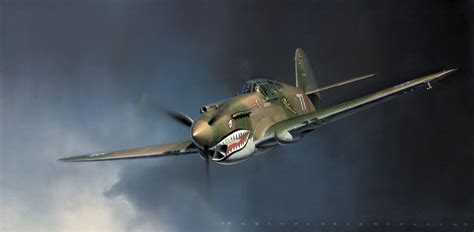
Its most famous operators, the Flying Tigers in China, used clever tactics to overcome its limitations. Instead of turning dogfights, they relied on diving attacks and hit-and-run strategies—maximizing the P-40’s strengths while avoiding its weaknesses.
In harsh environments like Burma and North Africa, the P-40 proved indispensable. It was a workhorse fighter, dependable under extreme conditions and capable of delivering consistent performance.
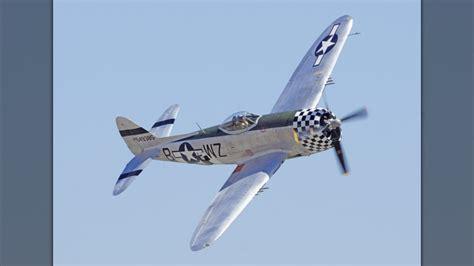
7. Republic P-47 Thunderbolt — The Indestructible Juggernaut
Nicknamed the “Jug,” the Republic P-47 Thunderbolt was the heaviest single-engine fighter of WWII—and one of the most effective.
Its defining feature was its massive radial engine, delivering immense power and enabling high-speed dives that few aircraft could match. Armed with eight .50-caliber machine guns, it packed devastating firepower.
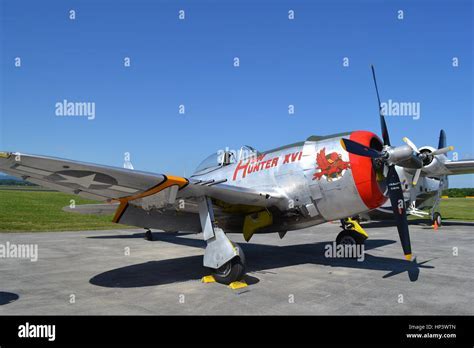
But what truly set the P-47 apart was its durability. Pilots often returned to base with aircraft riddled with bullets, yet still airworthy. This toughness made it ideal for ground-attack missions, where it inflicted catastrophic damage on enemy infrastructure.
Despite its size, it remained surprisingly capable in dogfights, especially at high altitudes. With over 15,000 units produced, the P-47 played a crucial role in both air superiority and battlefield support.
6. Grumman F6F Hellcat — The Pacific War Game-Changer
The Grumman F6F Hellcat arrived at a critical moment—and completely shifted the balance of power in the Pacific.
Designed with lessons learned from earlier encounters, it directly addressed the weaknesses exposed by the Zero. It featured better armor, superior firepower, and a powerful engine, allowing it to dominate Japanese fighters.
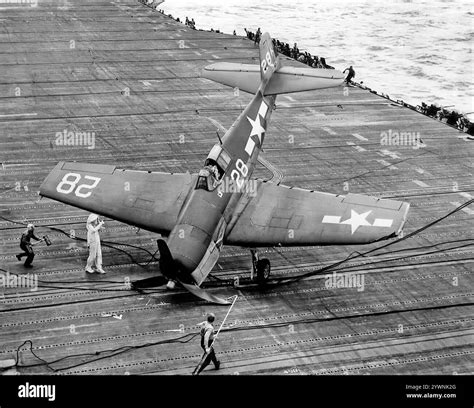
The results were staggering. The Hellcat achieved one of the highest kill-to-loss ratios of the war, becoming the primary tool for establishing American air superiority over the Pacific.
It was also optimized for carrier operations, making it a perfect fit for naval warfare. Within just two years, thousands were produced, showcasing America’s unmatched industrial capability.
The Hellcat didn’t just compete—it overwhelmed.
5. Ilyushin Il-2 Sturmovik — The Flying Tank
The Ilyushin Il-2 was unlike any other aircraft on this list. Designed as a ground-attack platform, it prioritized armor and survivability over speed.
Dubbed the “Flying Tank,” it featured heavy armor plating that protected both the pilot and vital components. This allowed it to fly directly into enemy fire, delivering devastating attacks on tanks, infantry, and supply lines.
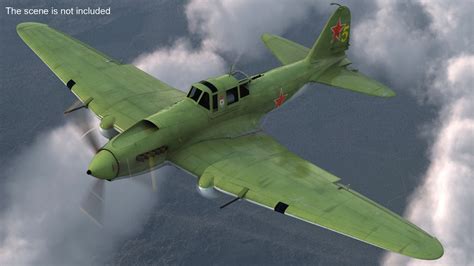
While slower than most fighters, its impact on the Eastern Front was immense. Produced in staggering numbers—over 36,000 units—it became the backbone of Soviet air power.
The Il-2 proved that effectiveness isn’t always about speed or agility. Sometimes, sheer resilience and firepower can change the course of a war.
4. Messerschmitt Bf 109 — The Backbone of the Luftwaffe
The Messerschmitt Bf 109 was Germany’s primary fighter throughout the war—and one of the most produced fighters in history.
From the invasion of Poland to the final days of the conflict, it remained a constant presence in the skies. Its design evolved continuously, with later models achieving impressive speeds and firepower.
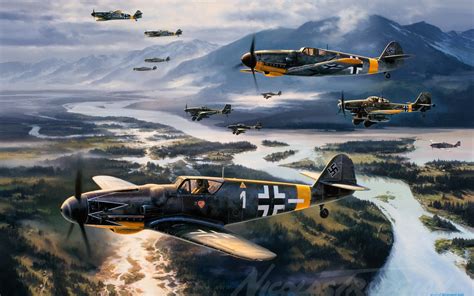
The Bf 109 combined speed, climb performance, and lethality, making it a formidable adversary. It played a central role in major campaigns, including the Battle of Britain.
However, its limitations became more apparent as Allied aircraft improved. Range issues and evolving enemy tactics gradually eroded its effectiveness.
Still, its longevity and impact make it one of the most significant fighters of the war.
3. Hawker Hurricane — The Unsung Defender of Britain
Overshadowed by the Spitfire, the Hawker Hurricane was arguably the true hero of the Battle of Britain.
It was simpler in design but highly effective, accounting for the majority of German aircraft shot down during the campaign. Its stability and firepower made it ideal for attacking bombers.
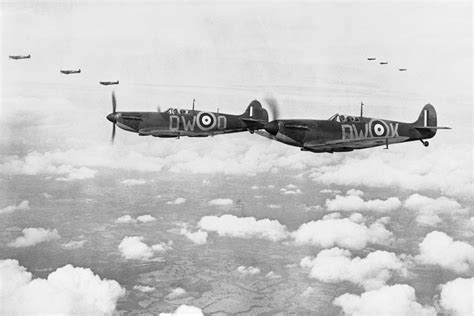
While it lacked the speed of the Bf 109, it compensated with durability and ease of repair. This allowed the RAF to keep more aircraft in the air during critical moments.
The Hurricane was a fighter of necessity, proving that reliability and pilot skill could overcome technological disadvantages.
2. Supermarine Spitfire — The Icon of Elegance and Power
Few aircraft are as instantly recognizable as the Supermarine Spitfire. With its elliptical wings and sleek design, it became a symbol of British resistance.
But the Spitfire was more than beautiful—it was exceptionally capable. Its maneuverability and continuous upgrades kept it competitive throughout the war.
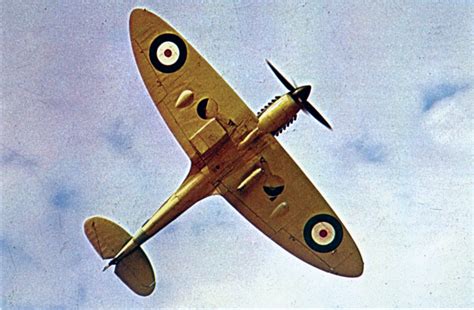
Equipped with increasingly powerful engines, it evolved into one of the fastest piston-engine fighters ever built. It even proved capable of intercepting early jet aircraft.
The Spitfire’s combination of design excellence and adaptability ensured its place among the greatest fighters in history.
1. North American P-51 Mustang — The Ultimate Escort Fighter
At the top of the list stands the North American P-51 Mustang, widely regarded as the finest all-around fighter of WWII.
Its defining feature was its long-range capability, allowing it to escort bombers deep into enemy territory—something no other fighter could do effectively at the time.
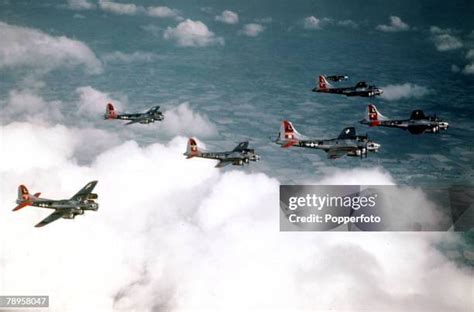
Initially underpowered, the Mustang reached its full potential after being fitted with the Rolls-Royce Merlin engine. This transformation turned it into a high-speed, high-altitude powerhouse.
The Mustang combined speed, range, maneuverability, and firepower into a single platform. It not only outperformed many German fighters but also helped secure air superiority over Europe.
Its impact was decisive. By protecting bombers and dominating enemy fighters, the P-51 played a crucial role in weakening Germany’s war effort.
The Legacy of WWII Fighter Aircraft
The aircraft of World War II represent a unique moment in history—a time when necessity drove innovation at an unprecedented pace. These fighters were not just tools of war; they were engineering masterpieces, each reflecting the strategic priorities and industrial capabilities of their nations.
From the nimble Zero to the unstoppable Mustang, these machines defined aerial combat for a generation. They pushed technology to its limits and laid the groundwork for the jet age that followed.
Even today, their legacy endures. Restored examples still take to the skies, their engines roaring as a reminder of a time when the outcome of entire battles—and perhaps the world itself—depended on the skill of a pilot and the performance of a single aircraft.