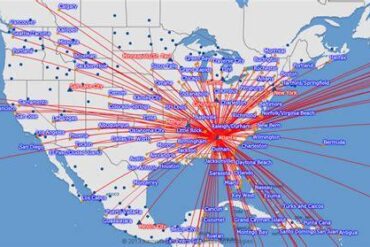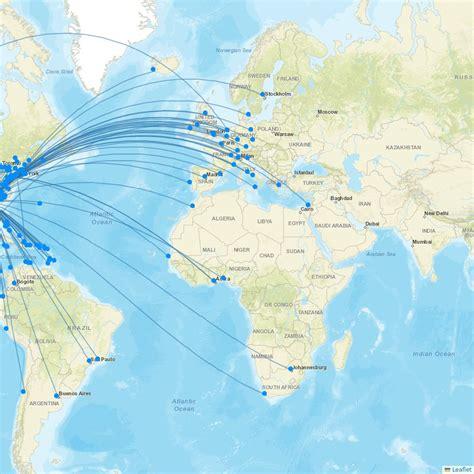
Delta Air Lines is entering one of the most ambitious international schedules in its history for Summer 2026. During the peak travel quarter between July and September, the carrier plans nearly 11,895 long-haul departures from the United States, marking the highest quarterly total ever recorded for the airline. This milestone reflects strong global demand, a rebound in international tourism, and Delta’s strategic focus on strengthening transatlantic and transpacific connections.
The schedule represents a 2% increase over the airline’s previous long-haul record, with an average of 129 daily long-haul departures during the busiest weeks of the summer. While traditional hubs such as Atlanta and New York JFK remain critical to the airline’s international network, Delta has shifted growth toward other gateways including Los Angeles, Boston, and Seattle, each benefiting from newly introduced routes and additional frequencies.
These adjustments reveal an evolving strategy that spreads international traffic across multiple US hubs while reinforcing connections with SkyTeam alliance partners, including Air France, KLM, and Virgin Atlantic. Together, these partners operate a metal-neutral joint venture, allowing them to coordinate schedules, share revenue, and optimize routes across the Atlantic.
By examining Cirium Diio schedule data, it becomes clear which routes form the backbone of Delta’s global network during Summer 2026. The airline operates 113 long-haul routes during the quarter, with 96 airport pairs offering at least daily service in mid-August. Among them, 15 routes stand out with the highest frequencies, representing the airline’s most strategically important international markets.

The Five Most Frequent Delta Long-Haul Routes
At the top of the ranking sit five routes operating up to three flights per day, the highest frequency Delta schedules on any long-haul market. These routes connect major US hubs with key European alliance hubs, reinforcing the airline’s transatlantic dominance.
The most heavily served connections include:
- Atlanta – Amsterdam
- Atlanta – London Heathrow
- Detroit – Amsterdam
- Minneapolis – Amsterdam
- New York JFK – Paris Charles de Gaulle
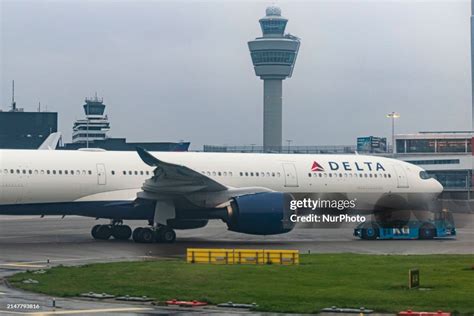
Each of these routes plays a critical role in the SkyTeam transatlantic network, linking Delta’s major US hubs with partner hubs in Europe. The Amsterdam routes in particular highlight the importance of KLM’s hub at Schiphol Airport, which serves as a gateway to hundreds of onward destinations across Europe, the Middle East, and Africa.
Delta deploys a mix of widebody aircraft on these services, including the Airbus A330-300, A330-900neo, A350-900, and Boeing 767-400ER. These aircraft offer a blend of high passenger capacity and long-range efficiency, making them ideal for dense intercontinental routes.
Historically, some of these markets even supported four daily Delta flights, demonstrating how strong demand has remained for business travel and international connectivity between North America and Europe.
Routes Ranked Sixth to Thirteenth in Delta’s Long-Haul Network
Beyond the top five, several other routes maintain high frequencies approaching or exceeding twice daily, underscoring the depth of Delta’s global network.
6. Atlanta – Paris Charles de Gaulle
This major transatlantic link sees up to 18 weekly flights during the peak summer period, occasionally dropping slightly below twice daily. The route benefits heavily from Delta’s joint venture with Air France, whose hub at Paris CDG offers extensive connections throughout Europe.
Aircraft used include the A330-300, A330-900neo, A350-900, and Boeing 767-400ER, giving the airline flexibility to match capacity with seasonal demand.
7. Atlanta – Rome Fiumicino
Rome continues to grow in popularity among American travelers. Delta operates 17 weekly flights on this route during Q3 2026, representing the airline’s largest capacity ever offered to the Italian capital.
Demand for Southern European destinations has surged in recent years, prompting Delta to add over 5,000 additional seats during the quarter. Even without the previous codeshare partnership with ITA Airways, Rome remains one of Delta’s strongest leisure markets.
8–13. Twice-Daily Long-Haul Markets
Several routes share the next tier of service, each operating two daily flights during peak summer weeks. These include:
- Atlanta – Seoul Incheon
- Boston – Amsterdam
- New York JFK – Athens
- New York JFK – London Heathrow
- New York JFK – Rome Fiumicino
- Seattle – Amsterdam
These routes reflect Delta’s strategy of strengthening secondary US gateways such as Boston and Seattle while maintaining robust operations at JFK. Boston’s Amsterdam route, for instance, connects New England travelers directly with the KLM hub, reducing reliance on New York connections.
Meanwhile, the New York JFK – Athens route has become increasingly significant due to booming tourism between the United States and Greece. During peak summer weeks, Delta schedules departures from JFK at 3:15 PM and 8:30 PM, allowing passengers flexibility and convenient arrival times in Europe.
Routes Ranked Fourteenth and Fifteenth
While slightly lower in frequency, the final two routes in the ranking remain essential components of Delta’s long-haul portfolio.
14. Detroit – Paris Charles de Gaulle
Detroit continues to function as a powerful Midwest hub for Delta. The Detroit–Paris route operates daily to twice daily during the summer peak, before tapering to around 12 weekly flights in September.
Delta utilizes several aircraft types on the route, including the Airbus A330-300, A330-900neo, and A350-900, allowing the airline to adjust seat capacity depending on demand.
15. Atlanta – Athens
The final position belongs to Atlanta–Athens, a route that has seen remarkable growth in recent years. Delta operates 10 to 13 weekly flights using the Airbus A330-900neo, matching the highest frequency the airline has ever offered on the route.
Data from the US Department of Transportation shows that Delta carried 81,685 round-trip passengers between Atlanta and Athens in Q3 2025. Even more impressive is the 90.9% seat load factor, which surpassed the airline’s average long-haul load factor from Atlanta by more than three percentage points.
This strong demand suggests that Athens has become Delta’s most successful European route from Atlanta, driven by booming tourism to Greece and increasing interest in Mediterranean destinations.
How Delta’s Long-Haul Strategy Is Evolving
The Summer 2026 schedule reveals a broader transformation in Delta’s international strategy. Instead of relying exclusively on its historic mega-hubs, the airline is diversifying long-haul departures across several US gateways.
Los Angeles has experienced a 42% increase in long-haul flights, while Boston has grown by 22% and Seattle by 13%. These changes allow Delta to capture more regional demand and reduce congestion at its largest hubs.
At the same time, Delta’s partnership structure remains crucial. By coordinating schedules with Air France, KLM, and Virgin Atlantic, the airline ensures seamless connections and optimized capacity across the Atlantic. This cooperation allows Delta to operate fewer redundant flights while still offering passengers extensive routing options.
Ultimately, the top 15 routes outlined above highlight where Delta sees the strongest global demand. High frequencies between major hubs—particularly those linked to alliance partners—demonstrate the importance of connectivity, reliability, and schedule flexibility in modern international aviation.
As travel demand continues to surge, these long-haul corridors will remain central to Delta’s network, carrying hundreds of thousands of passengers between North America, Europe, and Asia throughout the busy Summer 2026 season.