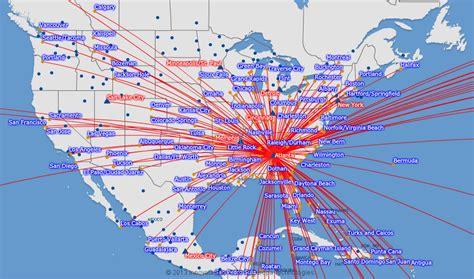
Delta Air Lines, one of the most strategically disciplined legacy carriers in the United States, continues to dominate domestic aviation by optimizing an intricate hub-and-spoke model, with Atlanta Hartsfield-Jackson International Airport (ATL) serving as the nexus of its operations. As we dissect the 30 busiest domestic routes in Delta’s 2025 schedule, a precise picture emerges—one of frequency dominance, strategic geographic targeting, and hub-centralized connectivity.
What sets Delta apart in this fiercely competitive market is not only its volume but also how and where that volume is deployed. Nearly all the top-performing routes feed through Atlanta, the world’s busiest airport, illustrating Delta’s dependence on centralized efficiency to sustain its vast national network.
Atlanta: The Central Artery of Delta’s Domestic Power
At the heart of Delta’s busiest domestic route map lies Atlanta, where 29 out of the top 30 routes either originate or terminate. This underscores Delta’s deliberate overconcentration of assets and personnel in Georgia, a tactical move that leverages economies of scale and unmatched scheduling flexibility.
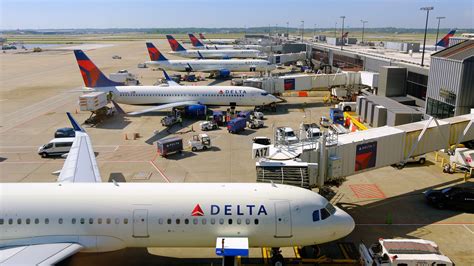
The top-ranked route in 2025 is Atlanta to Orlando (MCO), with nearly 2,740 flights monthly, moving over 556,000 passengers and generating 224 million Available Seat Miles (ASMs). This is not a business route—it’s a family and leisure conduit, proving that Delta’s success isn’t solely reliant on corporate travelers. The route’s high volume is a reflection of both year-round tourism demand and the efficiency of high-frequency deployment on short-haul sectors.
Other Florida connections from Atlanta—Fort Lauderdale, Tampa, Miami, West Palm Beach, and Jacksonville—populate the upper echelon of Delta’s domestic network, combining to produce over 2.1 million monthly seats, and nearly 1 billion ASMs. These figures make Florida a non-negotiable pillar in Delta’s short-haul volume strategy.
High-Frequency Markets: Delta’s Scheduling Domination
One of Delta’s greatest tactical strengths is its mastery of high-frequency, business-friendly routes. Nowhere is this more evident than in the corridor between Atlanta and New York–LaGuardia (LGA). Operating over 2,260 monthly flights, Delta offers business travelers a virtual shuttle service. This route, despite being only 761 miles, produces 328 million ASMs, outperforming many longer cross-country markets.
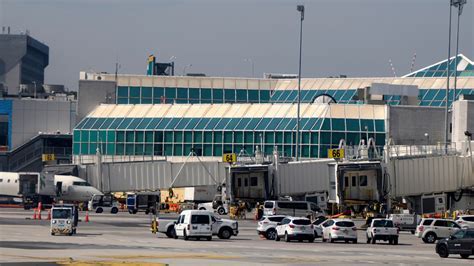
Atlanta to Washington National (DCA) and Atlanta to Charlotte (CLT) are similarly structured, with dozens of daily departures and rapid turnarounds, appealing to travelers who value schedule flexibility over flight duration or distance. This “shuttle logic” amplifies brand loyalty and gives Delta the upper hand in time-sensitive corporate travel segments.
The Florida Phenomenon: Persistent and Profitable
Florida’s appearance across five of the top ten routes cannot be overlooked. The state’s dual allure of tourism and migration-driven VFR (visiting friends and relatives) traffic ensures that Delta flights are consistently full. Unlike seasonal adjustments in other leisure markets, Florida is a 365-day operation, and Delta treats it as such.
Fort Lauderdale (FLL) and Tampa (TPA) offer robust performance metrics: 2,188 and 2,154 monthly flights respectively, and hundreds of thousands of passengers moved each month. These routes sustain some of the highest seat counts and dense load factors in the Delta system.
Long-Haul Titans Among the Short-Haul Giants
Despite Delta’s short-haul dominance, long-haul domestic flights also hold their ground, especially in key transcontinental markets. The outlier in the top 30 list—Los Angeles (LAX) to New York–JFK—is a remarkable exception, not involving Atlanta at all. With 1,528 monthly flights, nearly 850 million ASMs, and heavy premium seating configurations, this route is emblematic of Delta’s strategic investments in coastal prestige corridors.
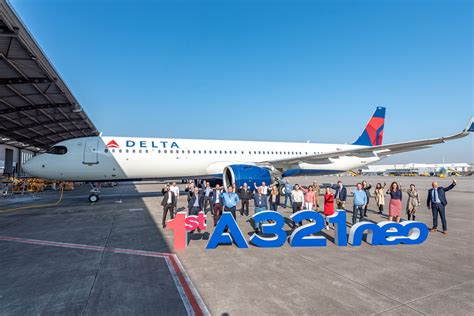
Atlanta’s connections to Los Angeles, Salt Lake City, Las Vegas, and Denver also represent the longer sectors in the top 30, balancing frequency with aircraft upgauging—often widebodies or high-density A321s—to maximize seat-mile profitability. These are not throwaway routes; they are carefully designed to complement the short-haul network by bringing volume to major connecting hubs without compromising on operational economics.
Point-to-Point Flying: A Limited but Strategic Presence
While Delta’s reputation includes a balanced point-to-point model, the 2025 data suggests otherwise. Nearly every top route is routed through Atlanta, proving the resilience and profitability of the hub-and-spoke structure. Even Delta’s other hubs—Minneapolis (MSP), Detroit (DTW), and Salt Lake City (SLC)—barely make repeated appearances.
This reveals a powerful insight: Delta has doubled down on Atlanta rather than decentralizing, choosing to pour resources into a single mega-hub to achieve operational density, consistency, and predictable customer experience.
Market Competition: Holding Ground Amid Rivals
In markets like Atlanta–New York, Boston, Washington, and Philadelphia, Delta is in direct combat with American and JetBlue, both of which fight for market share among business travelers in the Northeast Corridor. Delta’s competitive edge lies not just in brand recognition or SkyMiles loyalty, but in gate control, scheduling precision, and customer service consistency.
In Florida-heavy markets, Delta battles low-cost giants like Southwest and Spirit, who compete aggressively on fare prices. Delta’s answer? Higher frequency, superior service, and dependable operational performance, which attract travelers willing to pay a premium for reliability.
Top 30 Routes: A Network Engineered for Load and Loyalty
Delta’s top 30 busiest routes form the backbone of its domestic strategy. Each route is a puzzle piece, intricately aligned with aircraft availability, seasonal patterns, fare dynamics, and most crucially, passenger behavior. Here’s a focused view of a few standout routes:
- Atlanta (ATL) – Orlando (MCO): Delta’s leisure behemoth, ranking first with 2,739 flights and 224 million ASMs.
- Atlanta (ATL) – New York–LaGuardia (LGA): Business heavyweight with 2,262 flights and unmatched frequency.
- Los Angeles (LAX) – New York–JFK: Premium transcon dominated by high ASM and fierce competition.
- Atlanta (ATL) – Salt Lake City (SLC): Inter-hub synergy with robust 448 million ASMs.
- Atlanta (ATL) – Las Vegas (LAS): High-yield entertainment market that bridges leisure and business.

Operational Complexity vs. Strategic Simplicity
The simplicity of Delta’s domestic volume is deceptive. While the model appears focused and repetitive, the underlying complexity in scheduling, fleet deployment, and pricing strategy is immense. For example, routes like Atlanta–Charlotte, which see more than 1,300 flights a month, require precise gate logistics, crew optimization, and aircraft turnaround planning.
Delta’s ability to sustain high-load short hops such as Atlanta–Jacksonville (JAX) and Atlanta–Birmingham (BHM)—both less than 400 miles—speaks to the efficiency of its regional jet strategy, largely managed by partners under the Delta Connection brand. These routes are margin-thin but indispensable in network integrity and feeder flow to the broader system.
Looking Forward: Volume, Not Just Margin
Delta’s top 30 domestic routes tell us that the carrier continues to prioritize frequency and connectivity over unit margin. The short-haul flights are crucial in maintaining high load factors, while long-haul and transcon routes offer prestige and brand leverage in competitive markets.
The strategy is clear: maximize the utility of Atlanta as a domestic launchpad while building resilience through schedule depth, high aircraft utilization, and unwavering passenger loyalty.
Conclusion: Atlanta Isn’t Just the Hub—It’s the Heart
The data from 2025 reflects more than just passenger traffic—it reveals the philosophy behind Delta’s network architecture. The decision to consolidate domestic volume into Atlanta creates unmatched scale and allows Delta to flex its muscles in both frequency-driven markets and high-value coast-to-coast corridors.
From the theme park travelers headed to Orlando, to executives shuttling between New York and D.C., and gamblers flying out to Las Vegas, Delta’s schedule reads like a symphony of American mobility—all orchestrated from a single, dominant control center: Atlanta.
Delta’s top 30 routes are not simply busy—they are the foundation of a system that thrives on discipline, foresight, and relentless operational excellence.