Alaska Airlines, once perceived as a regional operator rooted firmly in the Pacific Northwest, is now executing a strategically calculated expansion while fiercely preserving its hometown strongholds. The 2025 ranking of its 30 busiest domestic routes, determined by flights, seats, and available seat miles (ASMs), paints a vivid picture of a carrier that expertly balances legacy connections with emerging demand corridors across the United States.
At the heart of this network lies Seattle–Tacoma International Airport (SEA), which anchors 22 of the airline’s 30 top-performing routes. But while Seattle still defines the airline’s identity, Alaska’s growth in California, transcontinental lanes, and within its namesake state shows a mature evolution into a nationally competitive player.
Seattle: The Pulse of Alaska Airlines’ Network
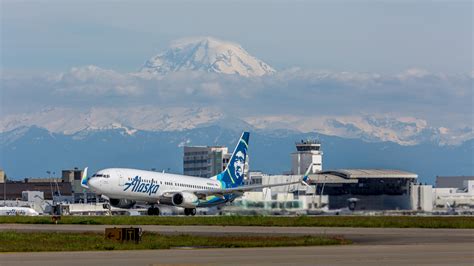
There’s no overstating Seattle’s pivotal role. SEA is Alaska Airlines’ epicenter, both operationally and culturally. Among the busiest routes, Anchorage–Seattle stands dominant with over 1,000 monthly flights, more than 174,000 seats, and a staggering 253 million ASMs, making it the single most important domestic route in the carrier’s network. This isn’t merely a route—it’s a corridor of commerce, community, and continuity between Alaska and the mainland.

Beyond Anchorage, Seattle’s connectivity reaches deep into California and the Southwest. Routes to Los Angeles (LAX), San Francisco (SFO), and San Diego (SAN) collectively account for over 1,700 monthly flights. These aren’t just volume plays—they’re high-value markets capturing both tech sector traffic and leisure demand.
Las Vegas and Phoenix routes from Seattle show strong figures as well, each with nearly 500 monthly flights and significant ASMs above 70 million, reinforcing Alaska’s position in leisure and secondary business markets. Even smaller West Coast destinations like Spokane, Burbank, Ontario, and Sacramento are robustly connected to Seattle, illustrating the airline’s dominance as a West Coast interconnector.
Portland’s Strategic Silence: A Subtle Powerhouse
While Portland (PDX) lacks Seattle’s numbers, it remains Alaska’s crucial secondary hub, especially for Southern California and the Southwest. In 2025, routes such as Portland–San Diego (285 flights), Portland–Santa Ana (248), and Portland–Phoenix (230) hold prominent positions. These corridors represent not just volume but strategic anchoring—defending territory in markets where larger airlines have retreated or stagnated.
Even Portland–San Francisco, with over 230 flights monthly, signals that Alaska intends to keep PDX viable as a leisure and short-haul business hub, despite intensified coastal competition. The Portland–Phoenix link, with over 40,000 seats and 41 million ASMs, proves Alaska’s capability to capture seasonal traffic and retain year-round relevance.
California: The Backbone of Intra-West Connectivity
California remains deeply embedded in Alaska Airlines’ domestic strategy. Four of the top 10 busiest routes include destinations within the state, and several more appear further down the list. These include not just major airports like LAX and SFO, but smaller, high-frequency corridors such as Santa Ana (SNA), San Jose (SJC), and Ontario (ONT).
What’s most telling is Alaska’s penetration into competitive intrastate routes, where legacy carriers like American and United often scale back in favor of hub concentration. Alaska’s nimbleness allows it to thrive, offering frequent flights with a mix of Boeing 737s and E175s—ideal for both short hops and longer point-to-point flights.
Expanding East: Transcon Ambitions and Slot Battles
The network data confirms that Alaska Airlines is no longer confined to the West Coast. Transcontinental flights such as JFK–San Francisco and JFK–Seattle are now among its top 30 busiest domestic routes. Both operate with 248 monthly flights, serving not only bicoastal tech traffic but also elite business travelers accustomed to premium offerings.
With more than 100 million ASMs each, these transcons show Alaska’s capacity to go toe-to-toe with legacy heavyweights. Despite fierce competition for valuable slots at JFK and Washington National, Alaska’s continued presence underscores a steady eastward strategy built on frequency and service differentiation.
Even newer long-haul additions like Seattle–Boston and Seattle–Chicago O’Hare show momentum, both offering over 60,000 seats per month, and gaining traction as cornerstone business routes.
Alaska Intra-State and Connections to the Lower 48
No network narrative is complete without addressing Alaska Airlines’ roots. The Alaska–Seattle air bridge isn’t just operational—it’s symbolic. The top route, Anchorage–Seattle, is followed closely by Fairbanks–Seattle (282 flights) and Juneau–Seattle (253). These are lifeline routes, essential for passengers needing access to healthcare, education, commerce, and family.

Additional routes like Anchorage–Juneau (220 flights) and Ketchikan–Seattle (220 flights) continue to score high in ASMs, affirming that despite growth elsewhere, Alaska Airlines has not abandoned its namesake region. These flights support not only residents but also cargo, medical evacuations, and government travel.
Emerging Battlegrounds: Texas and Mountain West Expansion
Recent years have brought noticeable growth in non-West Coast strategic markets, most notably Texas. The Seattle–Dallas/Fort Worth and Seattle–Austin routes have solidified positions in the top 30, with the former handling over 100 million ASMs, and the latter fast-approaching 68 million.
These flights are driven by a combination of tech sector synergies, hybrid work models, and a growing Pacific-to-Southwest migration trend. Alaska’s ability to grow frequency and preserve yield on these longer-haul routes speaks volumes about its operational efficiency and brand loyalty among West Coast business travelers.
Elsewhere, Seattle–Denver and Seattle–Salt Lake City serve as important connective tissue into the Mountain West. These routes not only support point-to-point traffic but also function as feed lines for Alaska’s codeshare and interline partners, especially in Denver’s ultra-competitive space.
Data Snapshot: Alaska Airlines’ Top Routes by the Numbers
To provide context for Alaska’s 2025 network strength, consider these core statistics:
- Anchorage–Seattle: 1,044 flights | 174,812 seats | 253M ASMs
- LAX–Seattle: 612 flights | 104,034 seats | 99M ASMs
- JFK–San Francisco: 248 flights | 43,555 seats | 112M ASMs
- Fairbanks–Seattle: 282 flights | 45,695 seats | 70M ASMs
- PDX–Phoenix: 230 flights | 40,598 seats | 41M ASMs
Each of these routes represents more than just volume—they are microcosms of Alaska Airlines’ strategic priorities: preserving its Pacific Northwest identity, expanding cautiously into competitive markets, and sustaining vital connections to the state of Alaska.
A West Coast Titan with National Reach
Alaska Airlines in 2025 is no longer just a regional power. With strategic density in the Pacific Northwest, expanding reach into transcontinental business markets, and an unwavering commitment to interior Alaska, the carrier embodies the rare ability to scale without diluting its brand identity.
In a domestic landscape increasingly defined by consolidation and big-four dominance, Alaska Airlines proves that frequency, regional expertise, and operational discipline can still carve out significant national influence. The airline is not merely surviving—it is defining what smart, sustainable growth looks like in modern American aviation.