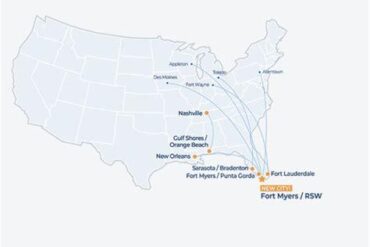
Florida continues to anchor Allegiant Air’s business strategy, and the airline’s latest network expansion underscores just how critical the Sunshine State has become to its operations. Between June and September 2026, the ultra-low-cost carrier will introduce 27 additional Florida routes, broadening connectivity between secondary cities and popular leisure destinations while reinforcing its unique point-to-point model.
According to schedule data for summer 2026, more than six out of every ten Allegiant flights will either depart from, arrive in, or operate within Florida. The expansion reflects the carrier’s continued focus on underserved markets where nonstop service remains limited or entirely absent, allowing travelers to bypass major airline hubs and lengthy connections.
Rather than competing directly on frequency with legacy airlines, Allegiant continues to build a network centered around convenience, seasonal demand, and operational flexibility.

Florida Becomes the Centerpiece of Allegiant’s Summer Network
The scale of Allegiant’s Florida operation is striking. During the June-to-September 2026 period, the airline is expected to operate approximately 26,060 flights involving Florida airports, accounting for roughly 61% of its entire schedule.
Although that figure represents a marginal decline from the previous year’s total of 26,200 flights, the difference is minimal and largely reflects selective route rationalization rather than weakening demand. At the same time, the carrier is reshaping its network by introducing new destinations and reviving previously suspended services.
Allegiant’s business model also differs significantly from many competitors. Its fleet utilization strategy allows aircraft to fly fewer daily hours than newer-generation fleets used by rival airlines. As a result, the company can concentrate flights on high-demand travel days such as Fridays while significantly reducing operations on slower weekdays. Summer schedules may feature more than 340 Florida-related services on busy Fridays, while certain Tuesdays see only a fraction of that activity.
Expansion Strengthens Allegiant’s Position in Florida’s Competitive Market
The airline now ranks among the largest domestic operators serving Florida, maintaining nearly 7% of all U.S.-Florida flights despite fierce competition from rapidly expanding rivals.
The competitive landscape has changed considerably following the disappearance of Spirit Airlines, creating opportunities for several low-cost carriers to capture market share. Airlines including Breeze Airways, Frontier Airlines, and JetBlue have expanded aggressively across Florida, while Allegiant has chosen a more measured strategy focused on carefully selected city pairs instead of blanket growth.
This disciplined approach allows the airline to maximize profitability by targeting markets with limited nonstop competition and lower airport operating costs.
Twenty-Seven New Routes Reshape the Florida Network
A comparison between Allegiant’s summer 2025 and summer 2026 schedules reveals 27 newly available Florida routes.
Some began service during late 2025, while others entered the schedule throughout the first half of 2026. Several routes also represent seasonal returns after temporary suspensions, having disappeared during parts of 2025 before being reinstated for future peak travel periods.
The additions span 25 airports and collectively represent more than 28,000 network miles, extending Allegiant’s footprint across both established leisure markets and smaller regional communities.
The strategy continues the airline’s long-standing emphasis on connecting travelers directly rather than routing them through congested hub airports.
Thirteen Routes Introduce Completely New Air Service
Perhaps the most remarkable aspect of the expansion is that 13 of the newly added routes have never before been served by any airline.
This pattern reflects Allegiant’s willingness to pioneer markets that larger carriers often overlook. Instead of chasing heavily contested routes between major metropolitan centers, the airline focuses on connecting mid-sized communities with vacation destinations where latent demand exists but nonstop service has historically been unavailable.
Among the notable additions are new links involving Columbia, Missouri, and La Crosse, Wisconsin, both representing fresh opportunities within Allegiant’s evolving network. Huntsville also gains renewed attention after the carrier’s return to the city following an absence stretching back many years.
For passengers living outside major airline hubs, these nonstop connections can eliminate lengthy drives and inconvenient layovers while providing direct access to Florida vacation destinations.

Orlando Sanford and Alternative Airports Remain Central to Growth
The expansion also reinforces Allegiant’s preference for alternative airports that typically offer lower operating expenses and shorter passenger processing times.
Facilities such as Orlando Sanford International Airport continue serving as important gateways alongside more traditional Florida destinations. New services from Sanford connect to markets including Atlantic City, La Crosse, and Columbia, demonstrating the airport’s growing strategic value within the airline’s system.
This philosophy extends beyond Orlando. Allegiant frequently favors airports that are less congested than nearby primary hubs, helping reduce delays while maintaining lower operating costs that support its low-fare business model.
For travelers, these airports often provide faster check-in experiences, easier parking access, and simplified terminal navigation compared with larger metropolitan facilities.
Seasonal Scheduling Maximizes Demand and Revenue
Unlike airlines that maintain consistent daily frequencies across their networks, Allegiant carefully aligns service levels with expected passenger demand.
The carrier’s scheduling flexibility enables it to increase flying during weekends and holiday travel periods while avoiding unnecessary capacity during slower days. This approach helps maintain stronger load factors without relying excessively on discounted fares to fill aircraft.
Many Florida leisure travelers naturally prefer departures near weekends, making this model particularly effective for destinations centered around beaches, cruises, and family vacations.
The result is an operation designed around profitability rather than maximum aircraft utilization, distinguishing Allegiant from many competitors pursuing continuous daily schedules.
Strategic Growth Signals Continued Confidence in Florida Tourism
The launch of 27 additional routes illustrates Allegiant’s confidence that Florida will remain one of America’s strongest leisure travel markets.
While some routes represent returning seasonal services, the introduction of numerous entirely new airport pairs highlights the carrier’s willingness to continue experimenting with underserved markets. By emphasizing nonstop travel between smaller communities and popular vacation destinations, Allegiant has carved out a niche that differs substantially from both legacy airlines and other low-cost competitors.
As summer 2026 unfolds, the expanded network is expected to strengthen connectivity across dozens of cities while giving travelers more direct options to reach Florida without passing through traditional airline hubs. For a carrier built around convenience and selective expansion, the latest additions represent another significant step in refining a business model that continues to reshape leisure travel across the United States.