Flying a Boeing 787 Dreamliner is one of the most desirable jobs in commercial aviation, but the headline salary numbers only tell part of the story. In 2026, an experienced 787 captain at a major US airline can potentially earn well over $400,000 a year, while the most senior widebody pilots can push total compensation substantially higher once retirement contributions, profit sharing, per diem, and premium flying are included. First officers earn less, but their pay can rise dramatically as they accumulate seniority and eventually qualify for a captain upgrade.
The reason 787 pilot salaries are so high is not simply that the aircraft is large or technologically advanced. The Boeing 787 Dreamliner operates long-haul international routes that demand highly trained crews, extensive systems knowledge, careful fuel management, international operating experience, and the ability to manage complex situations far from the airline’s home base. Pilots may cross multiple time zones on a single trip, operate overnight flights, and spend several days away from home.
There is also an important distinction between a pilot’s advertised salary and actual annual earnings. Airline pilots in the United States generally do not receive a conventional fixed monthly paycheck based solely on an annual salary. Instead, their compensation is governed by a collective bargaining agreement and calculated primarily through hourly pay rates and credit hours. That system means two pilots flying the same aircraft at the same airline can finish the year with noticeably different earnings.
How Boeing 787 Pilot Pay Works in 2026
Airline pilot compensation can initially look confusing because the hourly rate published in a contract is not simply multiplied by every hour the aircraft spends in the air. Pilots are generally paid according to credit hours, which incorporate contractual rules governing trips, minimum guarantees, duty periods, and other forms of compensation. Most major US airlines provide monthly guarantees commonly falling somewhere around 70 to 85 credit hours, with approximately 75 hours often used as a useful benchmark.
This is why an hourly rate can be converted into an approximate annual salary. A pilot earning $400 per credit hour and receiving 75 credit hours each month would have a basic annualized figure of roughly $360,000 before considering additional compensation. A pilot who generates more credit through scheduling, premium trips, open flying, or contractual pay protections can earn considerably more.
Another important detail is that not every part of a pilot’s working day is compensated in exactly the same way. Activities such as briefings, preflight preparation, and boarding responsibilities occur before departure, while contractual rules determine how the pilot’s paid time is calculated. The result is a compensation structure that is very different from a conventional office job.
Seniority is equally important. Airline pilot contracts generally provide scheduled pay increases as pilots gain years of service, while the transition from first officer to captain can produce a major jump in earnings. At some carriers, a senior captain’s hourly rate can be dramatically higher than that of a newly hired first officer, creating a large lifetime earnings difference between the two positions.
Why 787 Dreamliner Pilots Command Higher Salaries
The Boeing 787 belongs to the widebody category, and widebody flying generally commands higher compensation than regional or narrowbody operations. The aircraft’s long range allows airlines to connect cities across oceans, meaning crews can operate flights lasting ten, twelve, or even more hours while managing sophisticated aircraft systems and international procedures.
The 787 premium becomes especially noticeable at the captain level. A captain is ultimately responsible for the safe operation of the aircraft, crew, passengers, and flight while coordinating with dispatch, air traffic control, maintenance personnel, and cabin crew. On an international route, that responsibility extends across different regulatory environments, weather systems, airports, and airspace structures.
Long-haul operations also require pilots to manage fatigue carefully. A 787 may depart late at night, cross several time zones, and arrive during a local daytime period that corresponds to the crew’s biological night. These operational demands are one reason experienced widebody pilots are among the best-paid employees in the airline industry.
American Airlines Boeing 787 Pilot Salary
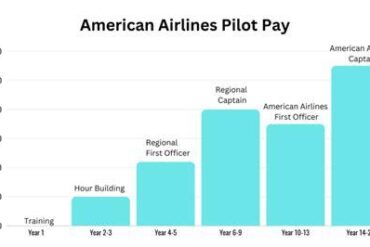
American Airlines provides a useful example of how 787 compensation can develop throughout a pilot’s career. According to the supplied 2026 reference figures, Boeing 777 and 787 captains begin at approximately $410.37 per hour in the first year, producing an estimated annualized base figure of about $393,955 when calculated using 80 monthly flight hours.
That figure rises with seniority. By the twelfth year, the captain rate reaches approximately $447.24 per hour, equivalent to roughly $429,350 annually using the same 80-hour monthly assumption. These numbers demonstrate why seniority is such a powerful factor in airline pilot compensation.
American’s 787 first officers have a much lower starting rate. The supplied figures place first-year pay at approximately $116.05 per hour, translating into an estimated $111,408 annually using the same calculation method. By the twelfth year, however, the first officer rate rises to about $305.50 per hour, or approximately $293,280 annually.
The difference is striking. A senior first officer can earn more than a newly hired captain in some circumstances, while a senior captain can earn well above $400,000 in base pay. Additional compensation such as per diem, profit sharing, retirement contributions, and premium flying can push actual total compensation beyond these basic figures.
United Airlines Boeing 787 Pilot Salary
United Airlines is another major operator of the Boeing 787 and offers a similarly attractive long-term compensation structure. Based on the supplied reference figures, widebody first officers at United begin at approximately $91 per hour, or around $87,360 annually under the stated assumptions.
By the twelfth year, the first officer rate reaches approximately $240 per hour, producing an annualized figure of around $230,400. That progression illustrates how dramatically pilot earnings can change over a decade, even before a first officer becomes a captain.
United’s widebody captain compensation is considerably higher. The supplied figures indicate a first-year captain base rate of approximately $323 per hour, equivalent to about $309,120 annually. By year twelve, the rate reaches approximately $352 per hour, producing a base calculation of around $337,920.
However, base-rate calculations do not necessarily represent what a highly productive senior captain actually earns. Some estimates place a twelfth-year Boeing 787 captain at United at approximately $558,000 in annual earnings, with contractual increases potentially taking that figure close to $598,000 in later years. The difference illustrates why headline hourly rates should never be treated as a complete picture of airline pilot compensation.
Delta Air Lines and the Widebody Pay Benchmark
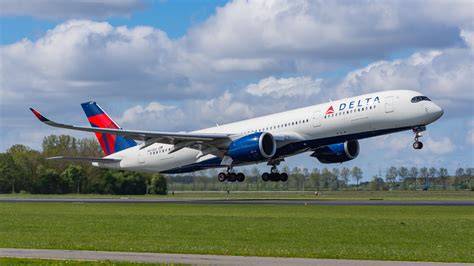
Delta Air Lines does not operate the Boeing 787, but its widebody pilot pay provides useful context because its compensation structure helps establish the broader market for experienced US airline pilots. Delta operates aircraft such as the Airbus A350, Airbus A330, and Boeing 767, all of which require pilots with widebody qualifications and long-haul experience.
The supplied reference figures indicate that a Delta captain can earn around $330,000 in the first year, rising to approximately $342,000 after five years and $355,000 after ten years under the cited assumptions. First officer earnings also increase substantially with experience, moving from approximately $113,000 in the first year to more than $240,000 after ten years.
Widebody flying is particularly valuable in this context because hourly rates can be significantly higher than those associated with narrowbody aircraft. A first-year captain on an Airbus A350, for example, can receive a substantially higher hourly rate than a captain operating a Boeing 737.
Per Diem, Retirement, and Other 787 Pilot Benefits
Looking only at base salary can underestimate the financial value of an airline pilot’s compensation package. One important addition is per diem, which is generally paid when pilots are away from their home base. The supplied reference material places typical per diem at roughly $2 to $3 per hour while on qualifying duty away from base.
Although a few dollars per hour may seem insignificant compared with a $400,000 salary, the amount can accumulate over a year because long-haul pilots routinely spend substantial periods away from home. Per diem is also generally treated differently for tax purposes than ordinary wages, depending on the applicable rules and circumstances.
Retirement benefits can be even more valuable. Major US airlines have increasingly offered substantial employer retirement contributions, including non-elective contributions that can reach the mid-teens as a percentage of eligible pay. If an airline contributes 16% on a $400,000 salary, that represents another $64,000 going toward retirement without the pilot having to contribute that amount personally.
United’s supplied figures are particularly notable, with employer retirement contributions listed at up to 17% in 2025 and 18% in 2026. For a highly paid senior pilot, that percentage can represent tens of thousands of dollars each year and significantly increase total compensation.
Pilots may also receive profit sharing, incentive payments, premium trip pay, international allowances, health insurance, travel privileges, and other contractual benefits. Consequently, a pilot whose published salary appears to be $400,000 could have a total compensation package worth substantially more.
First Officer vs. Captain: The Biggest Pay Difference
The largest salary difference in a 787 flight deck usually comes from the transition between first officer and captain. A first officer is a highly trained airline pilot and shares significant operational responsibilities, but the captain holds ultimate authority and responsibility for the flight.
That difference is reflected in pay. At major US carriers, an experienced 787 first officer can potentially earn more than $250,000, while a senior captain may earn $400,000, $500,000, or considerably more depending on the airline and amount of qualifying flying.
Becoming a captain, however, is not simply a matter of accumulating flying hours. Pilots must meet regulatory and airline requirements, demonstrate the required proficiency, complete upgrade training, and obtain a captain position when one becomes available. Seniority determines much of a pilot’s career progression, so a pilot may spend years waiting for the right upgrade opportunity.
Boeing 787 Pilot Salary in Europe
The US market is unusually lucrative compared with many other regions. European airline pilot salaries vary considerably by country, airline, tax system, and seniority. The supplied reference material cites an average pilot salary of approximately €80,822 gross per year across 17 European countries, with reported figures ranging from about €32,299 in Romania to €113,672 in Switzerland.
Experienced long-haul captains at premium European airlines can earn substantially more than those national averages. Lufthansa A350 captains, for example, are cited at around €250,000, while senior long-haul captains at Air France and British Airways can occupy a similarly high compensation tier.
Nevertheless, direct currency conversion does not tell the entire story. European pilots may face different taxation, pension structures, employment protections, working-time rules, and living costs. A $500,000 US salary therefore cannot simply be converted into euros and declared automatically superior in every respect.
How Much Can a 787 Pilot Make in 2026?
So, what is a realistic answer to the question “How much do Boeing 787 Dreamliner pilots make in 2026?”
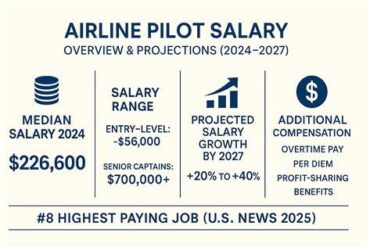
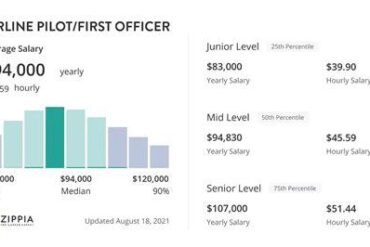
For a first officer, annual base compensation can range from roughly $90,000 to more than $290,000, depending heavily on airline, seniority, and contractual pay progression. Newly hired first officers sit near the lower end, while highly experienced widebody first officers can approach or exceed the upper end.
For captains, the range is much higher. First-year widebody captain compensation can approach $300,000 to $400,000, while senior captains at major US airlines can earn $400,000 to $550,000 or more. Exceptional earnings can be higher when premium flying, additional credit, profit sharing, and other contractual payments are included.
The most important point is that there is no single “787 pilot salary.” A pilot’s earnings depend on the airline, seniority, seat position, monthly credit, contract provisions, and additional compensation. The aircraft itself is only one piece of the equation.
What Determines a 787 Pilot’s 2026 Earnings?
Several factors determine where an individual pilot falls within the enormous salary range. Seniority is perhaps the most influential because it affects hourly rates, bidding opportunities, vacation selection, schedules, and access to premium flying. A senior pilot can often build a schedule that produces substantially different earnings from that of a junior colleague.
The airline’s contract also matters enormously. Two pilots flying the same Boeing 787 can have different compensation because their airlines use different hourly rates, minimum guarantees, retirement contributions, premium-pay rules, and profit-sharing formulas.
Monthly flying also matters. A pilot who consistently receives 80 or more credit hours can earn more than one receiving only a contractual minimum. However, pilots do not necessarily chase the highest possible credit every month because fatigue, commuting, family commitments, and quality of life are important considerations.
Finally, captain versus first officer status remains one of the most consequential factors. The captain’s greater responsibility and higher seniority position are reflected directly in compensation.
Is Flying the Boeing 787 Worth It in 2026?
For pilots who successfully reach a major airline widebody position, the financial upside can be exceptional. A senior Boeing 787 captain at a major US carrier may earn several times the salary of an average American worker, while retirement contributions and other benefits can make total compensation even more attractive.
But reaching that point requires a substantial investment in training, licenses, flight hours, and professional development. Pilots also accept an unusual lifestyle involving early mornings, overnight flights, weekends away, holidays spent working, changing time zones, and extended periods away from family.
The Boeing 787 Dreamliner pilot career therefore represents more than a large paycheck. It is the culmination of years of training and seniority progression, combined with the responsibility of operating one of the world’s most advanced commercial aircraft across some of the longest routes in the global airline network.
In 2026, the numbers make one thing clear: experienced US widebody pilots are among the highest-paid professionals in commercial aviation. A first officer can build toward a six-figure career relatively early, while a senior 787 captain at a major carrier can reach $400,000 to $550,000 or more in annual earnings. When retirement contributions, per diem, profit sharing, and other benefits are included, the overall compensation package can become even more substantial.
For aspiring airline pilots, the most important lesson is that the path to the highest salaries is built on experience, seniority, aircraft qualification, and long-term career progression. The 787 may be the aircraft that captures the imagination, but it is the combination of seniority and a strong airline contract that ultimately determines how much its pilots take home.